Flying Taxi Company Joby Is Buying a Defense Firm for $500 Million
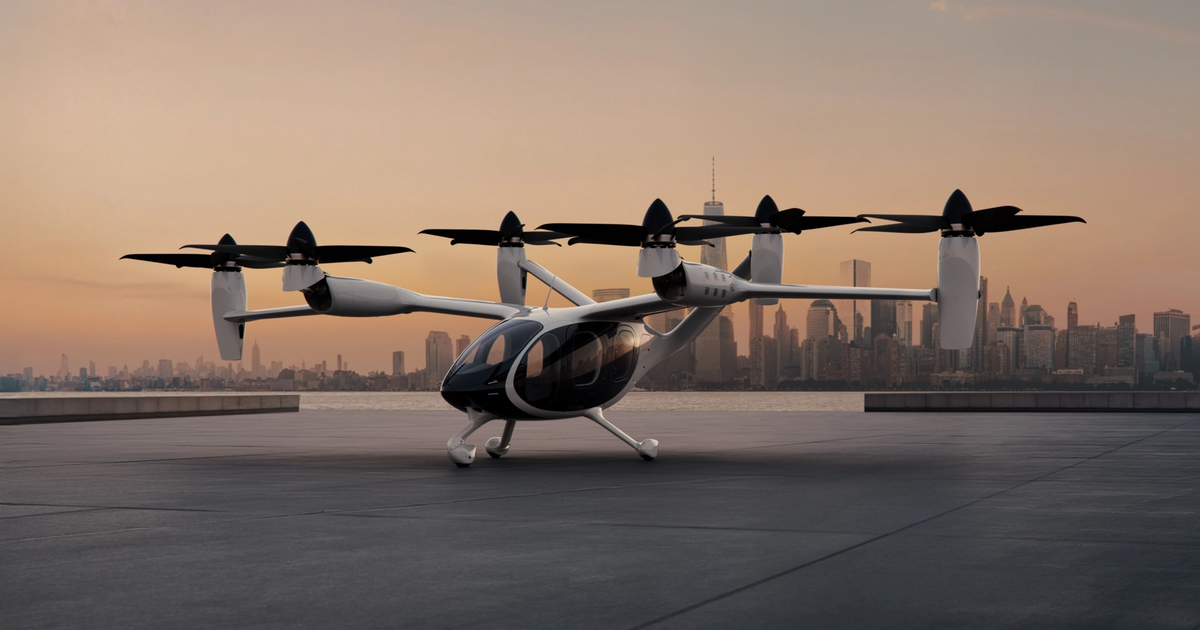
Joby Aviation, a company best known for building electric flying taxis, announced it is buying a defense firm called Resonant Sciences for $500 million. The deal includes $450 million in cash and $50 million in company stock. It is expected to be finalized in early 2027, after which Resonant Sciences will become Joby's dedicated defense division The Verge.
Resonant Sciences, founded in 2015 and based in Dayton, Ohio, employs about 250 people. The company builds technology that helps aircraft see, communicate, and operate in dangerous environments like war zones. Its products are approved for use on more than 20 different military and commercial aircraft. Many of its employees hold government security clearance because their work is classified The Verge.
To picture what Resonant Sciences does: imagine the sensors and communication tools that let a military jet detect other aircraft, share information with ground troops, and avoid being spotted by enemy radar. That is the kind of technology Resonant Sciences develops.
Joby intends to use Resonant Sciences' expertise to design and build stealth aircraft, which are planes designed to be hard to detect by radar. This is a new direction for Joby, which has focused on electric vertical takeoff and landing aircraft, or eVTOLs. These are electric aircraft that take off and land like helicopters but are quieter and cheaper to run. Joby's commercial division will keep working on air taxis, with the first ones expected to launch in 2026 The Verge.
Joby's relationship with the US military is not new. In 2016, the company joined a Pentagon program that brings commercial technology into military use. In 2020, Joby became the first eVTOL company to get approval from the US Air Force to test its aircraft for government purposes. In 2023, the company delivered its first aircraft to Edwards Air Force Base for testing The Verge.
The acquisition comes alongside Joby's push to start manufacturing its air taxis at scale. On June 30, 2026, Joby and Toyota Motor Corporation launched the first phase of a manufacturing partnership aimed at making air travel accessible to everyone Joby Aviation. Toyota had already announced in October 2024 that it would invest an additional $500 million in Joby to help fund certification and production of the company's electric air taxi Joby Aviation.
Joby reported a net loss of $245.4 million in the second quarter of 2026, on $38.6 million in revenue The Verge. The deal relies heavily on cash, which means Joby is spending a large portion of its available money on defense capabilities even as it gets closer to launching its commercial air taxis.
The competitive landscape is shifting quickly. Last month, another eVTOL company called Archer Aviation, based in San Jose, unveiled a new aircraft it developed with defense technology company Anduril. Boeing also said it was selling three of its eVTOL subsidiaries to Archer as part of a major deal The Verge.
Across the industry, electric aviation companies are increasingly pursuing military contracts alongside their civilian products. Joby's acquisition of Resonant Sciences and Archer's partnerships with Anduril and Boeing both point to the same trend: companies that started building flying taxis now see their technology as useful for the military too. For Joby, the appeal of Resonant Sciences is straightforward: the firm brings 250 employees with security clearance, technology already approved for use on more than 20 aircraft, and deep ties to classified defense programs. Building all of that from scratch would take years, and buying it is faster.
In my view, the financial picture is worth paying attention to. Joby lost $245.4 million in a single quarter while bringing in only $38.6 million in revenue. Spending $450 million in cash on a defense acquisition, even one with existing contracts and cleared staff, is a big commitment for a company that has not yet launched its main commercial product. The defense contracts Resonant Sciences brings in may help cover costs over time, but the immediate cash outlay is large.
The timing also raises questions. Joby expects to launch its first commercial air taxis in 2026, the same year it is committing $500 million to buy a defense company that will not officially be part of Joby until early 2027. The company is pursuing a commercial launch, a Toyota manufacturing partnership, and a major defense acquisition all at once. Each of those is a difficult challenge on its own. Doing all three simultaneously tests whether Joby can manage that much at the same time.
The stealth aircraft goal is the most ambitious part. Resonant Sciences builds systems that help aircraft operate in war zones, and Joby wants to use that knowledge to design and build aircraft that are hard to detect. That would take Joby beyond flying taxis and into the world of military aircraft, where established companies like Lockheed Martin and Northrop Grumman have operated for decades. Whether Joby can compete in that space depends on how well it can combine Resonant Sciences' cleared workforce and technology with its own engineering team.
The broader pattern is one we have seen before. About a decade ago, companies building civilian drones discovered that military contracts offered revenue sooner, longer development timelines, and a customer willing to fund research at a large scale. Joby's existing defense relationships gave it an early foothold. Buying Resonant Sciences deepens that position significantly, turning Joby from a company that participates in military testing into one with its own defense division and a cleared workforce. For the broader flying taxi industry, the message is that the path to profitability may increasingly run through Pentagon budgets.