How the President Was Sneaked Off Air Force One to Escape an Iranian Threat

President Donald Trump was secretly moved from Air Force One to a different plane on his way home from a NATO meeting in Turkey on 8 July 2026. The reason: US intelligence had identified an Iranian plot to assassinate him, according to a Washington Post investigation published 10 August 2026 (Washington Post).
NATO is a military alliance between the US, Canada, and many European countries. Its leaders meet regularly to discuss shared security. This particular meeting took place in Ankara, the capital of Turkey.
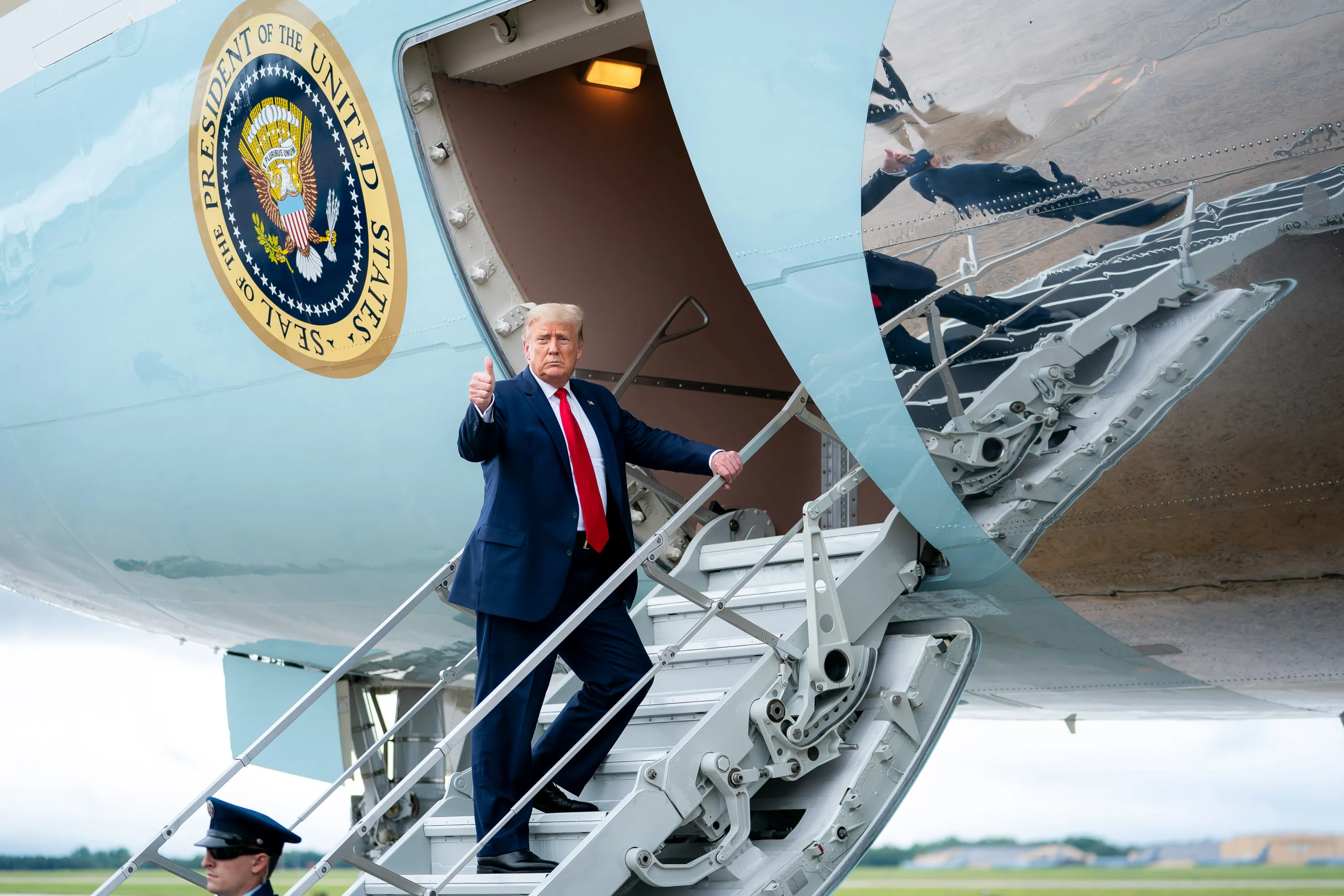
Here is how the operation worked, according to the Post and later confirmed by Reuters, ABC News, the BBC, and The Guardian. Trump boarded the famous Air Force One jumbo jet on 8 July, but that plane was never meant to carry him home. It was a decoy — a trick to make anyone watching think the president was still on board. Meanwhile, Trump was moved using an airport catering truck, the kind of vehicle normally used to load food onto planes, not to carry passengers. He was transferred to a third, unmarked military aircraft that then flew him out of Turkey (Washington Post; Reuters; ABC News).
The Guardian, citing the same reporting, said Trump hid inside a catering container during the transfer (The Guardian). ABC News called the plan elaborate, involving both the catering truck and a separate military aircraft (ABC News). The Post's follow-up reporting on 11 August confirmed that catering trucks were parked at Air Force One's position during the operation (Washington Post).
The journalists traveling with the president, along with some staff, had no idea what was happening. Trump spoke to reporters by phone during the flight back to the United States but never mentioned that he was on a different plane (BBC). Later, he was seen getting off Air Force One during a stop in the UK before switching to his newer, Qatari-gifted jet for the final stretch to the US (BBC).
The BBC's diplomatic correspondent Paul Adams explained the reported plane swap on air, noting how unusual it is to use a catering vehicle to move a president (BBC).
The Washington Post reported that the secret operation was specifically prompted by an Iranian assassination threat and was carried out covertly to protect the president (Washington Post). Earlier, on 22 July, The New York Times had reported that Iranian leaders were pushing back against Trump's threats to bomb Iranian bridges and power plants if Iran targeted any more ships. That back-and-forth helps explain the tense atmosphere around the NATO summit return (New York Times).
The broader context here is a US-Iran confrontation that has gone beyond harsh words into actual threats against the president's life. Air Force One is one of the most recognizable planes in the world. Its movements are normally a visible display of American power. The decision to use it as a decoy means the Secret Service and intelligence agencies believed the Iranian threat was serious enough to throw out the normal playbook for presidential travel. The catering-truck method sounds strange, but it follows a logic used in dangerous situations: when movements become predictable, they become targets. Think of a magician who keeps you watching one hand while the other does the real work.
That Trump kept talking to journalists during the flight without revealing the switch also matters. It suggests the plan was not just about keeping the president safe physically but also about controlling what people knew in real time, even the reporters traveling alongside him. The fact that some of his own staff were left in the dark shows the operation was shared on a strict need-to-know basis among the top levels of the Secret Service and military planners.
The use of the Qatari-gifted jet for the final leg to the US raises its own questions. That plane has been politically controversial inside the US, and using it for presidential travel brings up concerns about security certification and protocol. The Post's 11 August follow-up, which it called a "White House ruse," suggests more details about the operation's planning are still likely to come out.
The episode also points to how central the Iranian threat has become to US security decisions. The Times's 22 July report on Trump's threats against Iranian infrastructure and the now-revealed 8 July plane swap happened within a short, intense window of escalation. Whether this was a one-time response to a specific threat or part of a lasting change to how the president travels is still an open question. What is clear is that the confrontation with Iran has reached a point where the most protected person on earth was moved by catering truck to get away from it.