A Robot Company's Stock Sale Drew a Wild Crowd — Here's What's Going On
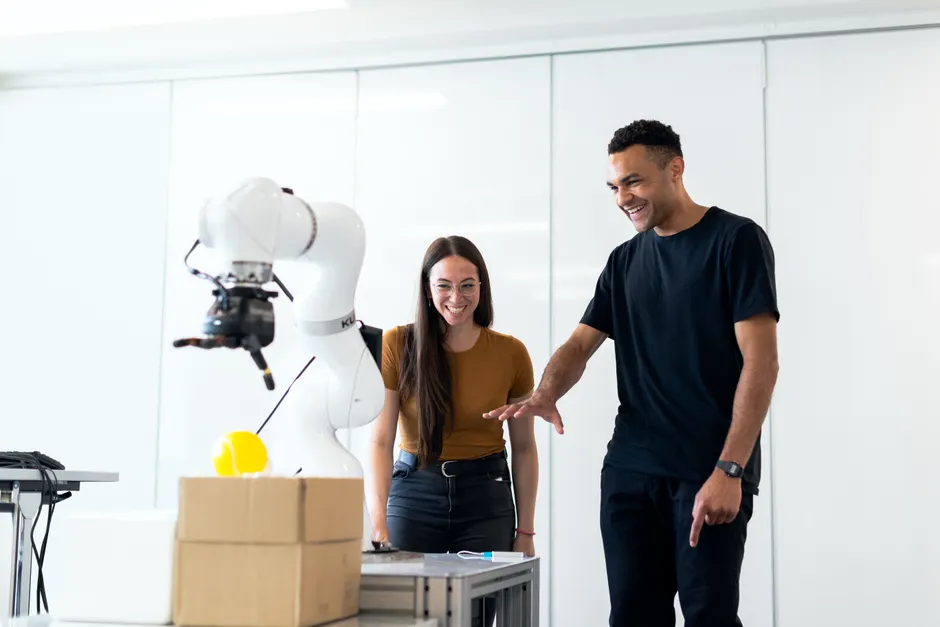
Unitree Robotics, a Chinese company that makes humanoid robots, just sold its shares to the public for the first time. Individual investors wanted in so badly that they placed orders for 5,526 times more shares than were available to them, submitting about 9.8 million orders totaling roughly 8.1 trillion yuan in hoped-for purchases, according to Bloomberg. The company priced its shares at 150.8 yuan ($22.34) each, giving it a total value of around 61 billion yuan, Reuters reported on August 6.
The sale aims to raise about 6.1 billion yuan ($904 million), per Reuters and Bloomberg. Bloomberg called it China's first mainland robotic IPO. The New York Times noted the listing is expected to test whether investors are genuinely interested in humanoid robots.
Here is the catch with those eye-popping demand numbers. When a company sells shares to the public in China, individual investors place orders saying how many shares they want. But when far more people want shares than are available, everyone gets a smaller slice of what they asked for. So the 8.1 trillion yuan figure is not money that will actually be spent. It is what people said they would pay if they got all the shares they wanted. Most of that money will never change hands.
The process moved fast. The Shanghai Stock Exchange accepted Unitree's application on March 20, 2026. A review committee looked at it on June 1. It was sent for final registration the next day, and that registration became effective on July 2. The whole process from start to finish took about 104 days, with the exchange noting that initial approval came in 73 days, per Caixin Global. CITIC Securities, a major Chinese investment bank, handled the deal.
Unitree announced the IPO launch and listing on July 31, 2026, per the Shanghai Stock Exchange. The official document for the sale includes standard warnings that companies on this market, called the STAR Market, carry "high R&D investment, high operational risk, unstable performance, and high delisting risk." It also disclosed inventory aging (how long products sit unsold) as of the end of 2022, but did not provide that information for later periods. That is a gap investors would need to think about alongside the company's recent growth.
The valuation climbed over time. Back in September 2025, CNBC reported that Unitree's IPO might value the company at up to 50 billion yuan ($7 billion). The final price came in higher at 61 billion yuan. That could mean the company's business improved, that investors grew more excited about humanoid robots, or that the pricing system on the STAR Market gave the company room to aim higher.
The broader context here is that extreme oversubscription is actually normal for Chinese IPOs, especially in popular sectors where few shares are made available. Think of it like a concert where only 100 tickets go on sale but 50,000 people line up. The huge waitlist does not mean 50,000 people get in. But all that pent-up demand, funneled into a small number of shares, can cause the stock price to swing sharply when trading begins.
The real question for investors is whether Unitree can deliver on the high expectations built into its 61 billion yuan price tag. No humanoid robot company anywhere in the world has yet turned this technology into a large, profitable business. The company's own listing documents warn of unstable performance and elevated risk of being delisted. Anyone buying shares at this valuation is betting on a future that no one in this industry has achieved so far.