A Chinese Chip Company Just Had a Huge First Day on the Stock Market. Here's What It Means.
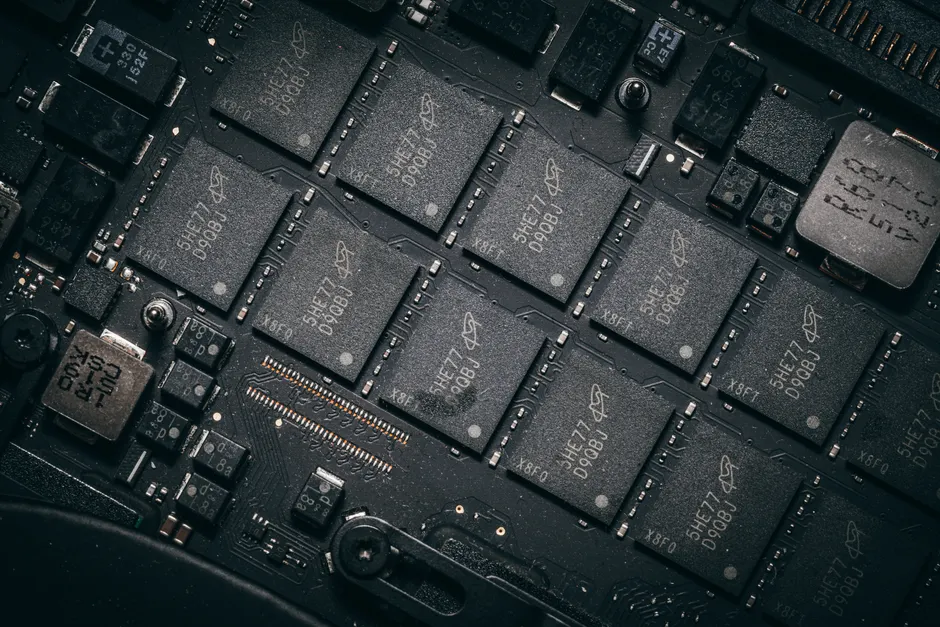
CXMT Corp shares closed at 49 yuan on their first day of trading on the Shanghai Stock Exchange on July 27, 2026, a 466% jump from the IPO price, after Asia's largest public offering of the year raised $8.6 billion. Reuters
The stock touched an intraday high of 55.03 yuan before settling at the 49-yuan close. Reuters
The offering, formally by ChangXin Technology Group Co., Ltd., was priced to raise approximately 57.9 billion yuan, or about $8.55 billion, before any over-allotment option. Reuters The final $8.6 billion figure was confirmed in subsequent reporting. Reuters
Retail demand dwarfed the offering size. The retail tranche was more than 200 times oversubscribed. That means everyday investors tried to order over 200 times more shares than were available to them, a sign of huge domestic appetite for semiconductor stocks. Reuters CXMT set July 27 as its listing date earlier in July. Reuters
CXMT, founded in 2016 and headquartered in Hefei, Anhui, is China's domestic DRAM manufacturer. DRAM chips are the memory components inside computers, phones, and data centers that handle short-term data access. The company makes several types, including DDR5, LPDDR5X, DDR4, and LPDDR4X chips and modules. cxmt.com
A 466% first-day pop is extreme even by the standards of freshly listed Chinese semiconductor names. For institutional investors who bought in at the IPO price, the session delivered an immediate multi-bagger on paper. For anyone buying shares during the trading day at or near the intraday high of 55.03 yuan, the stock closed roughly 11% below that peak, a reminder that first-day momentum cuts both directions.
The 200x retail oversubscription tells a more important story. It means the vast majority of would-be retail buyers were shut out of the IPO and, since institutional holders were restricted from selling by lock-up rules, that leftover demand flowed directly into the secondary market. That demand mechanically bids up a small number of available shares on day one. Whether that enthusiasm lasts depends on things the first-day price can't show: DRAM pricing cycles, CXMT's competitive position against Samsung, SK Hynix, and Micron, and how far its technology can go toward the cutting edge.
The IPO's $8.6 billion scale matters for the company's balance sheet. That capital funds research and factory expansion at a time when China's push for semiconductor self-sufficiency remains a stated national priority. CXMT's current products place it within the mainstream DRAM market but not yet at its cutting edge. The gap between where CXMT is today and where Samsung and SK Hynix are shipping is measured in process nodes, which are the manufacturing generations of chips. Closing that gap costs a lot of money. The offering proceeds give CXMT the war chest to pursue it.
The broader context here is supply-side. The three incumbents, Samsung, SK Hynix, and Micron, have historically managed DRAM output with disciplined capacity decisions. A well-capitalized CXMT adding production over time shifts that supply balance, even if the size and timing are uncertain. How the incumbents respond, whether through pricing strategy, capacity acceleration, or technology differentiation, is a second-order question that the listing raises but does not answer.
For individual investors, the caution is straightforward. A 466% debut gain is a pricing event, not a fundamental one. The company's earnings power, competitive positioning, and the DRAM cycle itself will reassert their influence on the share price as lock-ups expire and more shares become available. First-day prices built on retail excitement rather than the company's actual value tend to fall back when the hype cools.