Honor's New Robot Phone Has a Camera That Physically Moves on Its Own

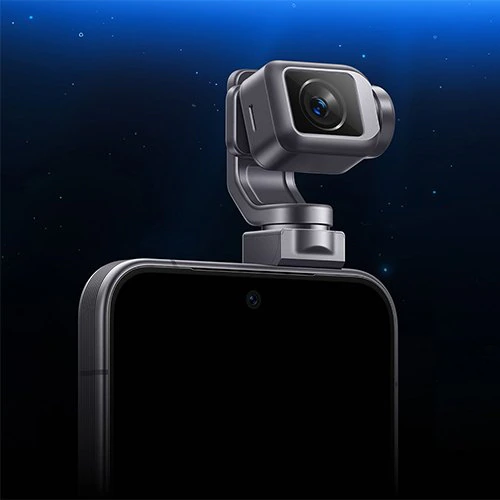
Honor has opened preorders for its Robot Phone in China, with shipments beginning August 18. The phone, first shown at MWC 2026 in March, has a camera that physically pops up and moves around using a small motorized arm made of titanium. The arm can rotate a full 360 degrees and move in four different ways Engadget.
That moving camera arm is the phone's main feature. Think of it like a tiny version of the handheld camera stabilizers that vloggers use, except it is built into the phone itself. It can lock its tilt, follow a first-person-view style, and spin. An AI system automatically tracks people in the frame, panning and tilting the camera to keep them in view. Honor says the tracking was trained on millions of simulated scenes Honor. Users can also raise the camera arm and take photos using hand gestures, without touching the phone. The gimbal also syncs sound with the camera's movement using what Honor calls "AI zone audio" Honor.
The back of the phone has two 200-megapixel cameras: a main lens and a telephoto (zoom) lens. Honor worked with Arri, a company that makes professional cinema cameras, on AI-assisted noise reduction and better detail in both very dark and very bright parts of an image. Footage can be previewed live and exported as RAW files, which are uncompressed image files that give editors full control when editing later Engadget.
The phone runs Honor's own software, called MagicOS, and includes a feature called "YOYO Robot Mode" that combines gesture recognition, environmental awareness, and the camera's physical movement. Honor is also letting outside developers build apps that can control the gimbal and use the phone's sensing abilities Engadget.
The rest of the phone's specs are top-tier. It runs on a Snapdragon Elite Gen 5 processor with a custom cooling system and a large 7,060mAh battery. Charging is rated at 120W Memeburn. The screen is a 6.3-inch OLED display with adaptive refresh rates and a peak brightness of 6,800 nits. Two versions are available: 12GB of RAM with 512GB of storage at roughly $1,480, and 16GB of RAM with 1TB of storage at about $2,075 Engadget.
Honor calls it the world's first robotic smartphone with a fully integrated mechanical gimbal Honor. The phone passed two final Chinese certifications ahead of its August 2026 launch Memeburn. It is only available in China at launch, with no announced date for other countries.
The broader context here is a smartphone market where most camera improvements in recent years have come from software processing applied to standard camera hardware. Honor's approach is different: instead of relying on software stabilization alone, the Robot Phone physically moves the camera itself. The Arri partnership adds professional filmmaking credibility, and the RAW file output suggests the phone is aimed at serious content creators, not just casual photographers.
The developer program is the element worth watching most closely. A moving camera arm combined with gesture recognition and environmental awareness is, in effect, a small robot that happens to make phone calls. If outside developers build genuinely useful apps for it, the Robot Phone could create a new way of interacting with phones. If they do not, the moving camera may end up as an expensive gimmick.
The prices put this firmly in premium territory, and the China-only launch limits how many people will encounter it. But the real engineering question is whether a phone with a moving mechanical camera part can hold up to daily use over the two to three years that most people keep their phones. Titanium helps with sturdiness, but the true test is whether the gimbal mechanism keeps working reliably after thousands of movements.
For now, Honor has built something genuinely different in a market where phones have looked increasingly similar. Whether enough buyers reward that difference will depend on how well it works, whether developers embrace it, and whether the moving parts survive everyday life.