What's Happening in the West Bank and Why the UN Says It's at a Breaking Point
On August 12, 2026, Israeli forces arrested 23 Palestinians across the West Bank and demolished the home of a man killed in a July confrontation with Israeli settlers. On that same day, the United Nations warned that the West Bank was at a "breaking point" (Al Jazeera).
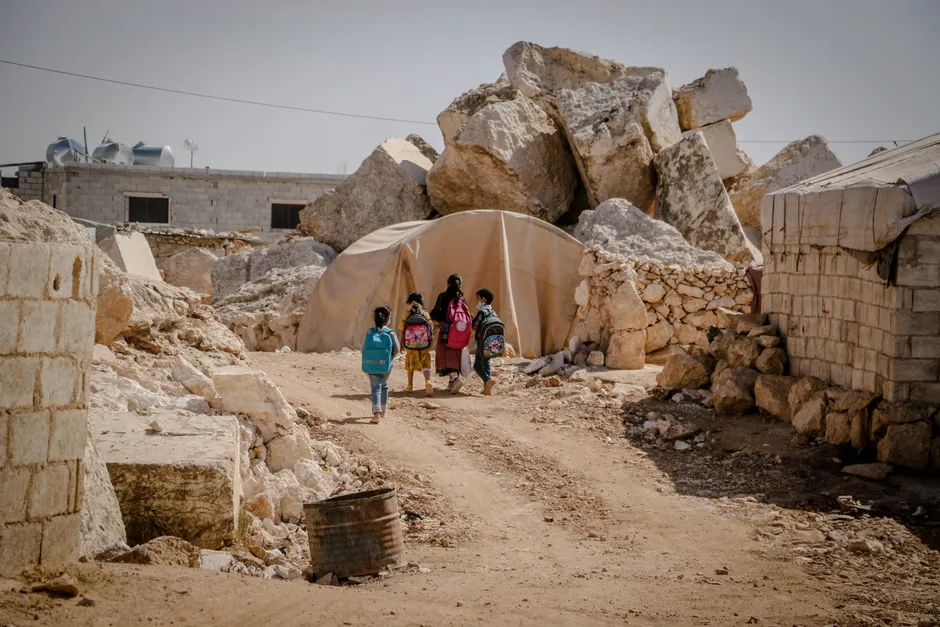
The West Bank is a Palestinian territory that Israel has occupied since 1967. Israeli settlers are Israeli citizens who live in communities built inside the West Bank, often on land Palestinians say belongs to them. Both Palestinians and Israelis have committed violence against each other in this territory for decades.
The demolition and arrests in August capped a weeks-long period of escalating tension. Two trends drove it: more intense Israeli military operations and a sharp rise in settler violence against Palestinians.
Also in August 2026, Israeli security forces reportedly withdrew from a site in a West Bank village where about a dozen Israeli settlers remained, leaving two Palestinian families trapped or under siege (BBC). The episode fits a wider pattern in which settlers enter Palestinian communities with limited or intermittent military interference.
The numbers tell a clear story. More than 260 Palestinians had been injured by Israeli settlers in attacks in 2026 as of late March. That is three times the previous rate, according to the UN Office for the Coordination of Humanitarian Affairs (OCHA). The New York Times reported in May 2026 that settler violence had become "commonplace" in the West Bank, describing it as part of a campaign of harassment, abuse, and forced displacement (New York Times).
By late July, the West Bank faced both escalating settler violence and a surge in Israeli army checkpoints (NPR). Israeli forces raided at least 20 West Bank towns and villages that month, demolishing homes and arresting dozens of Palestinians (Al Jazeera). During a lockdown of the northern West Bank, clashes killed four Palestinians and two Israelis. The Palestinian Health Ministry said Israeli soldiers shot and killed the four Palestinians (PBS NewsHour).
This escalation did not come out of nowhere. The New York Times reported in August 2025 that Israeli settler attacks in the West Bank had hit a record high (New York Times). A separate Times investigation published in May 2024 examined how extremist Jewish settlers gained political influence after decades in which Israeli authorities failed to curb violence against Palestinians (New York Times). Since the Gaza war began, armed settlers, often accompanied by the army, stepped up seizures of land long used by Palestinians, the Times reported in June 2024 (New York Times).
Violence in the West Bank has deep roots on both sides. The Israeli Army said Palestinians had injured 137 Israeli civilians in the West Bank in 2021, the Times reported in February 2022 (New York Times). That figure is now several years old, but it reflects the fact that both Israelis and Palestinians have suffered casualties in this conflict, even as the scale and frequency of settler attacks on Palestinians have since grown dramatically.
Three trends are happening at the same time, and that is what makes this moment different from earlier flare-ups. First, settler violence has reached levels without recent precedent. Second, Israeli military operations have expanded, including mass arrests, home demolitions, and village lockdowns. Third, the UN has formally warned that the situation is nearing collapse.
The broader context here is what experts call "impunity," which means that people who commit violence face little or no consequence. The 2024 Times investigation traced five decades of failure by Israeli authorities to hold settlers accountable for violence against Palestinians. That failure has both enabled and been enabled by the growing political power of settler movements within Israel's government. The result is a cycle: settler violence prompts Palestinian retaliation, which prompts military crackdowns, which in turn displace Palestinian communities and create openings that settlers can exploit. The UN has issued warnings, but those warnings have not, to date, led to diplomatic action that changes the situation on the ground.
The immediate question for observers is whether the "breaking point" language signals a threshold after which things get qualitatively worse: broader armed conflict, systematic displacement of entire communities, or a diplomatic crisis that forces outside powers to intervene. So far, the verified record offers no evidence of a mechanism that would reverse the trajectory. Settler violence has tripled. Military raids have expanded. The UN has spoken. None of these facts, individually or together, has altered the dynamics on the ground.