What Happened When Israeli Settlers Besieged Palestinian Families in Qusra
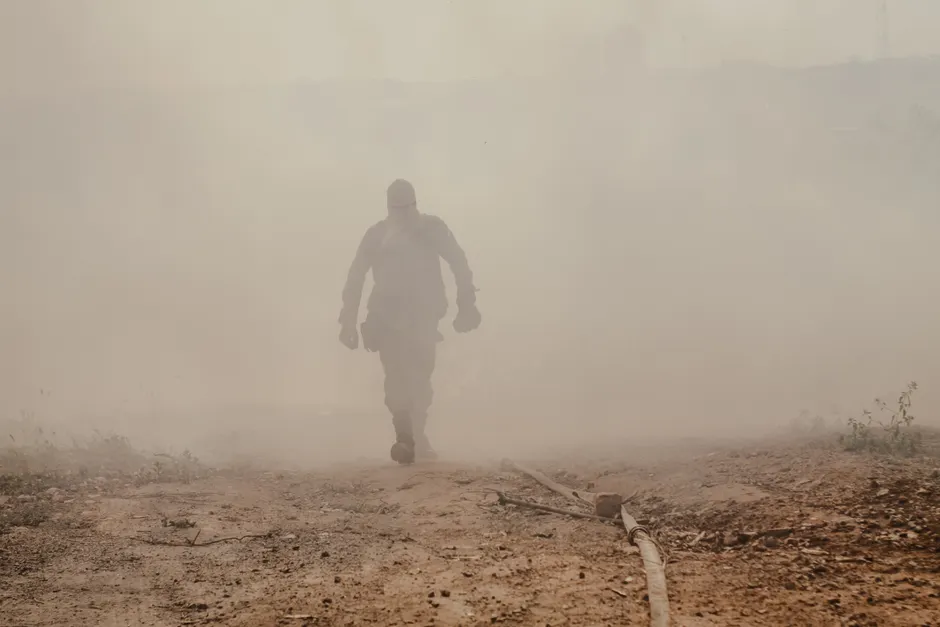
Israeli soldiers forced two Palestinian families out of their homes in the village of Qusra on 13 August 2026. The families had been trapped for days by Israeli settlers who cut off their water and electricity and blocked an ambulance from reaching a sick toddler (The Guardian).
To understand this story, it helps to know a few things. The West Bank is a piece of land that Israel took control of in 1967. Palestinians live there, but so do Israeli settlers — Israeli citizens who move into communities built on that land. Most of the world considers these settlements illegal under international law, though Israel disputes that. In Qusra, a group of settlers wanted to take over Palestinian homes, and they used force to try to do it.
The ordeal began on Sunday. Settlers, accompanied by soldiers, put up a tent that blocked the entrance to three homes on the village's edge. They cut water and electricity lines and stopped an ambulance from reaching a sick toddler. The two families stayed trapped inside for days as the settlers held their position (The Guardian).
Major General Avi Bluth, the top Israeli military commander in the West Bank, visited Qusra on Wednesday 12 August and met with the trapped families. He promised to remove the settlers. After his visit, troops took down the blocking tent but left the settlers, their bedding, and equipment in place. A later attempt to break up the settler group using riot control methods failed, and the soldiers pulled back (The Guardian). On 12 August, Israeli troops had clashed with the settlers while trying to disperse them from an outpost they set up in the area (Reuters). BBC reported that evening that Israeli security forces had withdrawn from the site, with about a dozen settlers remaining where the families had been trapped (BBC).
On the morning of 13 August, the Israeli military (known as the IDF) sent soldiers to Qusra, saying the deployment was to protect Palestinian residents and keep order after the previous day's confrontations (CBS News). Palestinian resident Qusai Ridi said soldiers arrived around 10 a.m. and asked the families to leave for a three-day military operation, moving them into a single house. The military also took over eight additional homes, telling village mayor Abdul Aziz Wadi the buildings were needed for the operation to remove settlers. Six of those homes were given back later that afternoon (The Guardian).
When families returned, they found significant damage. A Qur'an — the holy book of Islam — had pages torn out. Decorations were destroyed. Ridi said soldiers had damaged a security camera system and stolen equipment. The home of his neighbor, Yousef Hassan, was still under military control as of the afternoon of 13 August (The Guardian).
The IDF stated that any troops found to have been involved in besieging Palestinian homes in Qusra will face disciplinary action (Times of Israel). The New York Times noted that the siege showed how the Israeli army has struggled to stop settler violence and protect Palestinians (New York Times.
Qusra has seen violence before. In March 2026, a settler killed 28-year-old Amir Moatasem Odeh in the village, and another attacker stabbed his father. No one has been arrested for the killing or the assault (The Guardian).
The reaction from international and Israeli figures has been unusually direct. U.S. Ambassador to Israel Mike Huckabee called the Qusra siege a "horrific act of terror" carried out by Israeli terrorists. Former Israeli Prime Minister Ehud Olmert called it a "concerted and meticulous attempt at ethnic cleansing" — meaning the forced removal of a specific group of people from an area — and said these were "crimes against humanity" supported by the Israeli government (The Guardian).
The broader context here is that Israel's military appears unable, or at least consistently unable, to enforce its own orders against settlers in the West Bank, even when those orders come from the top commander on the ground. Think of it like a police force that announces it will clear squatters from your home, removes a chair blocking your door, but leaves the squatters inside — then comes back the next day and asks you to leave instead. That is what the sequence in Qusra looked like: a senior commander visits, promises to evacuate the settlers, and troops remove a tent but leave the settlers in place. Riot control measures fail. Forces withdraw. The next day, the military returns and displaces the Palestinian families rather than the settlers. The operation then produces damaged property, alleged theft, and a torn religious text.
Whether the IDF's stated intent to protect Palestinians was undermined by operational failure or by a lack of political will to confront settlers is a question the facts alone cannot answer. But the pattern of events, from the March killing that went unprosecuted to this week's siege, is one of impunity — meaning people face no real consequences for their actions. Neither disciplinary threats nor high-level visits have changed that.
Huckabee's and Olmert's statements are striking for different reasons. Huckabee represents a U.S. administration that has generally been sympathetic to the Israeli government, so his use of the word "terror" to describe settler actions is a notable shift from that side. Olmert, a former prime minister, directly accuses the Israeli government of supporting crimes against humanity. These are not outside critics. They are voices from within the political system that has historically protected settlement expansion, now using the language of atrocity.