Why Oil Prices Just Jumped: The US-Iran Standoff Explained

Oil prices rose above $90 a barrel on 18 August 2026, the first time that has happened since late July. The reason: a two-month effort to negotiate peace between the United States (alongside Israel) and Iran ended with no deal, and both sides are digging in. Brent crude, the main global oil price, was trading at $91.63 on Tuesday morning. American oil prices also went up. Reuters reported Brent at $91.22 by 0827 GMT on 18 August (Reuters). The negotiation window expired on Monday 17 August with no end to the conflict in sight (The Guardian).
The fighting and the failed diplomacy have moved together. Back on 1 March 2026, the White House announced Operation Epic Fury, calling it a campaign to "crush" the Iranian government and end its nuclear threat (White House). That operation has continued through repeated rounds of military strikes and several brief ceasefires (temporary stoppages of fighting). On 4 August, Trump offered Iran a "last chance" to make a deal, pausing US strikes while Oman, a small country near Iran that has acted as a mediator, tried to arrange safe passage for ships through the Strait of Hormuz (Fox News). That pause has now ended without a settlement.
Trump spoke by phone with Fox News chief foreign correspondent Trey Yingst on Monday and demanded that Tehran "put up the white flag of surrender." He said he was "not in a hurry" to reach a deal and would not set a new deadline. Trump also confirmed that the US has a backchannel — a secret, informal line of communication — with Iran's Islamic Revolutionary Guard Corps, an elite military force within Iran (Fox News). He threatened to bomb Oman if it "gets in the way" of his effort to end the war. This was the second time he made such a threat against the country that has been helping mediate.
Iran responded with equally tough language. An Iranian official told Reuters that Iran would shift to a "fully offensive" military stance if talks failed. Iranian military spokesperson Ebrahim Zolfaghari warned that ships trying to pass through the Strait of Hormuz would "find several beautiful holes in their hulls," as reported by Fox News.
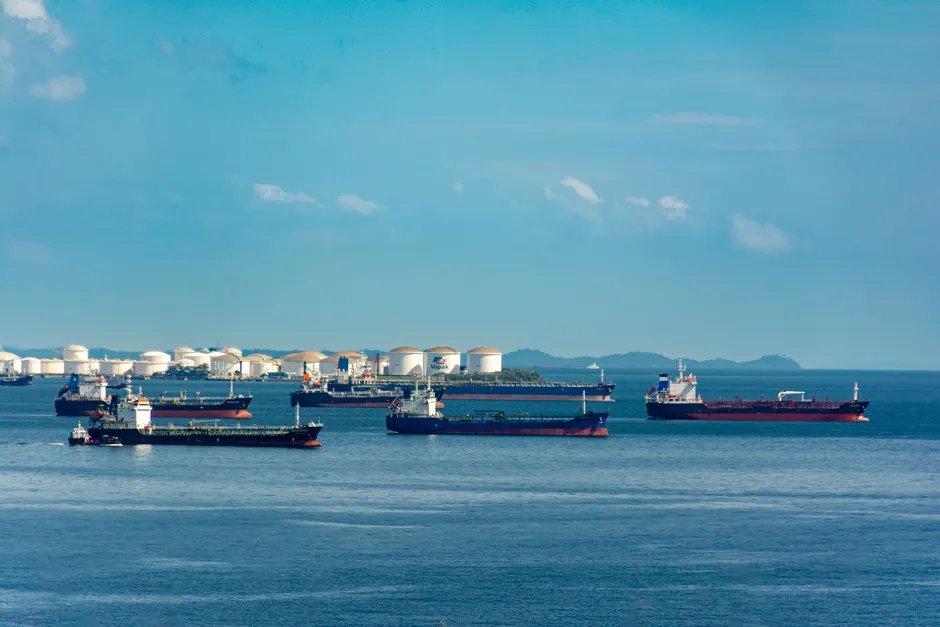
The Strait of Hormuz is a narrow strip of water between Iran and Oman. About a quarter of all the oil that travels by sea normally goes through it, making it one of the most important shipping routes in the world. A cargo ship was attacked while passing through the strait early on Tuesday, according to the UK Maritime Trade Operations agency. Ship tracking company Kpler recorded only six cargo ships passing through on Monday. On Saturday and Sunday combined, there were only five.
Deutsche Bank analysts wrote that rising oil prices reflected investors betting on "a more extended closure" of the strait. Dan Alamariu, chief geopolitical strategist at Alpine Macro, warned of a potential "double whammy" for energy prices if Middle East fighting continued alongside Russia's ongoing war in Ukraine. The price trend has followed the fighting: Brent settled at $89.22 on 20 July, having hit $91.42 during the day, before falling below $90 and now returning to the low $90s (Reuters).
The history of diplomacy before this point is full of false starts. A State Department spokesperson expressed "strong hope" for another ceasefire on 22 July 2025. By 12 August 2025, a State Department press briefing noted that Iran had said it did not support the peace plan and that some Iranian officials said they would try to stop it. The G7 Foreign Ministers' meeting statement had earlier demanded that Iran cease and reverse its nuclear activities and immediately stop supporting Russia's war against Ukraine. The Iran Sanctions Act, a law that allows the US to impose economic penalties on Iran, was extended through 31 December 2026, keeping the financial pressure on Tehran in place.
The wider concern is that the failed negotiation window, Trump's refusal to set a new deadline, and Iran's declared shift to a "fully offensive" posture add up to no clear path to peace in the near term. Oman has survived two direct threats from the US president, but the safe shipping corridor it was trying to arrange never came together. With Hormuz traffic down to a trickle and Iran warning ships to stay away, the market is now betting that oil supply will be squeezed for a long time, not just briefly. Whether the secret backchannel Trump confirmed leads anywhere will depend on whether either side decides that continuing to fight costs more than making a deal. So far, neither side has signaled that they have reached that point.