A Teen Died in an Abandoned New Orleans Skyscraper. Here's Why the Building Was Still Standing.
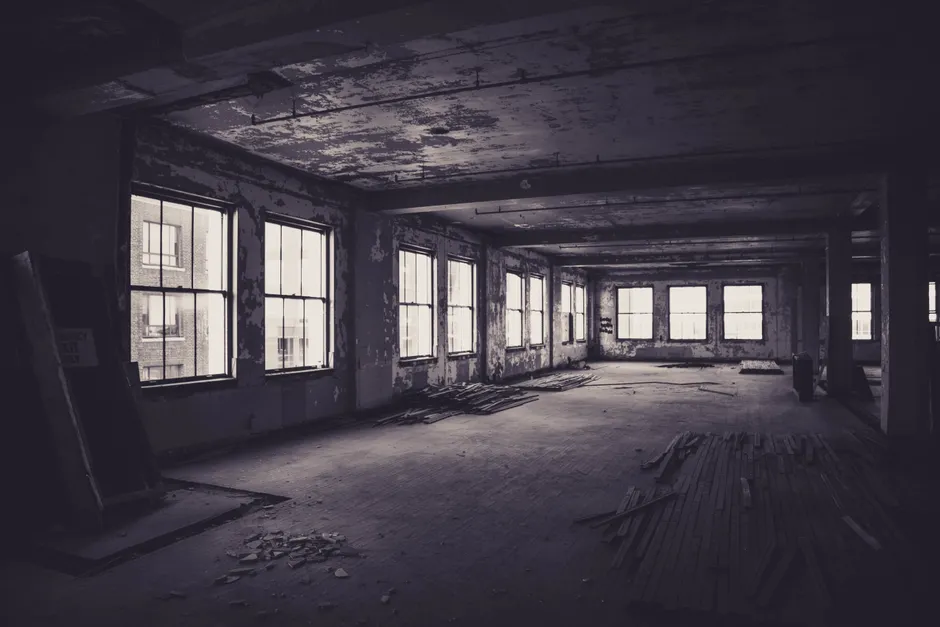
A 17-year-old high school student from Belle Chasse, Louisiana, died after falling inside the abandoned Plaza Tower in downtown New Orleans. His death has drawn new attention to the city's struggle with empty, dangerous buildings and the risky hobby of sneaking into them.
Jacque St Ann and a group of friends broke into the fenced-off, 45-story Plaza Tower in New Orleans' central business district on the night of 15 August 2026. According to police, St Ann climbed to a higher floor at around midnight and fell to his death as the group tried to walk down an interior staircase. Police declined to say which floor he fell from, out of respect for his family. Local paramedics pronounced him dead at the scene, and the coroner's office listed the cause of death as "blunt force injuries due to fall from height" (The Guardian).
Another teenager in the group was hospitalized with a deep cut to an arm and wrist. Police did not say how many teens were present and indicated that some may have left before St Ann fell (The Guardian).
St Ann was identified as a member of the Belle Chasse High School Class of 2027 (WWL-TV).
The 58-year-old Plaza Tower has not been in use since before Hurricane Katrina struck New Orleans in 2005. Its long decline has created dangers beyond its interior: in 2021, debris falling from the building hit a passing cyclist, leading the city to install protective netting at the site. City officials have identified Alexandria Land & Development LLC, the estate of the late New Orleans land magnate Joe Jaeger, as the building's owner and the entity legally responsible for securing it. Jaeger bought the tower in 2014, and the city fined him over years of inaction. The New Orleans City Council has passed a resolution supporting the tower's redevelopment (The Guardian; New Orleans City Council).
In the aftermath of St Ann's death, city and law enforcement officials issued warnings. New Orleans police cautioned the public against "urban exploring," the practice of entering off-limits or abandoned buildings. Deputy Police Superintendent Nicholas Gernon stated that the Plaza Tower was not a safe building to explore at night. Deputy Mayor Michael Harrison, a former city police superintendent, offered condolences and warned against entering boarded-up, abandoned buildings. Police Superintendent Anne Kirkpatrick acknowledged that St Ann's friends and family were "traumatized" and raised the possibility of trespassing charges, though she said those would be considered after a grieving period (The Guardian).
The Plaza Tower's situation is not unique to New Orleans. Cities such as Detroit, St. Louis, and Baltimore have spent years dealing with abandoned high-rises that pose structural dangers, attract trespassers, and cost money to police. The pattern typically involves developers who buy properties but stall on fixing them up due to financing shortfalls, environmental cleanup requirements, or legal complications tied to estate transitions. The Plaza Tower fits this pattern closely: nearly two decades of vacancy, a documented history of falling debris causing injury, fines levied against the owner, and a city council resolution urging redevelopment, yet no visible progress toward demolition or repair.
The enforcement gap here is built into the system. Cities have tools like placing legal claims on a property to recover unpaid fines, asking a court to appoint a third party to take control of a neglected building, or hiring contractors to demolish it. But these processes are typically slow, contested at each step, and limited by available resources. The transfer of ownership to an estate, as happened with the Jaeger properties, can further complicate legal proceedings by spreading responsibility across heirs and corporate entities. When a building of this size and visibility remains unsecured for two decades despite fines and public outcry, the question shifts from whether the owner is negligent to whether the enforcement system itself is adequate.
The potential for trespassing charges against the surviving teenagers introduces another layer. Kirkpatrick's approach of deferring charges during a mourning period reflects a tension between deterrence and compassion that local prosecutors will ultimately have to navigate. But the legal exposure of the property owner, Alexandria Land & Development LLC, is the more lasting question. A documented history of falling debris, municipal fines, and now a fatality could support claims of negligent maintenance under Louisiana's premises liability law, which holds property owners responsible for injuries that happen on their property. This is especially relevant because the protective netting installed after the 2021 incident addressed exterior hazards but did not make the building inaccessible.
The broader context here is the intersection of urban decay, property rights, and public safety in post-Katrina New Orleans. The city has made progress in redeveloping its downtown corridor, but structures like the Plaza Tower remain as stubborn exceptions. For urban planners and city officials, the case shows the limits of fines and resolutions when an owner lacks either the money or the incentive to act. For law enforcement, it reveals the difficulty of securing large, easy-to-enter buildings against determined trespassers. And for a community that has now lost a teenager to a building that has been visibly dangerous for years, it raises the question of how many warning signs must pile up before a city moves from fining an owner to taking the property away.


