Framework's Repairable Laptop Just Got Cheaper — and It Comes With Linux Built In

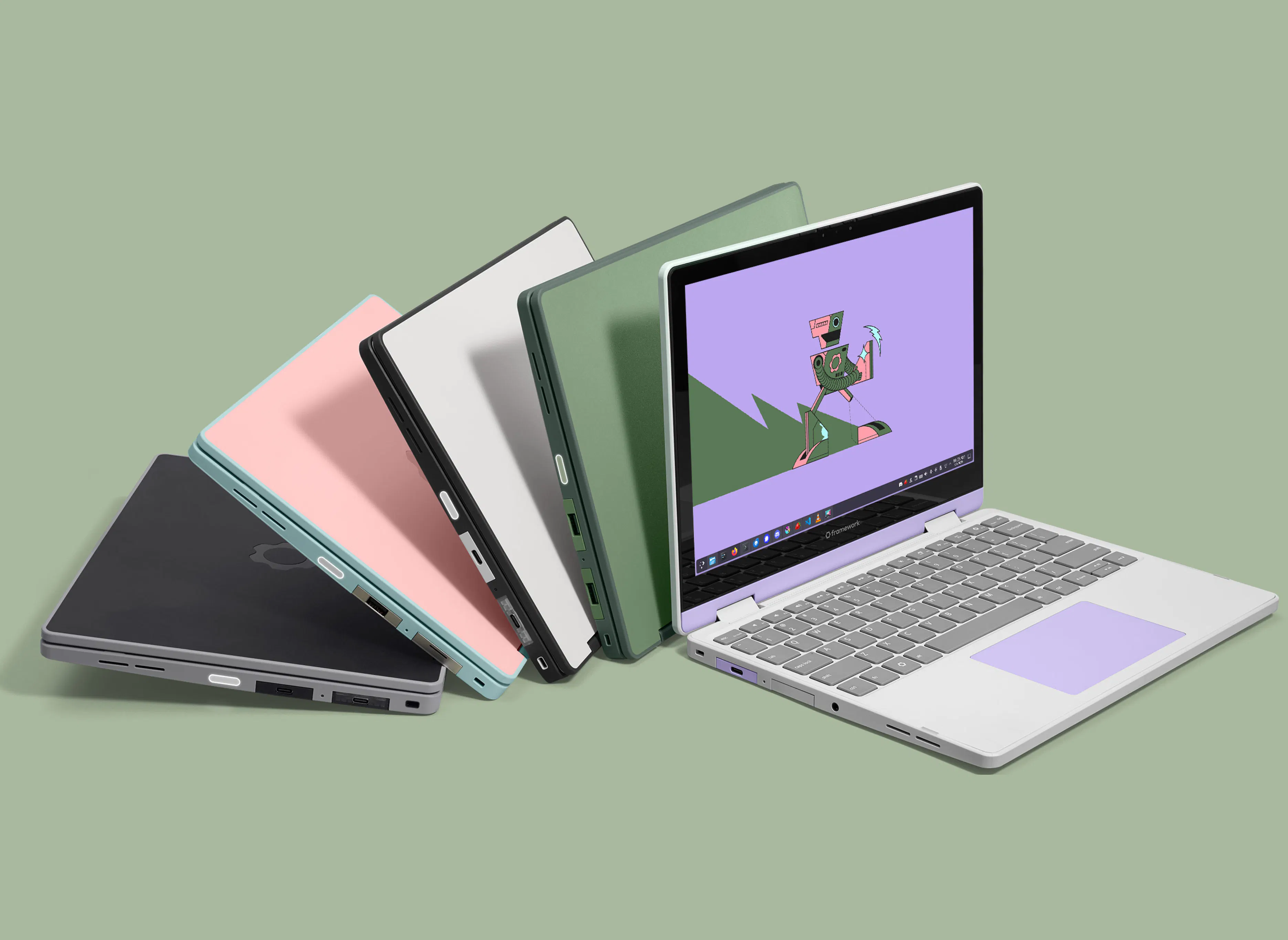
Framework has updated its 12.2-inch convertible laptop with new Intel processors, and the cheapest ready-to-buy version now starts at $699 — $100 less than the previous version at launch. Preorders are open, with the first wave of deliveries expected to ship in October. (The Verge)
The $699 model ships in green only and includes an Intel Core 3 304 processor, 8GB of memory (RAM), and 512GB of storage. It comes preloaded with Linux — specifically Fedora 44 KDE Plasma, a free operating system that is an alternative to Windows. Choosing Windows 11 Home instead of Linux adds $100 to the price.
The decision to lead with Linux is not random. Framework reports that nearly 80 percent of Laptop 12 owners are already running Linux, making it a natural default rather than a niche experiment. Framework markets the 12.2-inch convertible as having first-in-class Linux support (frame.work).
The new Intel Core Series 3 processors are designed for smaller, lower-power, budget-friendly laptops. Framework says the new chips should improve battery life, temperatures, and fan noise over the previous generation. The specific chip in the base model, the Core 3 304, has only a single performance core — meaning this is an entry-level device, not a powerhouse for heavy workloads.
The update does bring real improvements to how the laptop connects to other devices. The new chip supports faster memory (DDR5), the latest Wi-Fi standard (Wi-Fi 7 R2), and Thunderbolt 4 on the rear two expansion card slots. Thunderbolt 4 is a high-speed connection that allows you to plug in two 4K monitors or an external graphics card, which is unusual for a laptop this small. However, the front two USB slots are now slower than before — a downgrade from the previous configuration. All four slots still support charging.
Higher-tier configurations (Core 5 and Core 7) now include a fingerprint reader built into the power button and a backlit keyboard as standard. The backlit keyboard remains an optional extra on the DIY Edition, which starts at $549 and lets you assemble the laptop yourself with your own parts. The DIY Edition also offers more color choices.
The original Framework Laptop 12 with the previous-generation Intel chips is still available, priced from $699 for the pre-built version or $499 for the DIY Edition. Framework has also set an August 31 deadline for applications related to the new pre-built configurations (Framework Community).
Separately, Framework's Laptop 13 Pro uses Intel Core Ultra Series 3 processors and LPCAMM2 memory, marketed as the company's most repairable pro laptop with a CNC aluminum chassis (frame.work).
The $699 price for a pre-built, Linux-loaded, repairable laptop is the detail worth pausing on. The previous model launched at $799 in the same configuration, and the $100 reduction comes alongside new technology inside: faster memory, better Wi-Fi, and Thunderbolt 4. The trade-off is that the base chip has only a single performance core, and the front USB slots are slower than before. Framework is betting that its target audience — mostly Linux users who like to tinker — will care more about the connectivity and memory upgrades than about raw processing power.
The more interesting signal is the Linux pre-build itself. Most laptop makers treat Linux as an afterthought, if they consider it at all. Framework is making Linux the default operating system on its cheapest ready-to-buy model, with Windows as the paid upgrade. That flips the usual order. The 80-percent Linux adoption rate among existing owners largely answers whether this reflects real demand or a cost-saving move: Framework is meeting its customers where they already are.
For buyers who want more performance, the Core 5 and Core 7 tiers include the fingerprint reader and backlit keyboard as standard. The DIY Edition at $549 remains the cheapest option for those willing to bring their own parts and operating system. And the continued availability of the older model at the same $699 price gives buyers a clear choice: older chip with potentially more cores, or newer platform with faster memory and Thunderbolt 4 at the same cost.