Framework Adds New Computer Processors and Upgradeable Accessories to Its Repairable Laptops
Framework Adds New Computer Processors and Upgradeable Accessories to Its Repairable Laptops
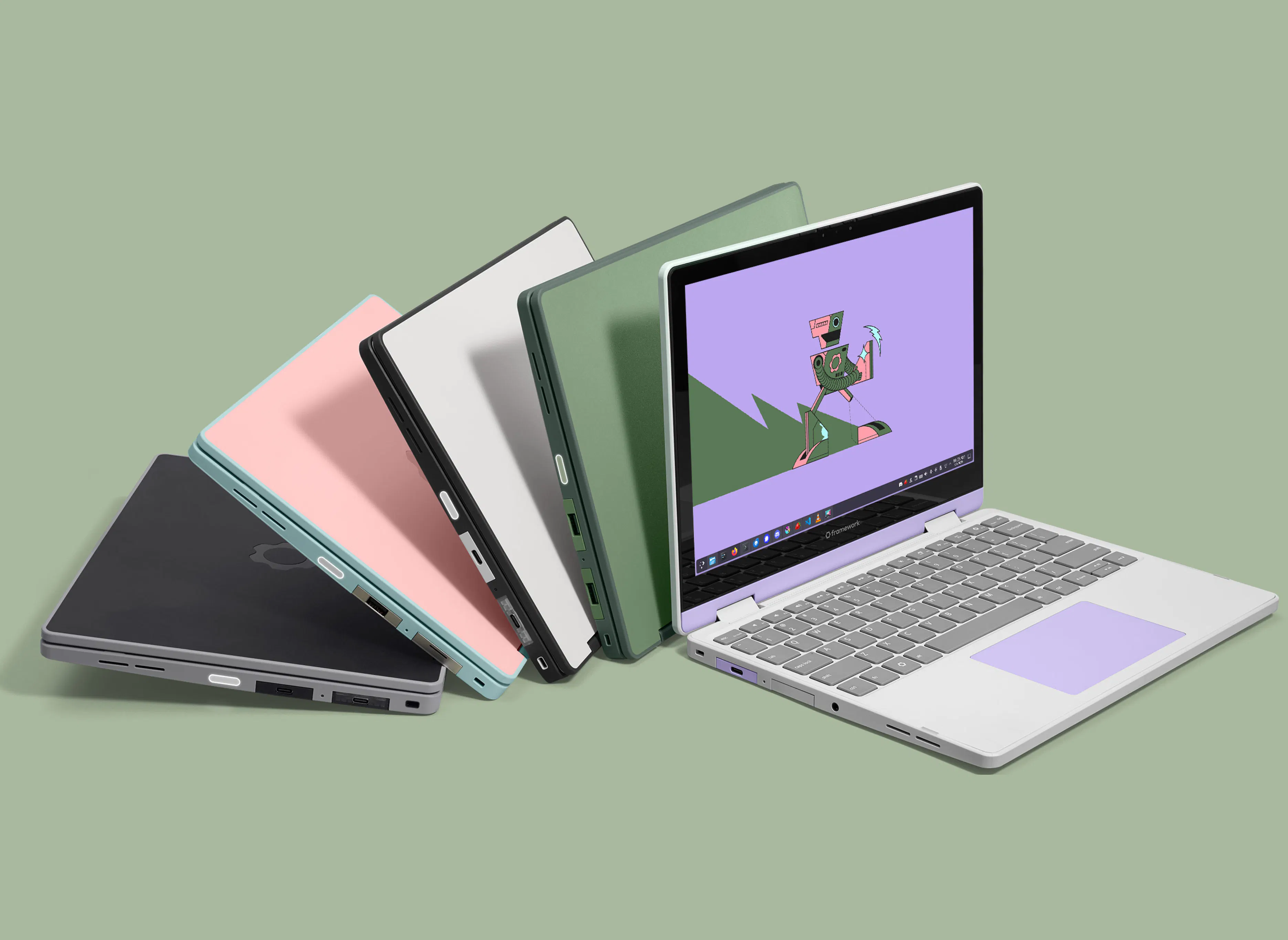
Framework, a company known for building laptops you can actually fix and upgrade yourself, just announced several new options for its laptops: fresh processor choices, a completely different type of brain for its computer, and new accessories you can swap in and out. These updates expand what Framework's laptops can do while staying true to the company's core idea: computers that last because you can repair them.
New High-End Model and Processor Choices
Framework released a new premium version of its 13-inch laptop, called the Framework Laptop 13 Pro. Like the other Framework models, it has a thin aluminum body and weighs just under 3 pounds — designed to be both durable and portable.
The company now offers its 13-inch laptop with several different types of processors, which are basically the brain of the computer. You can choose Intel's Core Ultra chips (which became available in August), AMD Ryzen 7000-series processors (announced earlier this year), or the newer AMD Ryzen AI 300 chips (available for pre-order now). Framework also updated its larger 16-inch model, though details remain limited. If you want sharper visuals, you can add an extra-clear screen that refreshes 120 times per second — twice as fast as most standard screens.
A Different Kind of Laptop Brain: ARM Processors
Here's something unusual: a company called MetaComputing created a completely different type of processor for Framework laptops — one based on ARM architecture. This matters because nearly all computers use either Intel or AMD processors, which work like automatic transmission cars. ARM-based processors work differently, like manual transmission — they use a different fundamental approach that tends to be more power-efficient.
This new option is a 12-core ARM processor (more cores generally means the computer can handle more tasks at once) that runs Linux, a free operating system. It comes pre-installed with 16GB of memory and 1 terabyte of storage — all for $549.
This is a significant moment for Framework's approach. It proves that the company's design truly is flexible enough to accept different types of processor brains, not just the usual Intel and AMD options. It opens the door for other companies to build their own versions of Framework components in the future.
New Accessories in the Works
Framework showed off two new accessories that will plug directly into its laptops. The first is an OCuLink Dev Kit — a connector designed to let you attach an external graphics card (a specialized computer chip for gaming or video editing). OCuLink is a new type of connector that can move information much faster than traditional USB ports.
The second is a Wireless Touchpad Keyboard — a keyboard with a built-in trackpad that doesn't need to be plugged in. This opens up new ways to use the laptop, like treating it more like a tablet with a separate keyboard, or as a desktop computer with wireless input.
Both are still in early preview stage, and Framework hasn't said when they'll actually ship.
A Warning About the Future of Computing
During the event, Framework's CEO Nirav Patel made a striking comment. He said that "personal computing as we know it is dead" — meaning the way we've owned and used personal computers could be changing.
His concern is that artificial intelligence — the technology behind ChatGPT and similar tools — is consuming enormous amounts of computer chips and memory. Companies building AI systems are buying up processors, storage, and memory at record rates. Patel worries this could create shortages of the parts that go into ordinary computers, making them scarce and expensive.
He suggested that if shortages get bad enough, instead of buying your own laptop, you might end up renting computing power from a company the way you rent cloud storage today.
Analysis: Patel's warning is worth taking seriously. His company depends entirely on having access to computer chips and on people wanting to own their own devices. When a CEO in that position sounds concerned about the future, it reflects real tensions in the industry right now between massive AI spending and the supplies available to everyone else.
Why Framework's Approach Matters More Than Ever
Patel also highlighted what Framework has achieved over the past six years: laptops that are "high-performance, thin, light computers that last longer through repairability, upgradability, and customization."
This directly challenges the trend in the laptop industry toward sealed devices — computers glued shut where you can't swap out the battery, add more memory, or upgrade the processor yourself. With Framework laptops, you can upgrade the processor, memory, and storage without buying an entirely new computer. Now, with the ARM option, you could theoretically even switch between fundamentally different types of processors while keeping the same chassis.
If Patel's warnings come true and computer chips become scarce, the ability to upgrade and repair your own laptop becomes even more valuable.
Plans for the Future
Framework announced it's holding another major event in April 2026 — giving itself two years to develop new products. That much advance planning suggests the company is working on significant new ideas, possibly including new laptop sizes or major design changes.
The company is also encouraging other manufacturers to create their own components for Framework laptops. The ARM motherboard from MetaComputing is proof this works. Smaller companies and specialist designers could eventually build their own Framework components — keyboards, processors, storage modules — without Framework building everything themselves.
Worth flagging: The new ARM laptop at $549 is competitively priced against other ARM-based devices, but it also fits into Framework's larger philosophy. You're not just buying a cheap computer — you're buying something you can upgrade and swap components in and out of, which protects your investment over time.
How the Technical Pieces Fit Together
Framework's laptops use the same chassis (the physical frame and shell) across different processor options. This means all the add-ons — the expansion modules, the display, the accessories — work with any Framework processor choice, whether it's Intel, AMD, or now ARM.
The new OCuLink connector is significant because it's much faster than the USB ports most laptops use. This matters if you want to attach a graphics card for gaming or video rendering — you need the speed to avoid bottlenecks where the data can't move fast enough.
The wireless keyboard preview suggests Framework is experimenting with how you interact with the laptop, potentially enabling new usage modes. Instead of a traditional laptop, you might use it as a separate screen and processor while typing on a wireless keyboard across the room.
Framework's trajectory demonstrates that modular design — building products from swappable pieces rather than sealed wholes — works in an industry moving the opposite direction. As computers potentially become harder to get and more valuable to hold onto, the ability to repair and upgrade them looks less like a niche preference and more like practical necessity.