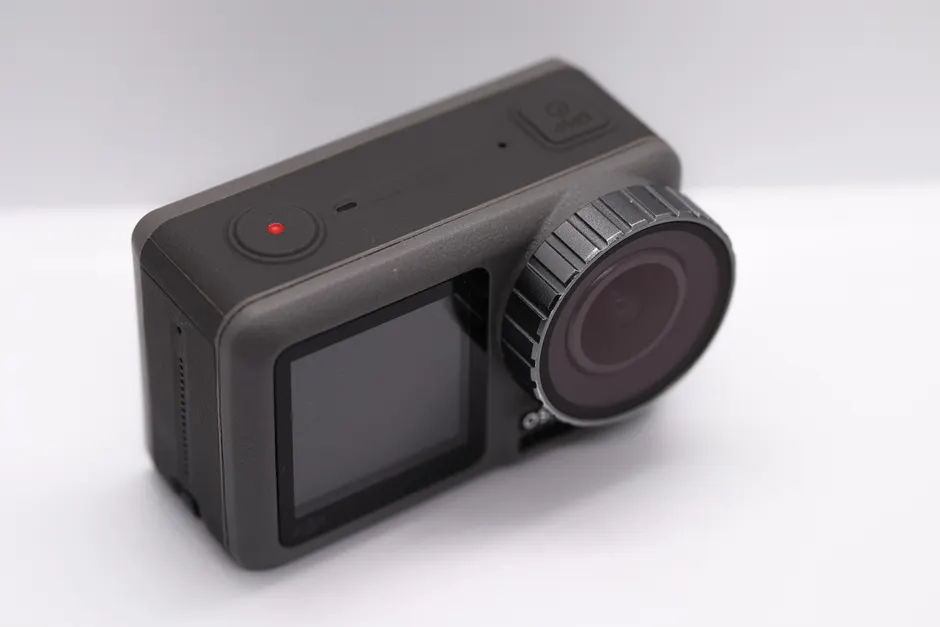
There's Now a Free Alternative to DJI's Camera App

Developer and journalist Konrad Iturbe has released Osmosis, a free, open-source app that replaces DJI's closed-source Mimo app for DJI Osmo cameras. The app is available on GitHub and was built with assistance from the AI Claude, according to The Verge.
To build Osmosis, Iturbe used a technique called reverse engineering. That means he watched how DJI cameras and the official Mimo app communicate with each other, figured out the rules of that conversation, and then wrote his own app that speaks the same language. The result requires no logins, no bloatware, and no activation, per its GitHub repository. Notably, it works with the DJI Osmo Nano, which is not supported by either the official DJI SDK or the DJI R-SDK.
The app covers the main things people use Mimo for. Osmosis shows a grid of thumbnails pulled directly off the camera, so you can browse your photos and videos without downloading the full files first. A low-resolution preview lets you scrub through any clip, and a trimming tool downloads only the portion you select, in original quality. A resumable download queue saves high-res files straight to your phone's gallery. You can also favorite videos and photos in the app and filter by photos, videos, and favorites The Verge.
Osmosis also lets you control the camera itself. You can start and stop recording, take photos, change settings, see a live preview, and offload files over USB-C. A status indicator shows battery level, shooting mode, and whether you're using internal or SD storage. The app supports multiple cameras, remembering which ones you've paired and showing which are nearby. GPS sync from your phone to the camera uses DJI R-SDK Osmo GPS controller commands, enabling stats via Telemetry Overlay.
Hardware support is broad across the Osmo line. The Verge reports testing on the DJI Osmo Pocket 3, Osmo Pocket 4P, Osmo Nano, Osmo Action 5 Pro, Osmo Action 6, and the Xtra versions of those cameras. The GitHub repository confirms verification on the Osmo Nano, Osmo Action 5 Pro and Xtra Edge Pro, Osmo Action 6, and Osmo Pocket 3. Drone offload via DJI QuickTransfer is verified on the DJI Mavic 3 specifically, while every other DJI drone is unverified and not expected to work.
There are practical limitations. Osmosis does not fully stow the gimbal on the Osmo Pocket 3, leaving the lens exposed unless folded away manually.
The broader context here is worth flagging. DJI's Mimo app has long been the only sanctioned way to pair a phone with an Osmo camera for media offload and remote control, and that lock-in has been a friction point for users who want a leaner workflow or who chafe at mandatory logins and activation steps. The Osmo Nano's exclusion from DJI's own SDK makes Osmosis's support for that device particularly notable: a third-party developer has achieved compatibility where the official toolkit does not.
The fact that Iturbe built Osmosis with AI assistance is itself a sign of how AI tools are making it easier to do the kind of reverse-engineering work that once required deep, specialized expertise. Whether this prompts a response from DJI, in the form of protocol changes or a more open SDK, is an open question. For now, Osmosis gives Osmo owners a capable, no-strings-attached alternative that covers the critical path from camera to phone gallery, and for the Nano specifically, a path that did not previously exist.