DJI's New 360 Camera: Better Lenses, Better in the Dark, but Not Coming to America
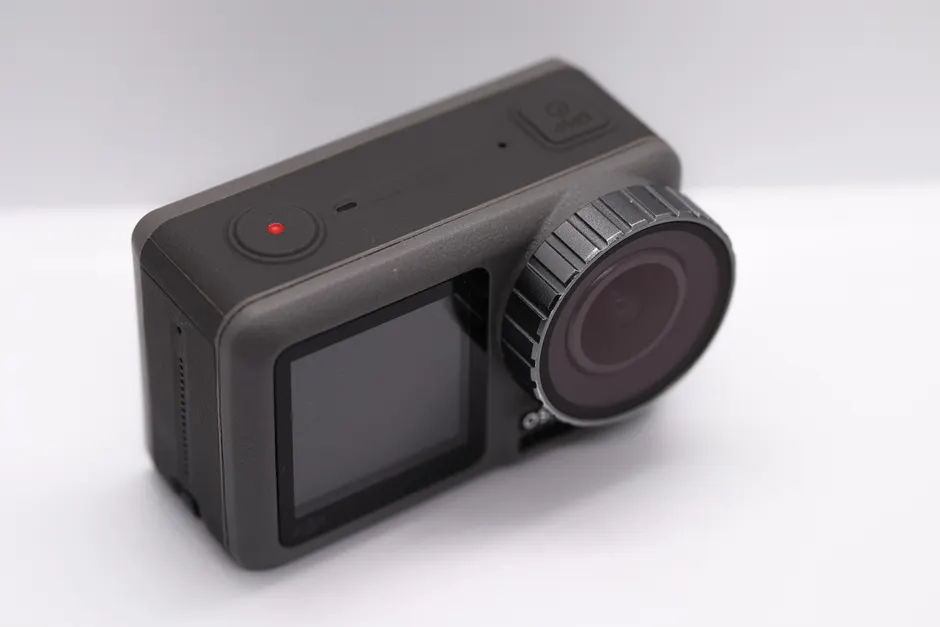
DJI has announced the Osmo 360 II, an updated version of its panoramic action camera. The new model lets you swap out scratched lenses, performs better in low light, and records smoother video. It is already on sale in Asia and will reach Europe later in September. It will not be sold in the US for now. Engadget
The biggest hardware change is the move to replaceable lenses. 360 cameras have two bulging, fisheye-style lenses that stick out from the body, and because they stick out, they are the part most likely to get scratched or cracked when you use the camera outdoors. Each lens pair on the Osmo 360 II uses what DJI calls an "ultra-hard" coating to resist scratching. When a lens does get damaged, you can buy a replacement pair for €39 (about $45) instead of replacing the whole camera.
The image sensor, the part of the camera that actually captures light, stays the same as the previous model: a 1-inch square unit that records 360-degree video in 8K resolution (a very high level of detail). What changes is the software and processing around it. The camera can now handle a wider range of bright and dark areas in the same shot. 8K video goes from 50 frames per second to 60, and 4K video goes from 100 to 120 frames per second, which means smoother motion. A feature called AI SuperNight 2.0 helps clean up grainy footage in dark scenes.
Timelapse resolution jumps from 8K to 16K. A Vortex mode, which creates spinning barrel-roll effects, moves from 6K to 8K resolution at 120 frames per second. The 120-megapixel photo mode now supports HDR, which combines multiple exposures to capture more detail in bright and dark areas.
Battery capacity increases from 1,950 mAh to 2,150 mAh. Battery life at 8K 30 frames per second stays at 100 minutes, and the camera charges to 80 percent in 22 minutes. An optional battery extension rod can push that to 180 minutes between charges. The camera has 105 GB of built-in storage.
For sound, the camera has a built-in four-microphone array with wind-noise reduction. It works with DJI's wireless microphones, including the Mic 3, Mic 2, Mic Mini 2S, Mic Mini 2, and Mic Mini. It also fits GoPro accessories, not just DJI's own mounts. A one-tap NFC connection pairs the camera with the DJI Mimo app on your phone.
For editing, DJI added a plugin for DaVinci Resolve, a popular video editing program. This lets you bring 360 footage directly into DaVinci Resolve from the DJI Studio app without extra conversion steps. In the past, getting 360 video into a standard editing program was a clunky process, so this removes a real headache for people who edit video regularly.
The camera measures 61 × 36.3 × 81 mm and weighs 183 grams. It is waterproof to 10 meters on its own and to 50 meters with a dedicated Waterproof Case. DJI
In Europe, pricing starts at €589 for the Standard Combo (£509 in the UK). The Adventure Combo, which includes extra batteries, a charger, and a case, costs €739 (£639 in the UK). Engadget
DJI says the Osmo 360 II was used to film a rocket launch in 8K at 60 frames per second, framing the camera as a tool for extreme scenarios. DJI Media Center
The Osmo 360 II will also be on display at IFA 2026 in Berlin, where DJI plans to show it alongside the ROMO 2 and a power ecosystem from September 4-8. The company will host four open workshops on September 5-6, including a drone-focused session at 11:00. PR Newswire
The absence of a US release stands out. DJI products have faced growing regulatory pressure in the United States, and skipping the American market, even temporarily, limits the number of people who can buy a device that competes with cameras from Insta360, a rival company that has built a strong following in this category. Whether the US omission is a short-term logistics decision or a longer-term shift will become clearer over the coming product cycles.
Taken together, the Osmo 360 II is an incremental update focused on the things that matter most in everyday use. The sensor stays the same, but it is surrounded by better lens management, better low-light processing, and faster recording at the resolutions people actually use. The replaceable lens system is the kind of change that sounds small on paper but makes a real difference for anyone who has stopped using a 360 camera because a single scratch ruined the footage. Combined with the DaVinci Resolve plugin and GoPro accessory compatibility, DJI is removing the frustrations that have kept 360 cameras as a niche product rather than an everyday action camera.


