Apple's Camera AirPods: What We Just Learned
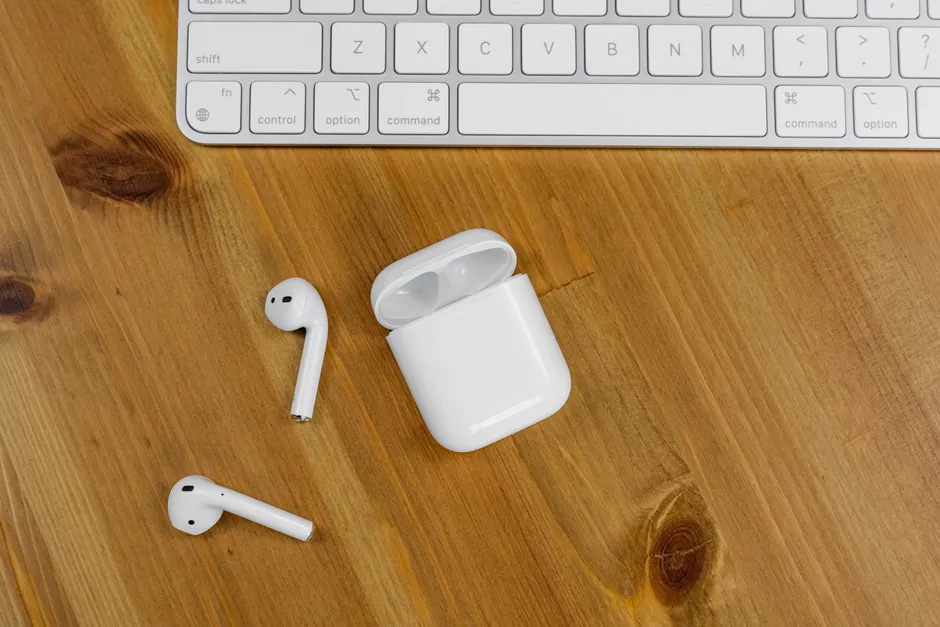
Apple has accidentally leaked a video of upcoming camera-equipped AirPods through a test version of a macOS update, giving us the clearest picture yet of a device that may not go on sale until 2027. The leak was found hidden in code from an early macOS Tahoe 26.7 build. It shows how the earbuds capture, sync, and process images for Apple's Visual Intelligence software, not for taking personal photos (Engadget).
Each earbud has its own camera, and software combines the two image streams into one. The cameras take standard color still photos at resolutions up to 1 megapixel, which is fairly low resolution compared to a phone camera. They do not record video. Instead, the system snaps photos at regular intervals, more like a device that keeps an eye on its surroundings than a video camera.
The design uses hardware already found in current AirPods. Small motion sensors inside the earbuds track how your head moves, so the system can line up the two camera feeds based on which way you are facing. Software on the earbuds throws out photos that are blurry from too much movement or blocked by something nearby, rather than trying to fix them later.
Some image processing happens on the earbuds themselves. Apple's code calls this "peripheral inference," meaning the earbuds do some thinking on their own before sending data to your phone or computer. The system has two modes: an active mode that produces sharper images, and a passive mode that saves power for when the device just needs a general sense of its surroundings.
Each earbud likely includes a small indicator light so people around you can tell when the cameras are on. This is a design choice with obvious social implications, and it is one Apple appears to be making ahead of any controversy rather than in response to it. Bloomberg's opinion coverage has already noted Apple's Visual Intelligence marketing tagline, which promises that "your world becomes savable," and pointed to the privacy backlash Meta faced over its camera-equipped Ray-Ban smart glasses (Bloomberg).
Visual Intelligence is part of Apple's long-delayed upgraded Siri, an AI assistant designed to analyze images from the earbuds and act on what it sees. The only example Apple shows in the leaked video is simple: a man asks Siri to remember a book he is looking at. It is a basic scenario, but it shows what the device is for. The cameras exist to give an AI assistant information about what is around you, not to take photos you would look at, edit, or share.
That distinction matters. The camera-equipped AirPods are not a photography product. They are a set of sensors for an AI system Apple has been building for years. Bloomberg reported in February that Apple is working on three AI-era devices: smart glasses, an AI pendant, and camera-equipped AirPods, all built around Siri (Bloomberg). By May, the AirPods had reached an advanced testing stage (Bloomberg). Reporter Mark Gurman has suggested the product will not reach consumers until 2027.
The broader context here is that Apple is not building one camera device. It is building a whole category. Three different products, all feeding the same Siri-based system, suggest Apple is trying multiple shapes to see which one catches on, while betting on the idea that AI assistants need to see the world. The AirPods are the most technically difficult of the three to build: they have to fit existing audio and battery requirements while also adding cameras, motion sensors, indicator lights, and on-device processing.
The privacy questions are what I would watch most closely. A capture indicator light is a basic courtesy, not a privacy guarantee. The harder questions are what Visual Intelligence does with the images it captures, how long it keeps them, whether they ever leave the device, and what Apple's promise of on-device processing really means for a system that must constantly analyze what is around you. Apple has not answered these questions yet, and the leaked code does not address them. The "your world becomes savable" tagline is promising a lot for a product whose data handling is still unknown.
The technical details that have surfaced point to a carefully limited system. Low-resolution stills, not video. Periodic capture, not continuous recording. Bad frames thrown out, not fixed. Two power modes. Some processing on the earbuds themselves. Each of these choices limits what the device can do, and by extension, what it can do wrong. A system that takes low-quality snapshots now and then is easier to defend on privacy grounds than one streaming video all the time. Whether that careful design holds through to a 2027 release, or whether Apple adds more capabilities as the AI assistant grows, is the open question.
For now, the leak confirms that Apple's camera AirPods are real, technically thoughtful, and built around a clear idea: AI assistants need to see your world, and the earbuds already on your head are a convenient place to put the sensors. The details suggest Apple understands both the engineering and the social challenges. What we do not yet know is whether the AI will be good enough by 2027 to make the whole thing worth using.


