Anthropic Teaching Claude to Understand Chemistry the Way Chemists Do

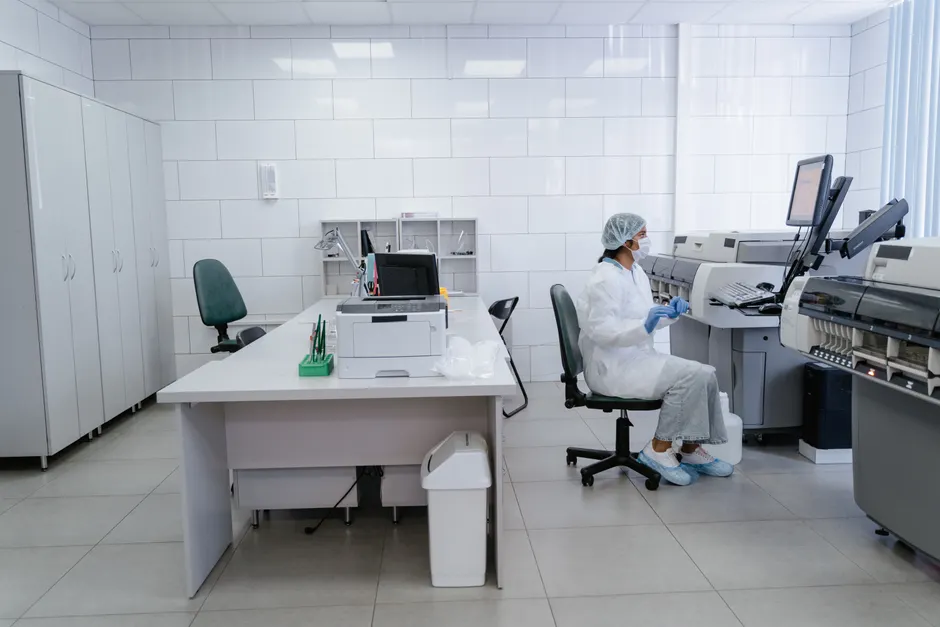
Anthropic announced in June 2026 that it is working with real chemists to teach Claude—its AI assistant—how to solve chemistry problems. Instead of just feeding the model more chemical data and hoping it gets better, the company is partnering with chemists who actually work in labs, so they can guide the AI toward understanding chemistry the way a professional does.
The team tested Claude on a specific chemistry task: looking at spectroscopy data and figuring out what a molecule is made of. Think of spectroscopy like an X-ray for molecules—it shows invisible patterns that tell you what atoms are present and how they are connected. Anthropic compared Claude's results directly against ChemDraw, a tool that pharmaceutical companies have relied on for 40 years. If Claude can match what ChemDraw does, it means chemists in the real world could actually trust Claude to help them check whether an experiment worked.
Why is this hard? Chemistry requires two very different kinds of thinking. One is precision: a molecule's structure is written in a special code, and if you get one character wrong, you describe a completely different (often impossible) molecule. The other is intuition: experience teaches chemists to look at data and instantly see patterns, understand which atoms are where, and grasp the three-dimensional shape of a molecule. Training data alone does not fully capture that intuition. The result is that AI models often sound confident while suggesting molecules that cannot actually exist, or getting the structure partly right but with the orientation wrong.
A Bigger Strategy for Science
The chemistry work is part of something larger. Anthropic launched Claude for Life Sciences in October 2025, designed to help with drug discovery. Think of it as Claude plus a toolkit tailored to the specific jobs that drug researchers do. A big piece of this is making Claude work directly inside the software systems that scientists already use—databases of proteins, chemical registries, lab notebooks—rather than forcing researchers to type information in and out manually. When tools fit seamlessly into existing workflows, people actually use them.
Anthropic also tested Claude's ability to answer biology and chemistry questions at a graduate level, published in April 2026. The company separately runs a program giving researchers free access to Claude for high-impact science projects, starting in March 2026.
Why This Matters
The clearest payoff is the chemistry one. If Claude can genuinely help chemists interpret spectroscopy, it saves time in a critical bottleneck: when you make a new molecule, you have to verify it worked, adjust your approach, and try again. Faster verification means faster progress. The broader ecosystem—integrations with lab software, chemistry-specific skills, and testing on biology questions—aims at the long, expensive process of discovering a drug, which can take years. Any time saved compounds over time.
There is a deliberate choice here worth noting: Anthropic is not treating this as a pure engineering problem (make the benchmark score go up). Instead, the company recruited working scientists to help shape what matters and how to measure it. This signals a belief that real expertise is foundational to building AI that actually works in hard scientific domains, not just a nice-to-have extra.