A Startup Is Building a $1 Billion Fusion Energy Plant in New Mexico
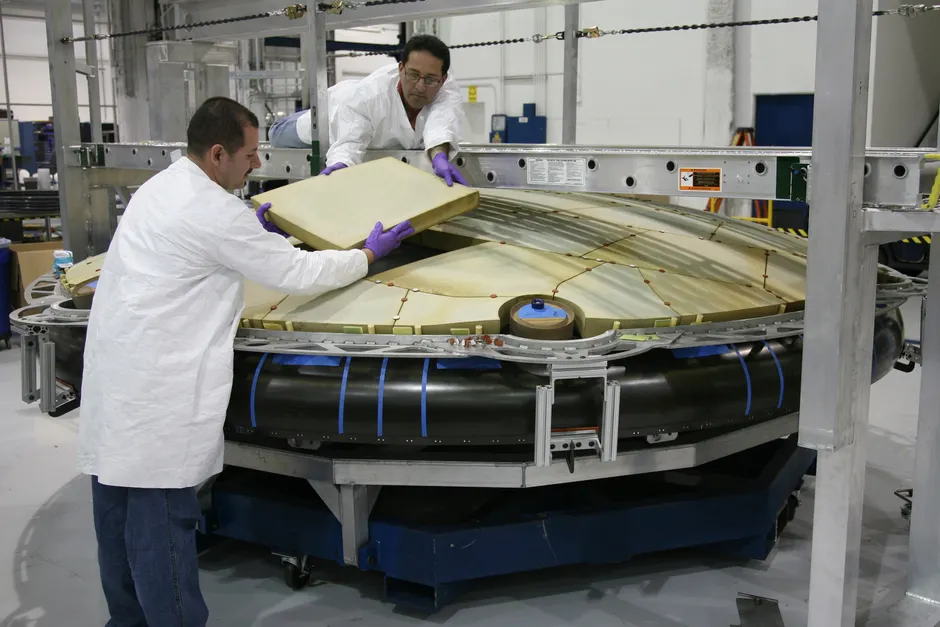
Pacific Fusion has started building a $1 billion facility in Albuquerque, New Mexico, with a bold goal: by 2030, it wants to produce as much energy from fusion as the facility consumes. A commercial power plant could follow in the mid-2030s. The campus, in the Mesa del Sol area, will also run experiments related to national security. (TechCrunch)
Founded in 2023, Pacific Fusion is a young company but already one of the best-funded in the private fusion field. It has raised over $1 billion in funding tied to hitting specific technical milestones. The company is led by co-founder and COO Carrie von Muench and co-founder and CTO Keith LeChien. (TechCrunch)
Fusion is the process that powers the sun: forcing light atoms together so they merge and release energy. Pacific Fusion's approach uses powerful, precisely timed bursts of electricity to create a magnetic field around a fuel target about the size of a pencil eraser, squeezing it until the atoms fuse. Each burst will produce roughly 100 megajoules of energy, about ten times more than the National Ignition Facility, the current record-holder for fusion output in the United States. (TechCrunch)
Those bursts come from 156 pulser modules. Think of each module as a bank of high-speed batteries and switches: each has 32 stages, each stage has 10 bricks, and each brick has two capacitors that store power and one switch that releases it all at once. Earlier in 2026, the company tested a smaller, one-third-scale version of one module that delivered 440 gigawatts of power in just 80 nanoseconds — a fraction of a blink of an eye. (TechCrunch)
Getting from this demonstration to a real power plant will be hard. The Albuquerque facility will fire a few shots per day. A working power plant would need to fire one shot every single second, nonstop. It would also need to produce about five times more energy per shot than the demonstration system. (TechCrunch)
Two challenges stand out. The first is making each shot more powerful, from 100 megajoules to about 500. The second is firing far more often, from a few times a day to once every second, indefinitely. That puts enormous strain on the hardware, which has to survive years of repeated use. The smaller-scale test in early 2026 proved the concept works for a single shot. Running it once per second, every second, for years is a much harder problem.
The broader context here is that this facility will do two things at once: pursue commercial fusion energy and conduct national security experiments. That combination is familiar in the fusion world. The National Ignition Facility already serves both science and national security purposes, and other powerful pulsed-power machines in the U.S., like Sandia's Z machine, have operated under similar dual mandates. What is unusual is a private startup building infrastructure that spans both missions. How much classified work and commercial development share the same equipment and people will be worth watching. New Mexico, with its concentration of national labs, makes sense as a location for that kind of overlap.
The way the company is funded also deserves attention. Because the $1 billion-plus is released only when technical milestones are met, any delay in hitting a goal directly affects how much cash the company has to keep going. Pacific Fusion will need to prove not just that a single shot works, but that it can be repeated affordably and frequently enough to look like a real power plant before the next round of money comes through.
Pacific Fusion's timeline, with net energy gain by 2030 and commercial power in the mid-2030s, is ambitious but not unique. Commonwealth Fusion Systems has similar goals for this decade, and ITER, a large international fusion project in France, is on a comparable timeline. The difference is the method. Pacific Fusion's pulsed approach avoids the giant magnets used by tokamaks and the costly laser systems used by other projects, but trades those for the challenge of firing powerful bursts over and over, very quickly. Whether that bet pays off will become clearer as the Albuquerque machine starts operating and the data comes in.
What the new campus gives Pacific Fusion is a dedicated site to assemble all 156 pulser modules, fire at energy levels well beyond anything operating today, and gather the real-world data needed to answer the questions that separate a lab experiment from a power plant. Those answers will come one shot at a time.