Volvo's Cars Can Now Warn Each Other About Animals, Cyclists, and Pedestrians on the Road
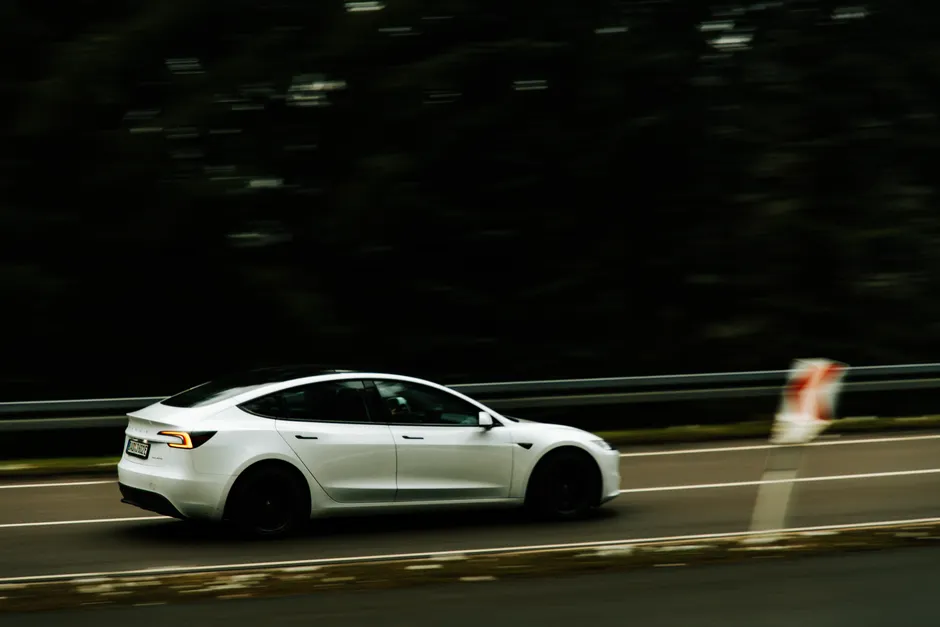
Volvo is updating three electric vehicles — the EX90, ES90, and EX60 — with new safety alerts that warn drivers about large animals, pedestrians, cyclists, roadwork, and accidents on the road ahead. The alerts use data shared between Volvo vehicles across Europe, the US, and Canada, rather than relying on manual reports from navigation apps like Waze or Google Maps. The Verge
The idea is simple. When a Volvo's built-in sensors and cameras detect a hazard, the car automatically records the location, sends it to Volvo's cloud computers, and other Volvo vehicles driving on the same road receive a warning. The system needs the car to have an internet connection, and the road must already exist in Volvo's map database. The Verge
Volvo says it has 1 million vehicles on the road today with these connected safety alert capabilities. The company also shares its safety alert data with traffic management centers and with other vehicle brands, not just Volvo-branded vehicles. The Verge
The new alerts build on technology Volvo has been developing for a decade. The automaker has used connected vehicle technology for some hazard warnings since 2016. Its cloud-based safety system, developed in partnership with the Swedish technology company Ericsson, warns drivers of slippery roads by analyzing data from the car's steering, braking, and acceleration. The system also notifies nearby vehicles when another car has turned on its hazard lights, which may mean a driver is stopped in a dangerous position on the road. The Verge
The specific alerts being added include a Vulnerable Road User Alert, which warns other drivers if pedestrians and cyclists are detected ahead on or near highways, and a Large Animal Alert, which warns other drivers if a large animal is detected on or near the road ahead. Volvo's EX90 support material notes that the feature aims to notify drivers of unexpected pedestrians and bicycles that could create a hazard, such as on a motorway. Volvo Press Release Volvo Support
Volvo announced the new safety features on its official newsroom across regional websites on August 26, 2026. The update adding Large Animal Warning alerts for the ES90 and EX90 was dated the same day. Motoring Research Volvo Press Release
The important difference here is between Volvo's approach and the way navigation apps handle hazard reports. Apps like Waze or Google Maps depend on a person manually flagging a hazard on their phone, which means warnings can be slow to appear, especially on rural roads where fewer people are using the app. Volvo's system removes the human from the loop: the car's own sensors detect the hazard, log it automatically, and send it to other vehicles behind it, with no user action required.
The decision to share this data with traffic management centers and other vehicle brands is the more strategically interesting part. A safety system that only helps Volvo drivers creates a brand-specific benefit — useful for marketing, but limited in its impact on public safety. By opening the data to other brands and to infrastructure operators, Volvo is treating hazard data more like a public-road-safety utility than a feature locked to its own vehicles. Whether that openness extends to real-time sharing with competitors or takes the form of summarized, delayed data shared with city traffic centers is not specified in the available material, and that distinction matters a great deal for how useful the system actually is.
The 1-million-vehicle figure is the number that makes the whole concept work. Connected safety alerts rely on a network effect: the more cars reporting hazards on a given road, the more useful the alerts are for every driver behind them. One million vehicles, concentrated in Europe, the US, and Canada, is enough to provide useful coverage on major routes. But rural roads, where large-animal collisions are most common and where the Large Animal Alert is arguably most valuable, may not have enough Volvo vehicles driving them to generate timely warnings.
The system also has a structural limitation. If the car loses its internet connection, hazard alerts stop working in both directions. And if a road is not yet in Volvo's map database, no alerts can be created or received for it. For a system whose main use cases include large animals on rural roads, these gaps are not small. Volvo has been building this infrastructure since 2016, and the Ericsson partnership suggests a robust cloud system behind it, but the real-world coverage will be uneven for the foreseeable future.
In this author's view, what Volvo is doing here is extending the safety-first philosophy that has defined the brand for decades into a connected, networked layer. The sensors that already help a single driver detect animals, pedestrians, and cyclists now serve a second purpose: they become a network of road-condition sensors feeding information to every Volvo behind them. That is a meaningful step beyond standalone safety features toward something that resembles cars sharing what they see with each other, even if it does not yet reach the level of a full industry-wide standard where all vehicles and road infrastructure communicate regardless of brand.


