Floods Hit While England and Wales Were Still in Drought — Here's Why That Makes Sense
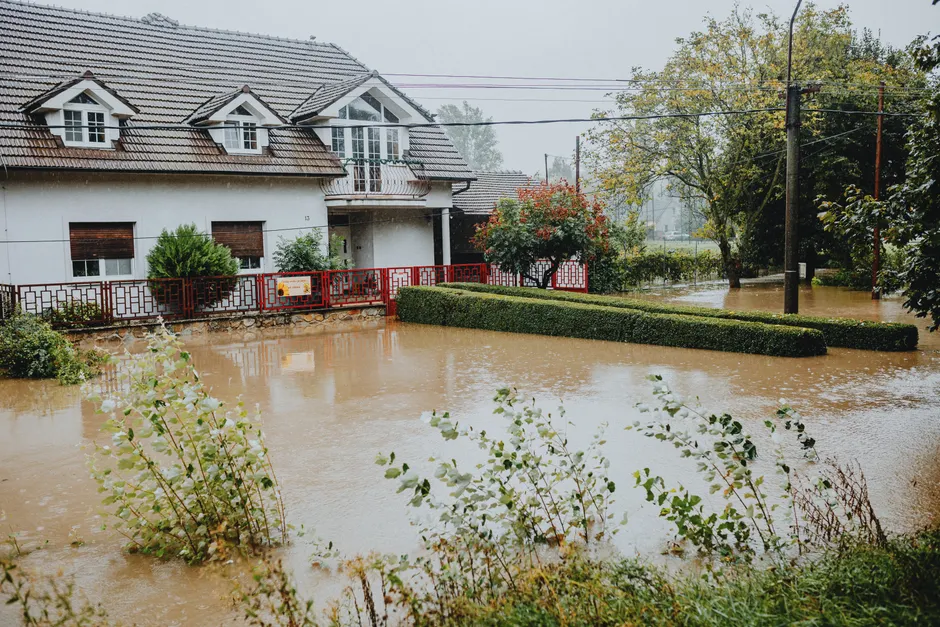
On 27 August 2026, dozens of homes in England and Wales were damaged by flood water after the Met Office issued thunderstorm warnings. The flooding came at the end of a summer that had already brought five heatwaves, and it showed something that might sound impossible: drought and flooding happening at the same time. That morning, a group called the National Drought Group had confirmed that 71.3% of England was still in drought, and all of Wales was too, according to the Environment Agency (The Guardian).
A "yellow" thunderstorm warning — meaning people should be aware and prepare — covered parts of the Midlands, east of England, south of England, the north-west, Yorkshire and Humber, and Wales until 10pm on Thursday. A second yellow warning covered Lincolnshire, parts of the east of England, parts of Yorkshire, Kent and Medway from 5pm Thursday to 7am Friday. The Met Office said some areas could get up to 75mm of rain in just 12 hours. A large band of thunderstorms was expected to move north across England and Wales, possibly slowing down through the afternoon and evening and reaching into Northern Ireland and southern Scotland.
The West Midlands was hit hardest. Parts of Birmingham flooded on Wednesday after the Environment Agency issued a flood warning for the Perry Barr area. Seven fire engines went out on Wednesday evening after the West Midlands fire service was called to flooding at 32 properties near the Tame Valley canal. In Staffordshire, the Environment Agency recorded 60mm of rainfall in 12 hours.
Birmingham resident Ryan Goodwin said his conservatory filled with three feet (1 metre) of water and his living room was damaged. He said it had been so dry that leaves had blocked the drains, and water also ran off the motorway. That detail shows what was really happening: when soil has been dry and baked hard for months, rain does not soak in. Instead it runs straight off the surface and into drains and rivers that are already struggling.
Think of it like a dried-out sponge. A damp sponge soaks up water easily. But a sponge that has been left hard and dry for months? The water just bounces off the surface.
By Thursday morning, the Environment Agency had issued forty flood alerts across the Midlands, Yorkshire and the south-east. One alert was for the River Maun at Edwinstowe and Ollerton in Nottinghamshire, where river levels at the Mansfield The Dykes gauging station were rising quickly, with Old Rufford Road named as most at risk. BBC Weather also reported flooding expected along the Spadesbourne Brook due to rising river levels.
The reason drought and flood can happen at the same time comes down to how soil and water behave. August had only seen 34% of its normal rainfall, according to the Environment Agency, after a record-dry July that pushed more areas of England into formal drought. The week of 14 to 20 August saw no change, with 71% of England by land area still in drought. Drought management in England has involved six drought permits — special permissions that let water companies take extra water from certain sources — in the north west and Yorkshire, plus one drought order in the north west, according to government data published in April 2026.
Environment Agency chief executive Philip Duffy put it plainly. "A few days or even weeks of wetter weather cannot reverse the impacts of several months of exceptionally dry conditions," he said. He also said the thunderstorm warnings show "it is possible to experience simultaneous drought and flood as heavy rain falls on compacted soils."
What this means in practice is that one big rainstorm cannot fix a drought. It takes a long time for water to soak deep into the ground and refill reservoirs to the levels needed for farming and nature. But that same rainstorm can easily overwhelm drains, damage homes, and disrupt travel. The drought and the flood are happening on the same land but at different speeds.
Climate scientists have warned for years that global heating is making the UK's weather more extreme — more heatwaves, more droughts, more floods, more storms. The summer of 2026 brought five heatwaves before these thunderstorms, and the gaps between different types of weather disasters are getting shorter. That leaves water companies, insurers, and emergency services less time to recover between one crisis and the next.
For the Environment Agency and the National Drought Group, the challenge is now double: they have to keep drought restrictions in place and conserve water while also responding to floods. For people living in the affected areas, the immediate danger is damaged homes and disrupted lives. The longer-term danger is that the drought is still there underneath, even as attention shifts to the floods. As Duffy made clear, soil that has been dried and hardened over months does not soften again quickly. That is what turns a heavy shower into a flood.
Forty flood alerts, two yellow thunderstorm warnings, and 71.3% of England still in drought all happened on the same day — 27 August 2026. That combination tells the story of the kind of risk the UK now faces as the climate shifts.


