Motorola's New Smartwatch Runs Google's Software — But Battery Life Takes a Hit
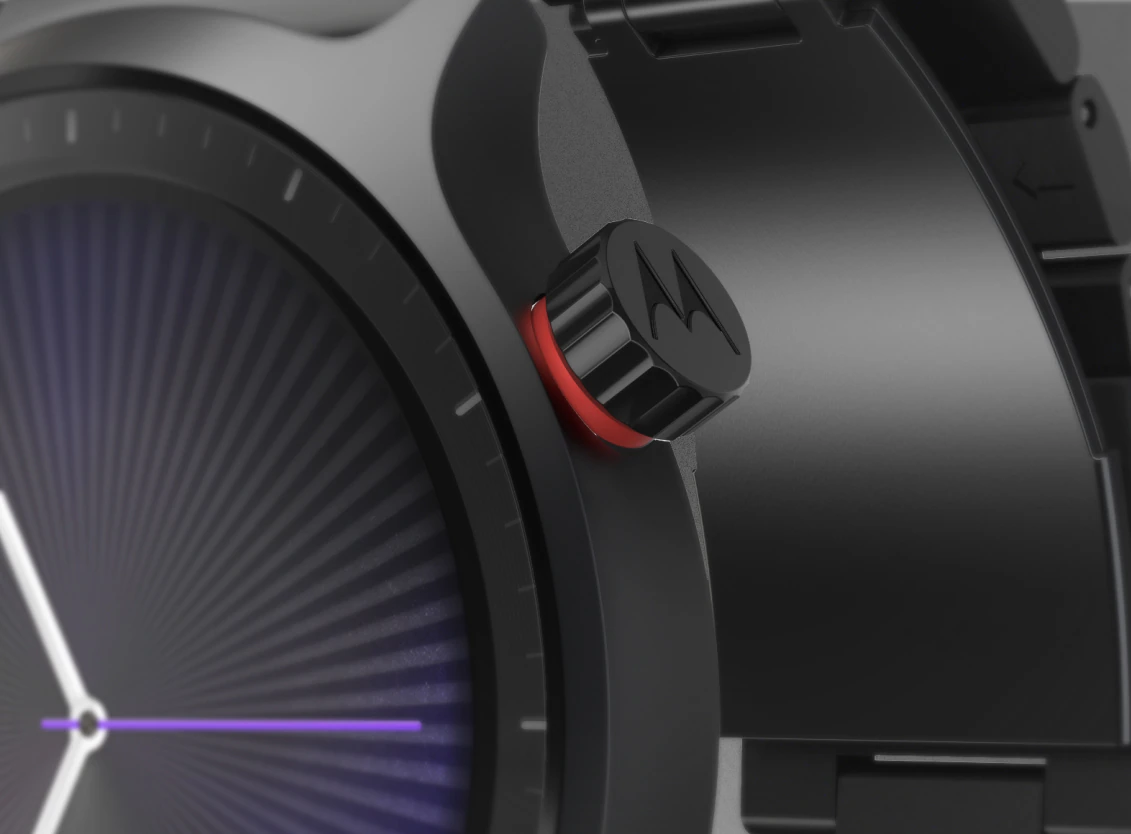
Motorola has announced the Moto Watch Ultra, its first smartwatch to run Google's Wear OS platform. Wear OS is the operating system that lets a smartwatch run third-party apps, just like Android does on phones. The device launches September 10th at $349.99 The Verge.
This is a shift for Motorola. Its earlier smartwatches used a simpler, custom operating system that was built to use very little power. That older software could not run popular apps, but it let the watch last up to 13 days on a single charge. The Ultra, running Google's more demanding software, claims 50 hours of battery life with the always-on display switched off The Verge; Engadget.
The hardware is designed to compete with premium smartwatches. The watch has a 46mm stainless steel case in black or silver, measuring 12mm thick and weighing 51g. Its 1.5-inch OLED screen is covered by Gorilla Glass 3 for scratch resistance. It carries an IP68 rating and 5ATM water resistance, meaning it is sealed against dust and safe for swimming. Each unit ships with two interchangeable straps, one silicone and one leather The Verge.
Health and fitness tracking comes through a partnership with Polar, a well-known fitness technology company. The watch tracks heart rate, sleep, stress, blood oxygen levels, and recovery metrics. It also includes an AI running coach, LTE connectivity (so it can connect to cellular networks without a phone nearby), and dual-band GPS, which uses two satellite signals for more accurate location tracking than standard GPS. Motorola's other current wearable, the Moto Watch (2026), also has dual-band GPS but starts at $149.99 and runs the simpler, low-power software The Verge; Engadget.
The Ultra supports tap-to-pay through Google Wallet and includes two AI assistants: Google's Gemini and Motorola's own Qira assistant. Having two assistants on one watch raises questions about how Motorola plans to divide their tasks, though the company has not explained that in its announcement The Verge.
Motorola now sells several smartwatches at different price points. The Moto Watch (2026), reviewed by Engadget at 6.5 out of 10, offers Bluetooth, a speaker and microphone, 4GB of storage for music, and dual-band GPS, but its custom software lacks automatic activity tracking and app support Engadget. Motorola also sells the Moto Watch Fit in two variants and the original Moto Watch with continuous heart rate and blood oxygen monitoring, covering entry-level and mid-range buyers Motorola; Motorola.
The trade-off is clear. The Moto Watch (2026) gives you exceptional battery life and a low price but runs limited software. The Ultra gives up roughly 90 percent of that battery life to gain full app support, LTE, and Wear OS, while doubling the price. Whether 50 hours is enough for a $349.99 smartwatch is the question the market will answer starting September 10th.
The broader context here is that Wear OS smartwatches have settled into a familiar pattern: the same Qualcomm chip, dual-band GPS, a steel or titanium case, and Polar-based fitness tracking. Motorola has included all of these. What could set the Ultra apart comes down to how deeply Motorola's Qira assistant is integrated, how good Polar's coaching features are on this platform, and whether $349.99 is low enough to pull buyers away from Samsung and Google's Pixel Watch, which currently dominate the Wear OS market. Motorola also offers a Moto Care extended warranty across its device lineup, which buyers may want to factor into their total cost Motorola.
The announcement was timed to IFA, a major electronics trade show held each September in Berlin, where wearable launches are routine. Motorola's smartphone partnership with FIFA gives the company an additional marketing channel, though the watch itself carries no FIFA branding Motorola.
For app developers, the news is simple: another manufacturer is shipping a Wear OS device with current-generation hardware and LTE, growing the number of people who can use their apps. For consumers, the question is whether Motorola's brand name and sub-$350 price can compete with Samsung and Google. September 10th will offer the first real clue.