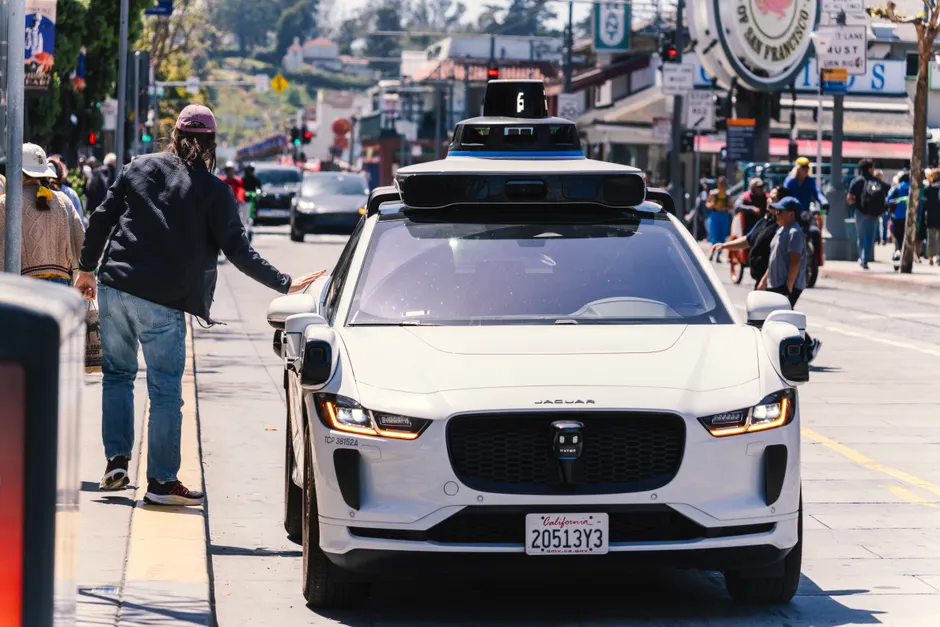
Self-Driving Startup Wayve Hires Waymo's Former Finance Chief

Wayve has hired Elisa de Martel as chief financial officer. She was previously chief financial officer of Waymo. TechCrunch
De Martel will be based in Sunnyvale, California. She succeeds Max Warburton, who has held the Wayve CFO role since 2024. Warburton will move into a strategic advisory role supporting the leadership team.
At Wayve, de Martel will oversee financial strategy and planning, capital allocation, reporting, governance, treasury and tax. That covers the full finance job, from raising money and choosing where to spend it to controls and compliance.
De Martel served as Waymo CFO from 2022 to January 2026. Waymo announced her appointment in September 2022. Waymo Waymo has since named Google executive Steve Fieler as its CFO. CFO Dive Before Waymo, de Martel was chief financial officer of Carbon. Earlier, she spent 11 years as manufacturing finance director at Apple.
During her time at Waymo, the company began commercial service in several cities and raised $5.6 billion in a Series C round led by its parent company at a valuation over $45 billion.
Wayve was founded in 2017. The company is valued at about $8.5 billion and has raised $3.2 billion to date.
Its system is built around an end-to-end neural network, a single AI system that learns driving from data. It is a bit like a learner picking up driving from experience rather than only following a written rulebook. It does not rely on high-definition maps, custom hardware, or hand-coded rules.
That software supports two products: an 'eyes on' assisted-driving system and an 'eyes off' fully automated-driving system for robotaxis or consumer vehicles. Founder and CEO Alex Kendall leads the company, which lists partnerships with automakers including Nissan and Stellantis. Wayve recently launched public rides in London with a human safety operator on board.
The broader context here is that the task changes at this stage. Building the driving software is a research job. Putting it into carmaker product lines and paid rides is about money, costs and factory scale. De Martel has seen both sides, from Apple manufacturing finance to Carbon to a commercially operating Waymo that closed a multi-billion-dollar parent-led round.
In my view, that mix matters more than the logo on the resume. Wayve has $3.2 billion raised, carmaker partners with their own product cycles and cost structures, and two product paths to fund. Assisted driving can ship in consumer cars on shorter timelines. Fully automated driving carries longer validation and liability tails, so cash needs strict prioritization. What is worth noting is that finance leadership often decides whether the system stays open to many partners or gets pulled toward the partner or place that pays for deployment first.
The longer-term picture still points to more capable driving software reaching more drivers. My kids learned to drive with lane-keep nudges and automatic braking. Their kids may treat human-only driving as the edge case. Getting there will depend less on demo videos than on disciplined work on costs, governance, and carmaker integration. That is the work de Martel was hired to oversee.