Meta's New Glasses Are Coming, But Old Trust Questions Are Back
Mark Zuckerberg said in a private WhatsApp chat that he would not make child safety his personal main focus because he was more focused on other areas like building the metaverse.
The chat was with a person who has not been named, according to court exhibits released later as part of lawsuits. It came up again in a story published by The Verge on September 22, 2026, titled "Can you forget how you feel about Meta?" The story centers on Zuckerberg, the CEO of Meta, and on products under him covering AI, smart glasses and social media.
In 2021, Zuckerberg posted a public reply on Facebook to claims from a whistleblower, an insider who said Facebook was harming children. The Verge story looks back at that reply and places it next to the private chat, where the metaverse was the personal priority rather than child safety. Facebook later changed its company name to Meta to reflect that metaverse priority.
Meta released a personal AI helper called Muse in early September. The company set Meta Connect 2026 as a two-day online event for September 23-24, with a stated plan to show breakthroughs in AI technologies, AI glasses and VR, according to Meta.
Connect is a yearly event for these products. Meta shared a Connect 2025 Day One recap called The Evolution of AI Glasses, Metaverse Momentum, & More. The 2026 event arrives with more hardware for sale and more AI features for developers to learn.
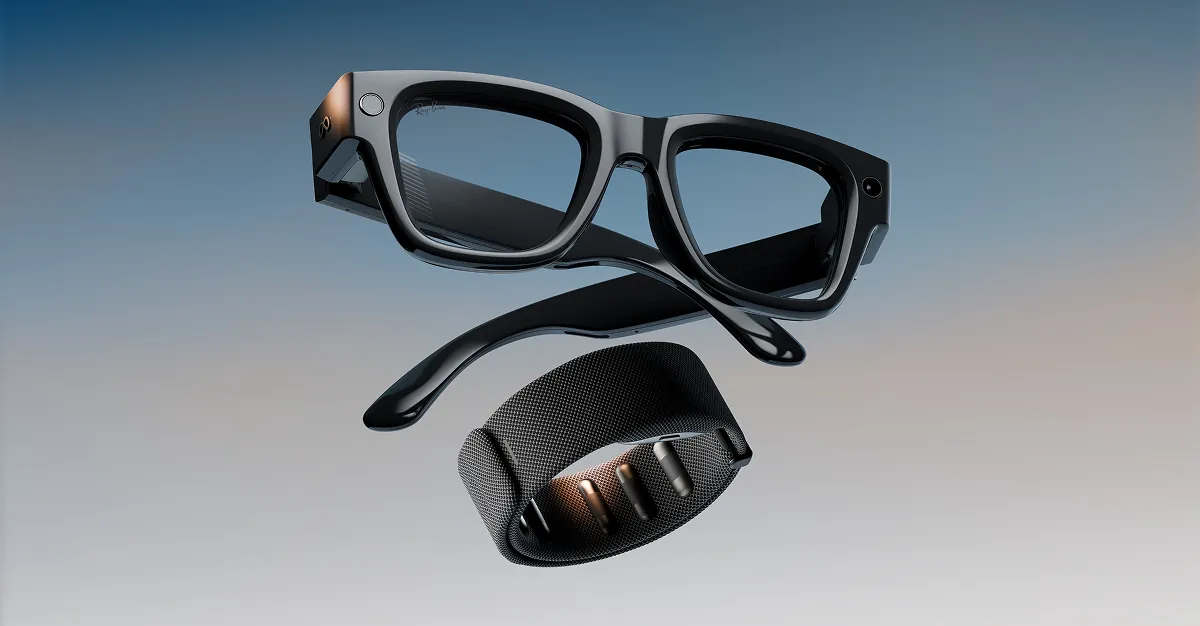
The current glasses are built around the Meta Ray-Ban Display and a wristband called the Neural Band. Meta AI in the glasses gives live answers, information about what you see, translations and step-by-step directions, according to Meta. Meta says its AI glasses work with WhatsApp, Facebook and Instagram.
The broader context for app makers here is that link to apps people already use. Glasses that connect to WhatsApp, Facebook and Instagram are different from a gadget on its own, like a phone you wear on your face. Login, contacts, photos and helper history all run through apps that teams already work with.
On price, Meta announced a new range of Meta Glasses starting at $299, while the Ray-Ban Display glasses were priced at $800, according to Reuters. Separately, Meta plans to release smart glasses with no camera, code-named Luna, in fall 2026, according to Reuters.
From a design standpoint, a version with no camera is an important choice. It leaves out the most sensitive part, both in the cost of parts and in how people feel about being recorded in public. It also means sound, wrist signals and a small display must do work that a camera would do with one picture.
EssilorLuxottica makes Ray-Ban. Its shares hit an all-time high, adding nearly $20 billion in market value amid investor excitement over Meta AI glasses.
The broader context here is a clash between big plans and trust. Meta wants glasses to become a main computer you wear, with Muse as the helper and WhatsApp, Facebook and Instagram as distribution. A device that remembers who you are and can hear and help is what you would expect after the phone and the wireless earbud.
In my view, the friction is not technical. It is memory. Companies, regulators and parents remember the 2021 whistleblower period and the choice to prioritize the metaverse over child safety as a personal focus. I have watched my own two children grow up with changing defaults around sharing, location and recommendations, and defaults set at this scale tend to outlast any single product. Developers building on this system face that history in buying reviews, permission screens and user doubt.
For builders watching Connect, two questions matter most. First, what Muse can actually do across Meta apps with steady tools, clear permissions and records that can be checked. A demo is easy. A full platform needs limits, off switches, logs and clear ways to fail safely. Second, how Meta splits features across glasses with a camera, with a display and with no camera without making the target too messy for developers.
Worth flagging in that light: the Luna plan and the $299 starting price suggest Meta understands that social comfort and price are system limits, not marketing details. A cheaper tier widens the base for voice-first helpers. A camera-free tier tests whether people want translation, directions and messaging on the face even without photos. If either tier catches on, the space for helpers grows fast.
Over the long arc, the optimistic case is simple. Light, hands-free help with answers, translation and directions is truly useful. It means fewer phone pull-outs. It helps people with low vision, people with their hands full, and people in unfamiliar places. Technology of this kind has, on balance, expanded what ordinary people can do.
In practical terms, that outcome depends on execution that respects limits. Clear camera lights, predictable handling of data, and serious tools for parents and IT managers will matter as much as model quality or screen brightness. Connect will show how far the hardware and models have come. The harder test is whether Meta can ship a developer platform and a trust model at the same pace.


