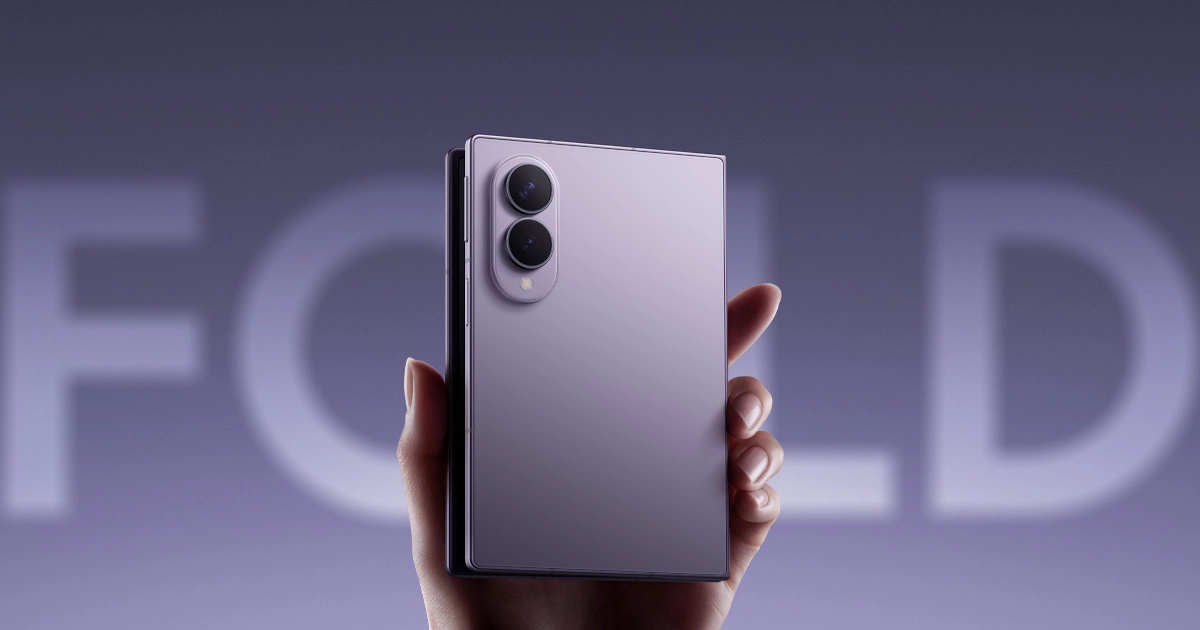
Oppo's New Phone Has Three Super-Sharp Cameras

Oppo launched the Find X10 Pro Max in China on September 22, 2026. It is the first phone with 200-megapixel sensors on all three back cameras, according to The Verge.
The main camera is rated for 17-stop dynamic range. That means it aims to keep detail in very bright and very dark parts of the same photo. It uses Oppo's DeepPix sensor technology.
Oppo continues its camera partnership with Hasselblad. Both the Pro Max and the standard Find X10 let users pick color styles and film looks. The base Find X10 drops to a 50-megapixel ultrawide camera.
At the top of the range, the chips are MediaTek. The Find X10 Pro Max runs on the Dimensity 9600 Pro, while the base Find X10 uses the 9600M. Oppo describes the Dimensity 9600 Pro as a 2nm platform and lists the OPPO Laminar Flow Engine as part of the Pro Max package, according to OPPO UK.
Both flagships carry 8,000mAh batteries. Both carry IP69 ratings.
The Pro Max debuted alongside the Find X10 and Find X10E in China, as reported by India Today. Oppo has confirmed the Find X10 Pro Max will also get an international launch, though timing and markets were not detailed in the verified materials.
The broader context here is balance. Three matching high-resolution sensors make switching between lenses smoother, like looking through windows made from the same glass. Color, exposure and detail do not jump when the user moves from wide to telephoto.
In my view, the hard work shifts to processing. Reading three 200-megapixel sensors with every shot loads the image processor, data movement and heat control. If the photo software and on-device processing cannot keep up, users will see slow shutters and fast battery drain. Worth flagging for testing is the 17-stop claim. On a small sensor, that range depends on the whole system, not the sensor alone. Lens flare control, lining up multiple frames and tone mapping decide what survives into the final photo.
The broader implication is practical. If Oppo delivers, matching color and high detail give photographers room to crop without changing phones or workflows. Bigger and more uniform files also mean more load on storage, backup and on-device ML pipelines for business buyers and developers. My kids took to phone photos without thinking about megapixels. They kept what looked good and deleted the rest. Pro users are more careful, but the test is the same. Images either hold up when edited or they do not. If the international version keeps the China hardware, Oppo will have set a clear reference point for 2026 flagships. Sharpness is no longer the limit. Processing speed is.