A Bed Cover That Heats and Cools You While You Sleep

Eight Sleep has announced the Pod 6, a bed cover that heats and cools the bed during the night based on body signals such as heart rate and breathing rate The Verge. The company describes it as its most significant hardware launch to date.
The system uses a redesigned cooling hub. It is half the size of earlier versions, so it can sit out of sight under most beds. Eight Sleep says it changes temperature 20 percent faster. The hub pumps temperature-controlled water through the mattress cover, and one hub handles both sides of the bed The Verge.
Pod 6 has 18 body sensors, up from two sensors in Pod 5. For two people, it tracks heart rate, heart rate variability, breathing rate, sleep stages, and snoring. Heart rate variability means small changes in the time between heartbeats. The system can tell the difference between adults, children, and pets. An automatic program called Autopilot uses those signals to adjust temperature through the night The Verge.
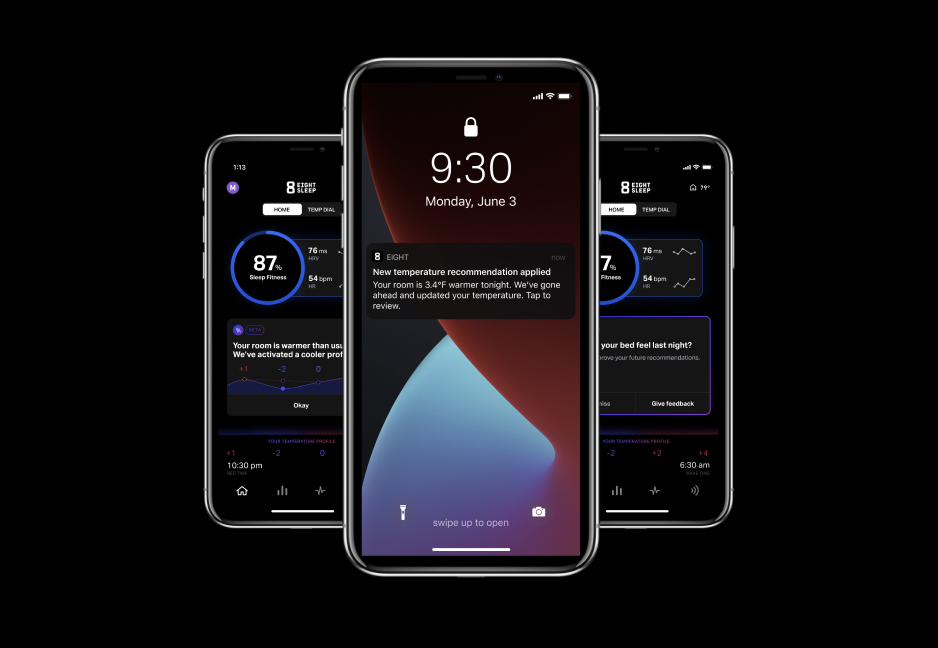
Users control it through an app. The app sets temperature, connects with fitness apps, and shows health information. Each side can be cooled or heated on its own, from 12°C to 43°C. The bed starts warming or cooling one hour before the set bedtime. The company lists the cover as working with any mattress Eight Sleep. It is described as giving faster relief from hot flashes, night sweats, or chills, and as reducing snoring. Pod 6 also works with Eight Sleep's $999 cooling pillow cover.
Pod 6 Standard costs $2,699 for full-size up to $2,999 for king and California king. A Pod 6 Solo version costs $1,999, with a cover that fits half of any size mattress for single sleepers. All versions require a yearly subscription from $199 to $399 per year for two sleepers. It is sold through Eight Sleep's online store The Verge. In the EU, Pod 6 starts at €2,199, with Solo sizes for EU Single mattresses or for one side of an EU Super King Eight Sleep.
The broader context here is a change from simple tracking to action. Most sleep trackers only report the night afterward. Pod 6 uses the same body signals to control heat and cold in real time. That is harder than just recording sleep, because it must pick up faint heartbeat movements through a water-filled cover, keep each side separate, and adjust without waking the sleeper.
In my view, there are clear trade-offs to watch. A smaller hub kept under the bed looks better in the bedroom, but packs water flow, heating and cooling parts, and wireless radios into a tight space. The required subscription keeps the upfront price below the $5,849 starting price listed for the Pod 5 Ultra last year, yet ties the automatic Autopilot control to ongoing payment. The real test is steady control each night, easy sharing of data with fitness apps, and how it acts when signals are weak. If that works well, sleep can support recovery in a practical way, like training and room temperature already do.