What Trump Said About Iran at the U.N., and Why Some Walked Out

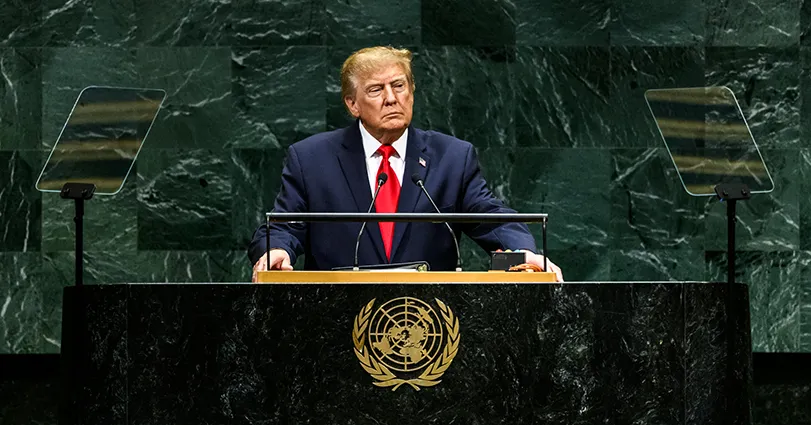
President Trump told the U.N. General Assembly on Sept. 22, 2026 that he had to choose between making a deal with Iran or to 'annihilate' Iran. The New York Times He said it while speaking to the Assembly.
Cuban officials walked out after President Trump's remarks. The New York Times
The General Assembly, the big yearly meeting of countries at the U.N., opened its 81st session at U.N. Headquarters. UN News Syrian President Ahmad Al-Sharaa told the Assembly that Syria "is rising" on many levels. He said its people made that possible. UN News
Delegates walked out during Israeli Prime Minister Benjamin Netanyahu's speech to the U.N. in September 2025. Reuters Delegates also walked out when Netanyahu spoke to the U.N. General Assembly in 2024. Reuters
Iranian President Mahmoud Ahmadinejad's speech to the U.N. General Assembly led U.S. delegates and other diplomats to walk out. PBS In that speech, Ahmadinejad called the September 11 attacks the "mysterious September 11th incident." He accused the United States of using it as an excuse to invade Iraq and Afghanistan. PBS
The broader context here is that leaders at the U.N. speak to two groups at once. They speak to the room. They also speak to people watching at home, like actors playing to both the front row and the cameras.
In my view, a walkout is a quiet protest. No shouting. No interruption. People simply leave, and the cameras notice. For small countries with less power in the room, leaving can send the message. That is why we have seen it before, from U.S. diplomats in 2011 to delegations during the Netanyahu speeches in 2024 and 2025 to Cuban officials on Sept. 22, 2026.
Looking at what this means in the weeks ahead, the real talks happen in hallways, not on stage. Tough public words can please supporters at home. They can make open deals harder. Quiet talks may still go on.
What matters next is the follow-up. Diplomats go back to their offices. Governments send new orders. Papers are shared. These speeches and walkouts tell us where countries stand now. They do not tell us how it will end.