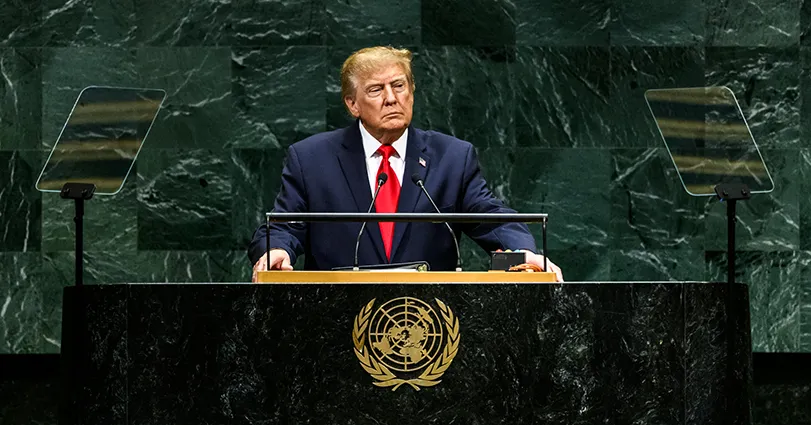
Trump Tells Iran at the U.N.: Make a Deal or Face Disaster
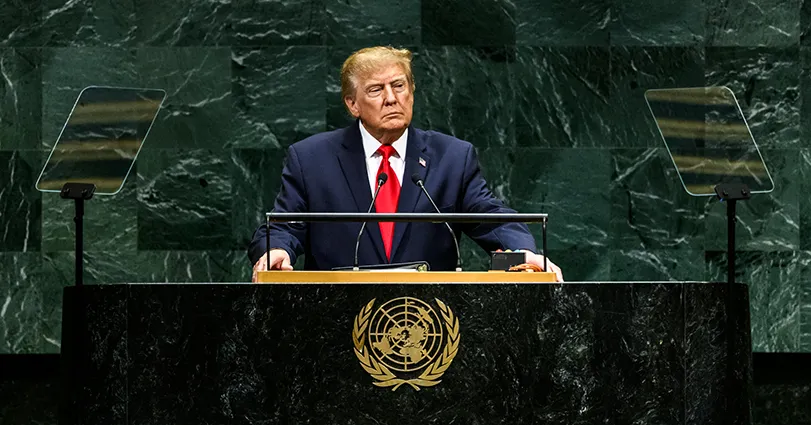
President Donald Trump spoke at the United Nations on September 22, 2026, and told Iran to make a deal or be driven "into hell." Iranian delegates walked out during his remarks on Iran. The Hindu
The White House published a September 22, 2026 summary titled "President Trump at the United Nations: ‘While Others Have Talked, I Have Acted’." White House The summary says the speech was Trump's address to the 81st session of the General Assembly, the U.N.'s main yearly meeting.
In the speech, Trump said he was thinking about whether to "annihilate" Iran and drive them "into hell with no chances of survival." Al Jazeera The language was conditional. He did not announce a decision. He gave two choices.
Trump argued the war with Iran stopped Tehran from getting a nuclear weapon. McClatchy That claim links the fighting to stopping the spread of nuclear weapons. No extra technical detail was given in the verified account.
As of September 18, 2026, the war with Iran was in its seventh month. Reuters Iran rejected new peace talks with the United States, as reported by its state news agency on April 19. Reuters
The September 22 speech follows earlier U.S. warnings at the U.N. In the U.S. speech at the 80th-session General Debate, the yearly speeches by leaders, Trump said the "world's number-one sponsor of terror cannot even be allowed to possess a nuclear weapon." UN General Debate President Trump spoke to the General Assembly on September 23, 2025. White House
The broader context here is pressure on a public stage. The General Debate cannot force countries to act, much like a microphone cannot end an argument. But it lets a leader state terms in public and see how allies react. A walkout is part of that pattern. It shows rejection without stopping the meeting. It keeps the delegation ready for later talks.
Looking at what this means for diplomacy, two practical steps matter. Washington says military pressure stopped weapons work. Tehran refuses new talks. That leaves go-betweens with little room. A lasting deal would need agreement on stopping fighting, checks by inspectors, and easing sanctions, or economic penalties. None of those details were in accounts of the speech. In my view, watch whether the ultimatum pushes Tehran to refuse more firmly or restarts quiet talks, and whether other countries call together for calm or split into sides.
The next phase will clarify whether the September 22 words were public positioning or a sign of new military action. That matters for troops, aid plans, and nuclear checks. For now, the record shows an ultimatum, a walkout, and a disputed claim about prevention.