Razer's New $300 Webcam Promises Sharp, Smooth Video
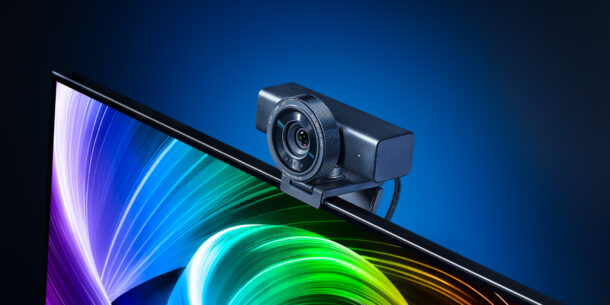
Razer has released the Kiyo V2 Pro, a $300 webcam that records very sharp 4K video at 60 frames per second. That means clear detail that stays smooth when you move. It is on sale now at Razer.com and other stores. Engadget
The camera uses a Sony 8.3-megapixel STARVIS 2 sensor and a lens that opens to f/1.9. A lower number means a wider opening that lets in more light, like a pupil opening wider in the dark. The view is 86 degrees wide, slightly narrower than the 93 degrees on the Kiyo V2. You get a tighter shot with less stretch at the edges and less background behind you.
On software, the Kiyo V2 Pro has AI auto-framing with smart pan, tilt and zoom. It follows you to keep you centered. It works with Razer Synapse, where you can set ISO, which controls light sensitivity, and shutter speed, which controls how long each frame gathers light. It comes with a clamp for monitor and laptop edges and a standard mount for tripod use.
Razer describes the Kiyo V2 Pro as a professional 4K webcam engineered for gamers. Razer The company positions it as delivering video and smart features for streams, setups and creative sessions without the need for a DSLR camera.
The regular Kiyo V2 records 4K at 30 frames per second and has AI auto-framing, face retouching and a privacy shutter. Razer describes it as a 4K webcam for streaming, video calls and content creation. The Kiyo V2 X records 1440p video, a step below 4K, at 60 frames per second, with fast autofocus, a wide-angle lens and a built-in mic. It comes in Black, White and Quartz colors. Razer announced two new colorways for the Kiyo V2 and Kiyo V2 X in February 2026. TechPowerUp An older model, the Kiyo Pro Ultra, recorded uncompressed 4K at 24 frames per second and also cost $300. The Verge
The broader context here is data and control. Full 4K at 60 frames per second creates a lot of data, so the video must be squeezed down to fit through the connection unless the internal chips and link are tuned for it. Razer is betting smooth motion matters more to its users than perfect still-image quality at 24 frames per second. For live video, smooth motion often looks better even when each frame gets less data.
Looking at what this means for streamers and creators, manual controls may matter as much as the sensor. Automatic brightness often jumps up and down under mixed room and desk lights. Setting ISO and shutter speed by hand in Synapse locks brightness, cuts flicker and keeps skin tones steady over a long session. Smart pan and zoom is digital crop, like cropping a photo on a phone, not a lens that moves. The extra pixels are what keep the cropped 4K picture sharp. Starting at 86 degrees helps, because less needs to be cut away to follow you.
In my view, the no-DSLR pitch makes sense, with limits worth flagging. A larger mirrorless camera with a clean HDMI feed still gives better lenses, background blur and low-light range. It also needs more money, extra gear and setup time that many solo creators will not keep up with. If a $300 USB camera looks close enough in good light, stays on the monitor and remembers settings, most people will pick the simple option. That should raise average stream quality without making streaming harder to learn.