UK Baby Banks Are Helping More Families Than Ever — and That's Raising Questions
UK Baby Banks Are Helping More Families Than Ever — and That's Raising Questions
UK baby banks gave out more than 3.5 million items to roughly 400,000 children in 2025 — clothes, nappies, prams, cots. That's an 11% increase from the year before. The Baby Bank Alliance and Little Village tracked the numbers.
These figures come against a harder backdrop: 4 million children are living in poverty right now, according to new data Save the Children UK cited. London has the highest child poverty rate in England at 38%.
How Baby Banks Work
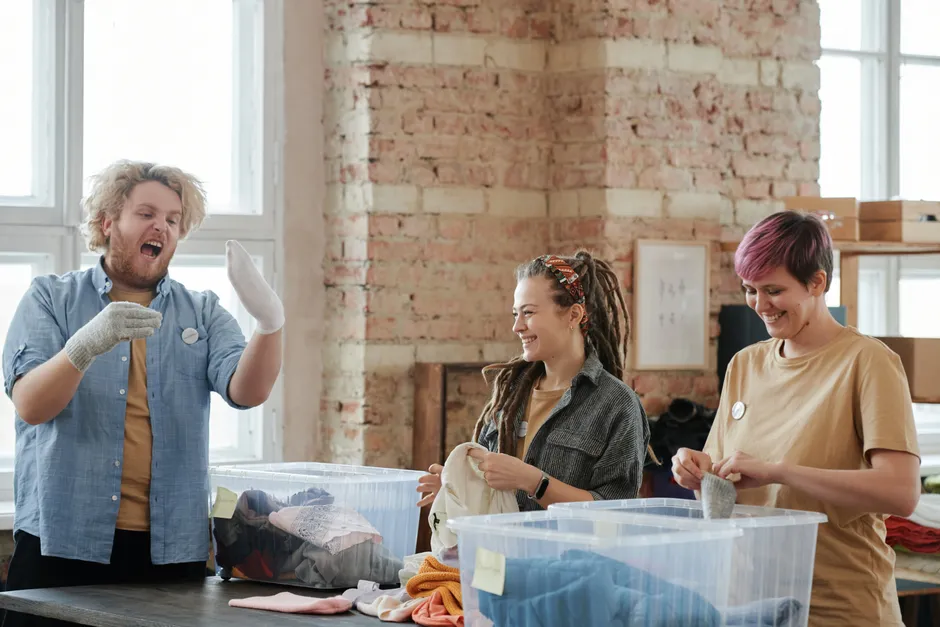
Think of baby banks as a community lending library for newborn essentials. Families donate or give surplus items — cots, pushchairs, clothes, nappies. The organisations collecting these goods hand them on to families who can't afford to buy them. There's no application form to fill in, no conditions attached. You just ask, and if they have it, they give it to you.
That simplicity is part of why baby banks have grown so fast in recent years. While regular welfare payments take time to process and come with rules, baby banks work fast. Wages have stayed roughly flat, and benefits haven't kept up with rising prices. For families stretched thin, a baby bank can mean the difference between managing and falling behind.
Why Growth Is Accelerating
The 11% jump is not a small fluctuation in the numbers. It tracks directly with families earning less and spending more on housing, especially in cities. In London, nearly four in ten children live below the poverty line — the worst rate in England.
Baby banks now operate across the whole country, but the need is sharpest in urban areas where rent eats up much of a family's income.
High-Profile Backing
The Princess of Wales publicly backed UK baby banks in 2025, giving them the kind of visibility most charities have to fight hard to get. Author and podcaster Giovanna Fletcher partnered with Save the Children and the Baby Bank Alliance to raise awareness of rising demand.
When public figures support a cause, it often brings in more money and volunteers. But even well-known backing can't solve the underlying problem — families not having enough money in the first place.
The Bigger Picture
Save the Children works on both domestic UK poverty and international issues. This year the organisation launched what it says is the world's first research centre studying child blast injuries — a response to explosive weapons being used widely in modern conflicts. In Gaza in 2024, around 475 children were hurt by explosives each month, roughly 15 per day, according to Save the Children's data.
The blast injury research and baby bank work sit under the same roof at Save the Children. It's a stark reminder of how many threats to children's safety exist right now — from poverty at home to violence abroad.
Is This a Temporary Spike or Something Deeper?
The real question underneath the statistics: Is this crisis temporary, or has the UK's support systems fundamentally broken down for families with small children?
The 11% rise, concentrated in the poorest areas, suggests something deeper than a one-off shock. Child poverty figures have circled around the 4 million mark for years now. Even as baby banks serve more children, the overall numbers haven't fallen. That tells you policies tried so far haven't fixed the underlying problem.
The two-child benefit cap, housing costs rising faster than welfare payments, and underfunded early years services are the biggest pressure points, according to people working in this sector. Baby banks help ease some of the immediate pain. They don't address the root causes.
For anyone watching child welfare closely, the 2025 data confirms what's been visible on the ground for a while now: demand for charity help is growing faster than government policy is bringing poverty down. Baby banks have shown they can scale up to meet need. Whether that's good news or a warning sign depends on how you read it.