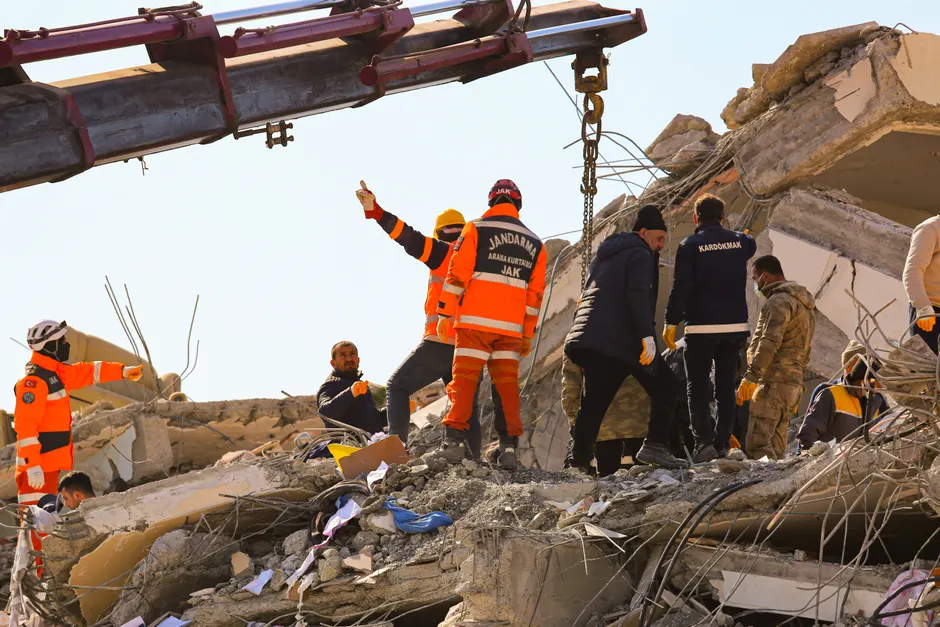
Powerful Earthquakes Kill Hundreds in Venezuela; Rescue Teams Race Against Time

At least 920 people died and 3,360 were injured when two strong earthquakes hit Venezuela on the evening of June 24, 2026. Thousands more are still missing as rescue teams from Venezuela and abroad dig through the wreckage, Reuters and AP reported on June 26.
The larger earthquake measured 7.5 on the magnitude scale, with its center about 16 kilometers southwest of the city of Morón. The quake was shallow — only 10 kilometers deep — which is important because shallow earthquakes shake the ground harder than deeper ones of the same strength, causing more building collapses. Morón is in a densely packed region along Venezuela's northern coast that includes the capital, Caracas, and the port city of La Guaira.
The Impact on People
The death and injury numbers reported by Venezuelan authorities on June 26 will almost certainly go up. When buildings collapse in earthquakes, rescue teams need days to reach survivors trapped under the rubble. Most of the missing people will likely be found in the coming days, and many may not be alive. Large numbers of survivors lost their homes and are sleeping in cars, under trees, or in makeshift shelters.
Venezuela's hospitals and emergency services were already stretched thin before the earthquakes. Foreign rescue teams started arriving on June 26, but the real challenge is getting food, water, and medical care to everyone who needs it. Getting supplies to people and distributing them quickly will determine how many lives can be saved in the coming weeks.
Why This Hit So Hard
Venezuela's economy has been collapsing for the past decade. Inflation has made money nearly worthless, and about seven million Venezuelans have left the country to find work elsewhere. This has meant less money for hospitals, fire departments, and the people who check that buildings are safe before people move in. Many buildings in Venezuela are old and not built to withstand strong earthquakes.
Venezuela's northern coast sits on a fault line where two giant pieces of Earth's crust — the Caribbean plate and the South American plate — meet and rub against each other. This area has had destructive earthquakes before, in 1812 and again in 1997. But knowing a disaster can happen does not make dealing with one any easier.
A Story in the Rubble
Among the thousands who died, one story spread widely. A Venezuelan soccer player named Hector Bello posted on social media that his partner — the mother of their daughter — died while shielding their child during the earthquakes. "You gave your own life for our daughter," he wrote. News outlets reported his story because it gave a real face to the death toll — a reminder that each number represents a person with a family.
What Happens Next
Rescue teams are in a race against the clock. People buried in rubble can survive without food for a few weeks, but without water they die in about three days. The earthquakes struck on Wednesday night, so rescue teams have until Saturday morning to find as many living survivors as possible.
After the rescue phase ends, Venezuela will need to rebuild. The country is already very poor and has tense relationships with many Western governments due to political disputes and economic sanctions. It is unclear whether other countries will ease those restrictions to help Venezuela recover — though it has happened in other disaster situations around the world.
The number of people who died will likely climb as more bodies are found. It will take weeks before anyone knows the true scale of the damage.