Swiss Glaciers Hit a Turning Point: What Happens When the Snow Melts Away
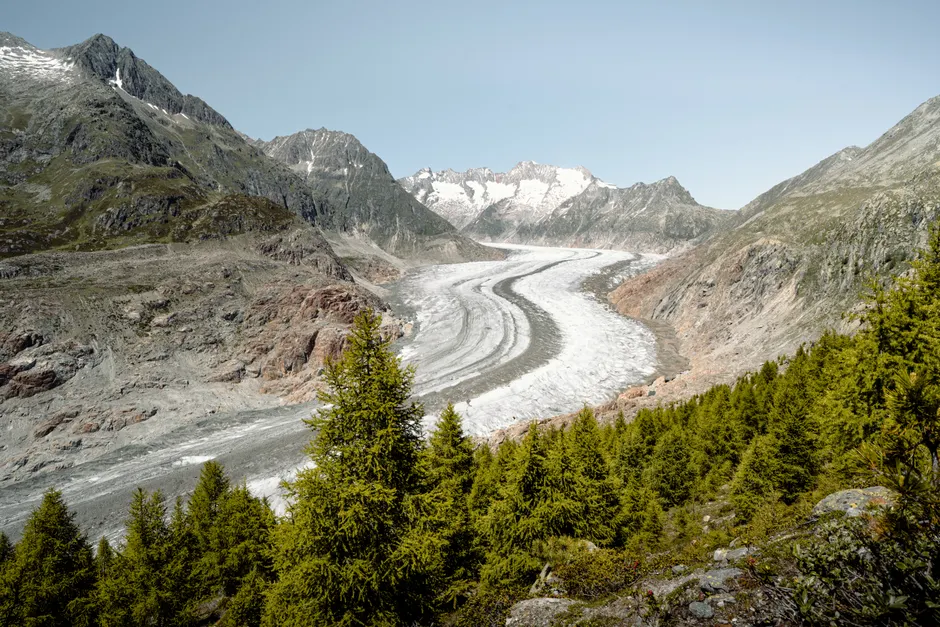
Swiss Glaciers Hit a Turning Point: What Happens When the Snow Melts Away
On June 29, 2026, Switzerland's glaciers reached what scientists call Glacier Loss Day. It's the moment when winter's accumulated snow has completely melted away, leaving only the permanent ice underneath exposed to the summer sun. ETH Zurich reported this milestone on June 26.
This date matters more than it might seem. The timing is not just a curiosity — it's a structural shift in how these glaciers behave.
Why the Timing Matters
Here's how glaciers normally work: each winter, snow piles on top of them. That snow acts like a blanket, insulating the glacier ice beneath and slowing melt. Summer comes, the snow gradually disappears, and by mid-to-late summer the bare ice finally starts melting. This natural rhythm keeps total ice loss within limits.
This year was different. By arriving three weeks earlier than usual, Glacier Loss Day means the bare ice sits exposed through July and August — the hottest months in the Alps. Bare ice is dark. It absorbs far more solar radiation than snow does. The result: more melt, less of the protective cushion that previously contained the damage.
A Year of Severe Losses
The context makes this worse. In 2025, Swiss glaciers shed 3% of their total volume in a single year, Reuters reported in October 2025. That happened because winter brought less snow than average, followed by heat waves in June. A 3% loss in one year is extreme by historical standards. Switzerland has about 1,400 separate glaciers, and when they lose that much ice, they don't bounce back within decades — not under current climate conditions.
Behind these yearly shocks sits a steady, grinding loss. Swiss glaciers are losing about 0.73 cubic kilometers of ice per year, according to MeteoSwiss. That's not an abstract percentage — it's a concrete amount of frozen water vanishing from the Alps each year. The Cryospheric Commission's monitoring report confirms that Swiss glaciers are retreating in size and mass, a trend unbroken across multiple decades.
The Practical Problem Ahead
The real stakes emerge downstream. Alpine glaciers do something essential: they store water during snowy winters and release it during hot, dry summers. Think of them as nature's reservoirs. In July and August, when farms need water and cities use more water for cooling, glaciers quietly supply it through their melt. Rivers like the Rhine and Rhône depend on this steady summer flow.
As glaciers shrink, that function breaks down. Rivers fed by glacier melt face lower water levels precisely when demand is highest. This matters for agriculture and drinking water. It also matters for power: about 60% of Swiss electricity comes from hydropower, which depends on reliable river flow.
The legal framework makes this even more complex. Switzerland shares water with France, Germany, and the Netherlands through treaties designed decades ago, when glacier melt was predictable and abundant. Those agreements haven't changed to match what's actually happening now.
Looking Forward
The broader context here is straightforward: scientists have precise data on what is happening to glaciers. The political and legal systems that govern water use haven't kept pace with the speed of change. The June 2026 milestone — arriving earlier than in any recent year — will likely force those systems to move faster. Whether they respond in time is a different question.


