Why 3D Movies Look Better on Video Glasses
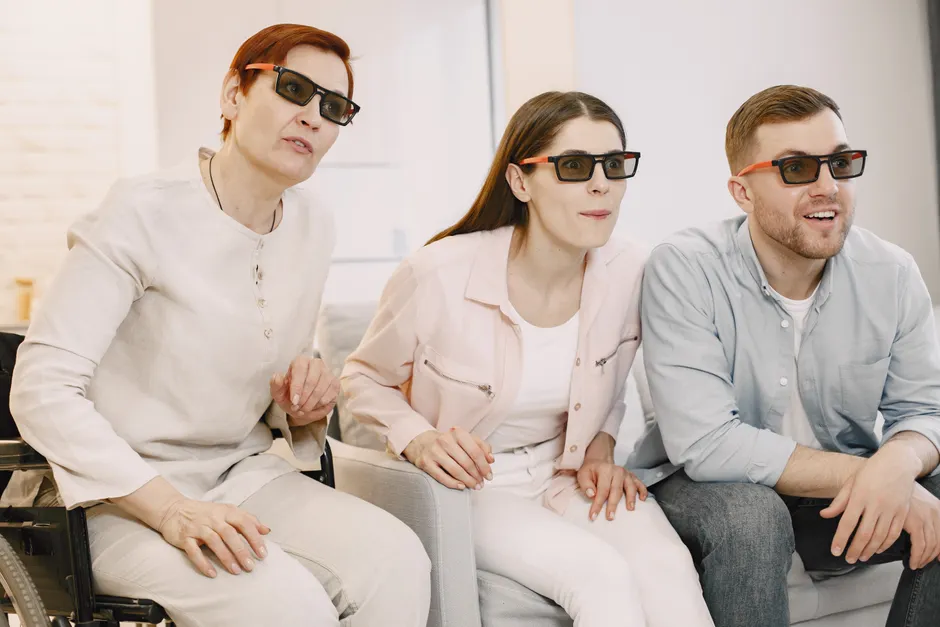
3D movies look good again when you watch them on video glasses. That is the argument of a feature published Oct. 3, 2026, which points to current headsets and plugged-in glasses as a private screen for 3D film, or film that sends a different image to each eye The Verge.
Avatar became the highest-grossing film worldwide. It set the pattern for the last round of 3D in theaters. The series still sells tickets. The third Avatar film opened with $345 million worldwide, with $88 million in the United States and Canada according to Disney Reuters.
The old living-room problem is gone here. The Xreal One Pro gives a large, flat private screen for devices you plug in. The image is described as feeling like a 171-inch screen using micro-OLED, a small display that is very bright and fast The Verge. What matters is brightness, how long each pixel stays lit, and how much the left and right views overlap, not just size. A steady virtual screen with no ghost image between eyes is more comfortable than the old shutter glasses used with LCD TVs.
Tethered glasses and side-by-side input
Xreal glasses must be plugged with USB-C into a source of 3D, such as a laptop, handheld game device, or phone. If you press and hold the right button, you get separate left and right views for side-by-side (SBS) 3D. With the right file, that gives full 1080p to each eye.
SBS squeezes two 960x1080 halves into one 1920x1080 frame. The glasses split the frame and stretch each half for its own tiny screen. There is no dimming from filter glasses. There is no flicker from shutters. Delay stays tied to video sent directly over USB-C, called DisplayPort Alt Mode, which keeps motion smooth for 24p film, or 24 frames per second.
XREAL uses the same path across its models. The One Series includes REAL 3D, which turns any flat video into 3D on the spot. The 1S is listed with a 500-inch spatial screen and the same power to turn 2D into 3D. The menus include a 3D Mode for watching 3D movies. The XBX A01+ glasses support SBS, where left-eye and right-eye images sit side by side.
Depth guessed from flat video is not the same as true 3D shot with two lenses. The difference shows at edges where one thing covers another, and in bright reflections. True SBS copies from 3D Blu-ray or downloads keep the depth timing set by the director. Live conversion is fine for casual watching but can flatten shapes and leave halos.
Making 3D is also getting cheaper. The Xreal Beam Pro has two cameras that shoot 1080p 3D video and 50-megapixel 3D photos for viewing in glasses The Verge. At the top end, Billie Eilish's concert film was shot by Cameron with 16 twin cameras including four remote-controlled AGITO camera rigs. One setup uses two lenses spaced like eyes for home clips. The other uses cinema cameras locked in sync, with exact control of the distance between lenses.
VR headsets and native streaming
Video apps on Meta Quest and Steam Frame include SBS 3D switches. Apple Vision Pro and coming Meta VR Glasses can stream 3D films directly.
On Quest, Bigscreen is a VR theater where you can watch 3D movies with friends. It supports Side-by-Side 3D or Over-Under 3D, where halves sit top and bottom. Over-under keeps full width but loses side detail, which fits some TV masters. SBS keeps side detail but loses vertical detail per eye. With both switches built in, you do not need to convert files first.
More films are coming. Bigscreen and Paramount Pictures announced a multi-year deal to release 3D and 2D films in VR across 10 countries. Meta's VR entertainment page states users can stream creators in immersive 3D. You rent or buy inside a shared theater, instead of only copying over your own files.
Apple's path is more joined up. Apple Vision Pro has more pixels than a 4K TV per eye and plays bought or rented 3D movies with sharp motion and brightness. Apple TV has a 3D Movies collection with Hoppers, Dune, and Gravity. In the Apple TV app on Vision Pro, you can watch Apple Immersive Video, described as 180-degree 8K recordings with Spatial Audio, or sound that stays in place as you turn your head. That is separate from cinema 3D stored at full resolution. It uses a wide view and head-tracked sound to put you inside the scene, not in front of a virtual screen. It is like stepping into the recording rather than looking at a big TV only you can see.
The broader context here is that 3D failed at home because it needed a new TV, new glasses, and new discs all at once. This time it is reversed. People already own these displays for work travel, handheld games, and VR movies and work. 3D becomes a setting and a file type, not a new TV.
In my view, that makes it easier to try in a healthy way. I watched my own children ignore 3D on TVs and then sit through full films on headsets without complaints about weight or dimming, because the image was private, large, and steady. Comfort and lenses still limit how long you can watch. Headsets that show the real world through cameras trade sharpness for immersion. Plugged-in glasses keep sharp text and clear flat video plus some 3D, while full VR gives size and being together at higher cost.
Looking at what this means for people who make and watch video, clean files matter most. Correct SBS labels, correct eye order, and matched color between eyes matter more than pixel count. Creators can now make phone-shot spatial clips, headset-native immersive video, and full cinema 3D. Viewers can pick light USB-C glasses or a heavier headset with a store and shared screenings. Either path avoids dark glasses in a bright living room.