SpaceX Wants to Be Your Phone Company, From Space and on the Ground

SpaceX has bought radio licenses to turn Starlink Mobile into a major U.S. phone carrier that would compete with T-Mobile, AT&T and Verizon. The Verge
The licenses cover up to 14 megahertz of paired spectrum in the 800 MHz band. You can think of spectrum as lanes on a highway for radio signals. Paired means one set for sending and one set for receiving. These low-band frequencies travel far and pass through walls and buildings. SpaceX says that fixes the indoor problem that has limited early direct-to-device service, where normal phones connect straight to satellites. Full service still needs FCC approval.
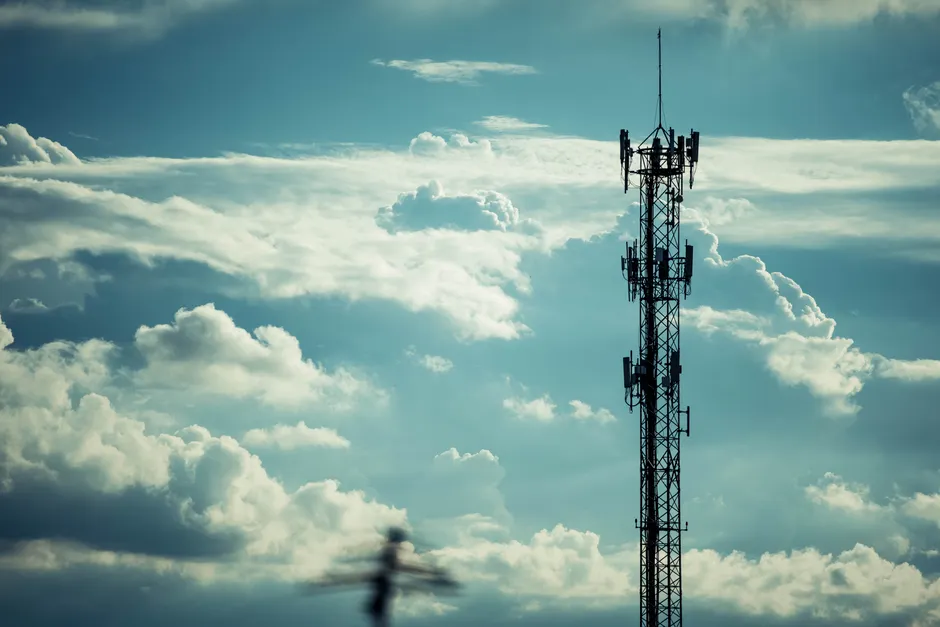
SpaceX says it will link its satellites that serve phones with a ground network of cell towers, once the FCC approves. It says Starlink Mobile could be the first carrier to put satellite and ground frequencies in one service. The Verge
That plan needs many more satellites in orbit. The FCC has approved SpaceX to launch 15,000 V2 Starlink Mobile satellites. SpaceX says those V2 satellites will carry more than 100 times the data capacity of the current ones. Right now there are about 9,600 Starlink broadband and mobile satellites, according to company papers approved in June. SpaceX EU Prospectus
Spectrum stack
The 800 MHz purchase adds to earlier spectrum buys centered on EchoStar. SpaceX had already bought 2 GHz spectrum from EchoStar to help its phone-to-satellite service. The Verge
The EchoStar deals cover 65 megahertz of wireless licenses. They were reported as two purchases worth about $17 billion and $2.6 billion. Reuters The FCC later put the total at $19.6 billion. FCC
The FCC issued an order moving EchoStar's AWS-4, AWS-H Block and unpaired AWS-3 licenses to SpaceX. FCC Order Another approval covers certain EchoStar spectrum and ground-station licenses, with a trust holding them for up to two years. FCC EchoStar's international rights will go to SpaceX as part of the deal. FCC
SpaceX has also agreed to buy S-band spectrum in the U.S. and global Mobile Satellite Service licenses. Those MSS rights matter outside the U.S., where each country has its own phone bands and sharing rules.
From gap filler to competitor
Until now, Starlink's phone role in the U.S. was backup only. Under a rental deal with T-Mobile, second-generation Starlink satellites can serve customers outside T-Mobile coverage. FCC In that setup, the ground carriers kept control of the customer, the core network and the main spectrum.
The new plan flips that setup. Starlink Mobile would use its own ground towers for busy areas and indoor use. Satellites would cover wide areas where towers cost too much to build. Low-band ground frequencies reach far and enter buildings but carry less data at once. Satellite links cover more land but face strict power and interference limits to normal phones.
Other countries are part of the plan too. SpaceX reported new Starlink Mobile deals with SoftBank, NTT Docomo and Spark NZ in its second-quarter 2026 results. SpaceX Q2 2026 Results The FCC also planned to vote on a new spectrum auction to help direct-to-device services, which could shape how satellite backup and ground rights fit together. Reuters
The broader context here is a change in what a phone network is. For 30 years, coverage meant towers, cables linking them, and license areas on maps. Phone-to-satellite links stretched the edge of that map. A carrier using both would remove that edge, at least on paper.
In my view, the hard building work will decide if that idea holds. A ground network still needs tower sites, power, fiber or wireless links, and care not to interfere with nearby carriers. Owning spectrum does not remove those costs. The V2 claim of 100 times more capacity needs care too. One hundred times a small start can still be tight in a crowded area.
Looking ahead, there is still reason for hope about what more choice could bring. Real network competition is rare in U.S. mobile. If SpaceX passes FCC review, pays for towers and hits its V2 goals, users could stay connected when the ground signal drops, with no extra steps or gear. That will be proved by steady handoffs, good upload speeds at the edge, and service inside concrete buildings on a busy afternoon.