Scientists Can Now Read Sentences Directly From Your Brain (Without Surgery)
Researchers at Meta have built a system that can read what you are thinking — specifically, complete sentences — by monitoring your brain activity, without requiring any surgical procedure. The system, called Brain2Qwerty v2, achieved an accuracy rate of 78% on test groups, according to research published on 29 June 2026.
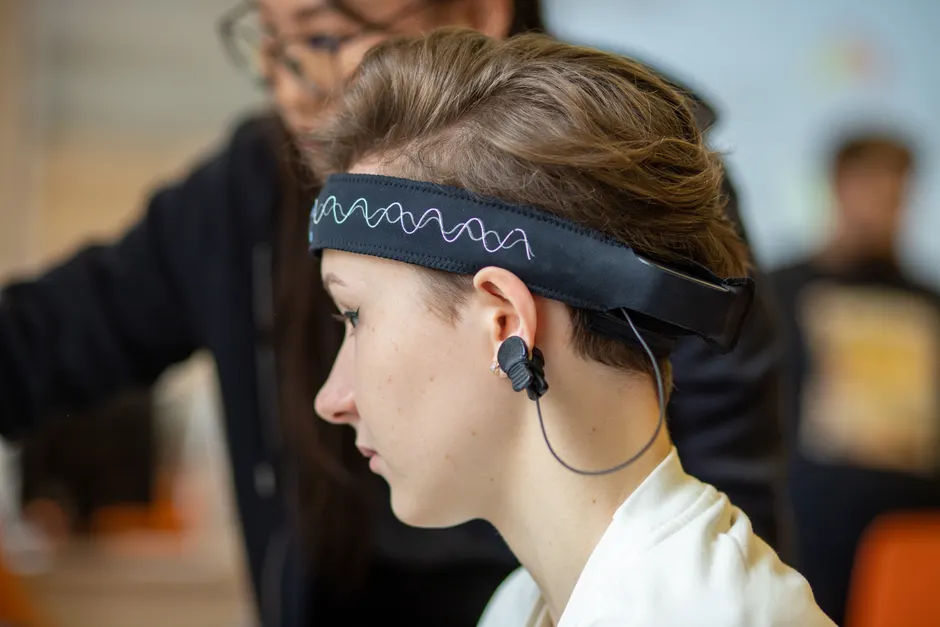
Here is how it works: volunteers wore a cap covered with sensors that detect magnetic signals coming from the brain. These sensors measure the electrical activity of thought itself. A computer system trained on thousands of examples then translates those brain signals into actual words and sentences.
Before now, scientists could only decode simple, isolated words from brain activity. Reading complete sentences — where word order and meaning matter — is much harder. This version of the system represents a major step forward because it can now handle the complexity of real language: how one word leads to the next, how grammar shapes the signal, how sentences flow.
There is an important practical detail. The machine that reads the brain signals is large, expensive, and expensive to operate. It needs to sit in a specially shielded room to work properly. You won't be wearing one of these devices to send text messages or control your phone. For now, this technology is aimed at people in hospitals or clinics — specifically people who have lost the ability to move and speak due to severe injury or disease. If someone is paralyzed or has conditions like ALS, even a slow way to communicate through a computer could give them back a voice.
There are other brain-reading systems being developed, some that use tiny electrodes surgically implanted in the brain. Those systems pick up stronger signals and can transmit more information faster, but they require surgery and carry medical risks. Meta's approach is different: it skips the surgery and instead relies on smarter computer learning to make sense of weaker signals from outside the skull.
The 78% accuracy number needs context to make sense. If one word in five is wrong, a person trying to communicate would need help fixing those errors. Imagine dictating to a transcriber who mishears roughly every fifth word. Language-correction software can catch many of these mistakes automatically by reading the full sentence and guessing which word doesn't make sense. But for real, smooth conversation, accuracy still matters.
So what happens next? The work was published by Meta as open science — other researchers can see exactly how it was done. Meta has been funding brain-computer research for years because the company is betting that future augmented reality glasses might respond directly to thought instead of hand gestures or voice commands. Whether this particular research becomes a product, becomes a clinical tool to help patients, or remains mainly a scientific breakthrough is still unknown. It depends on approval from regulators, testing with actual patients, and business decisions that lie ahead.


