A Treasured Cathedral Artwork Has Been Damaged—And It's Happened Before
A Treasured Cathedral Artwork Has Been Damaged—And It's Happened Before
A panel of Coventry Cathedral's famous West Screen was damaged during preparations for a music event, according to a report published on 1 July 2026 by The Guardian. The damage adds to a troubling pattern for one of Britain's most important buildings built after World War II.
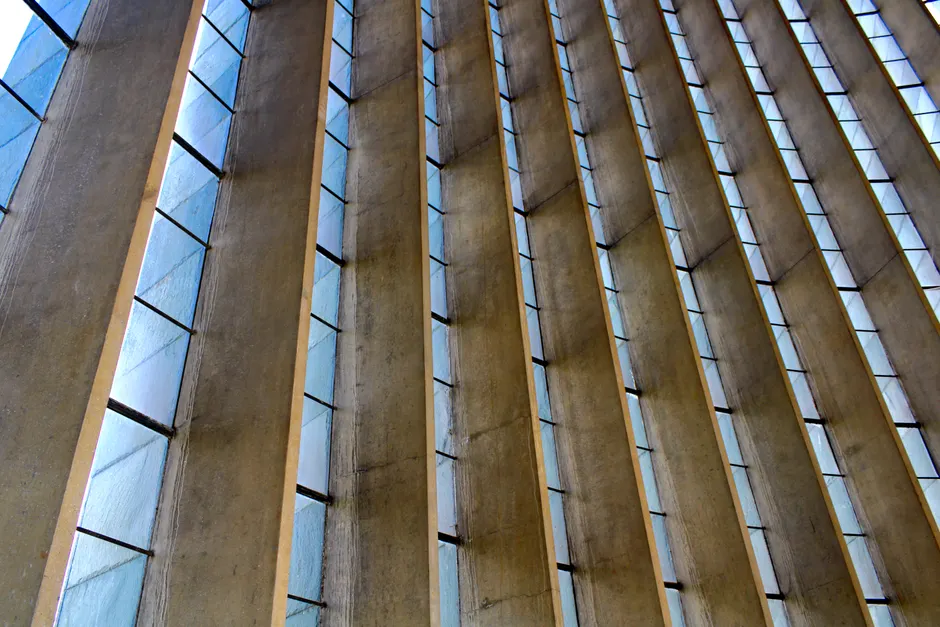
The West Screen is a floor-to-ceiling wall of glass at the cathedral's front entrance. It took artist John Hutton ten years to complete. The screen holds 66 hand-carved figures of saints and angels, made using a special wheel-engraving method directly onto glass that was already in place. The work is technically remarkable: each figure has exceptional depth and a translucent quality that comes from Hutton's precise hand-engraving method.
This screen is not mere decoration. It sits between the new cathedral, designed by architect Basil Spence, and the ruins of the medieval St Michael's—a church bombed in November 1940. The screen is essential to the building's identity and purpose as a symbol of renewal after destruction.
This is not the first time the screen has been seriously damaged. In January 2020, someone deliberately attacked and shattered a panel depicting 'The Angel of the Eternal Gospel' beyond repair. The cathedral brought in specialist conservators from Recclesia Stained Glass to repair the damage. That restoration work was still being completed as recently as July 2023. In the meantime, the cathedral invited artists to propose temporary works to fill the empty space left by the destroyed panel—an initiative covered by the BBC in April 2022. Rather than treat the gap as simply a loss, the cathedral used it as a way to involve the community.
The cathedral's response to that earlier attack drew on Coventry's identity as a place of reconciliation and peace-building. The institution has created significant programming around turning moments of destruction into opportunities for connection. Whether the same approach will be used for this latest incident is not yet clear.
Both incidents reveal the same underlying problem: vulnerability. The West Screen sits in an actively used public building. Coventry Cathedral hosts concerts, community events, and large installations throughout the year. Managing these events near irreplaceable mid-twentieth-century glass is risky. Hutton died in 1978, and no artist working today has the same specialist skills in this particular wheel-engraving technique at the architectural scale Hutton mastered. The conservators and venue managers now need to think carefully about how to reduce these risks.
Recclesia Stained Glass's earlier conservation work gives the cathedral a significant advantage: the conservators already have direct experience with Hutton's glass. That matters. Engraved glass is different from traditional leaded stained glass. With leaded glass, conservators can replace individual pieces. Engraved glass requires working with the surface itself. When damage occurs, conservators must determine whether the engraved surface is compromised, whether the panel's structural strength is affected, and whether any repair or stabilization is possible.
The cathedral has not yet confirmed the full details of the current damage—where exactly on the screen it is, how extensive it is, and whether it can be fixed. What is clear is the pattern: a fragile, one-of-a-kind artwork in a busy public building, damaged twice in six years under completely different circumstances.
For heritage conservators and the managers of historic buildings, this raises a practical question: what physical protections and separation protocols should be in place when temporary event equipment is installed near irreplaceable heritage glass? This question matters beyond Coventry. Many listed and scheduled buildings across the UK host commercial and cultural events to help pay for their upkeep. This creates a real tension—buildings need the income from events, but hosting those events puts artwork at risk. There is no simple answer.


