A New Telescope Begins Recording the Whole Sky, and Living Robots Help in Disasters
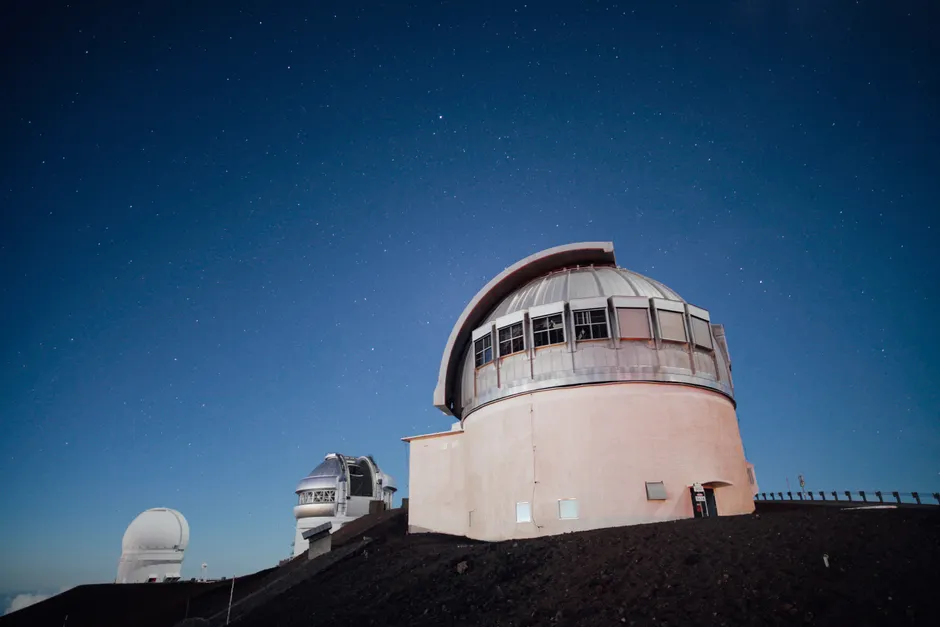
The World's Largest Digital Camera Starts Watching the Sky
On June 30, 2026, a new observatory in Chile began a ten-year project to photograph the sky repeatedly. The camera it uses is the largest digital camera ever made — with 3,200 megapixels. Each night, it takes about one thousand photos and generates roughly ten terabytes of data (the equivalent of about 2,500 full-length movies in high definition).
What makes this project unusual is that it photographs the same patch of sky over and over. The entire southern sky will be photographed roughly 800 times over the next ten years. This repeated approach allows scientists to spot things that change or move — like exploding stars, objects moving through space, or the subtle bending of light caused by massive amounts of matter.
Scientists use dramatic language about the project. Brian Stone of the National Science Foundation called it "the greatest cosmic movie ever made." The reason for the excitement is that ten years of repeated observations, accumulated together, creates the biggest dataset of its kind. Over the decade, the observatory will collect enough data to fill several petabytes of storage — roughly the equivalent of all the books in every library on Earth, stored as data.
The camera took its first test images in summer 2025, reported by Engadget, before the official survey started. This gave engineers a chance to check that everything worked correctly under real conditions.
All this data will be useful for artificial intelligence systems. Because the images are taken in a regular, repeating pattern over many years, computers can be trained to recognize patterns — like spotting rare events in space, or identifying moving objects. The observatory was designed from the start with this in mind; it is not an afterthought.
The dataset will likely become one of the most valuable tools for teaching computers to understand astronomy over the next decade, simply because no other dataset like it exists — so much sky, observed so many times, over so many years.
Living Robots Help Find People in Disasters
In separate news, researchers in Singapore and Japan have created cyborg cockroaches — living Madagascar hissing cockroaches fitted with tiny electronic controls — that can survive underwater for hours. According to Engadget, they achieve this with a small tank that generates oxygen and tubes connected to the cockroach's breathing holes.
Normally, cockroaches can only breathe air. The apparatus provides a fresh oxygen supply, letting them explore places that would otherwise kill them — like flooded basements or collapsed buildings filled with water.
For the first time, these cyborg cockroaches were used in a real search-and-rescue operation after an earthquake in Myanmar. Humans and robots cannot easily reach flooded spaces inside collapsed buildings, but a small creature with electronic controls can squeeze through rubble and explore areas where survivors might be trapped. The technology has moved from something scientists tested in the lab to something that actually helps in emergencies.
The Same Idea, Different Scales
Both of these projects work on the same principle: using technology to see into places humans cannot easily reach. The telescope looks at distant space. The cyborg cockroaches look into flooded rubble. The engineering is completely different, but the core idea is the same — technology extending human sight and reach into the unknown.


