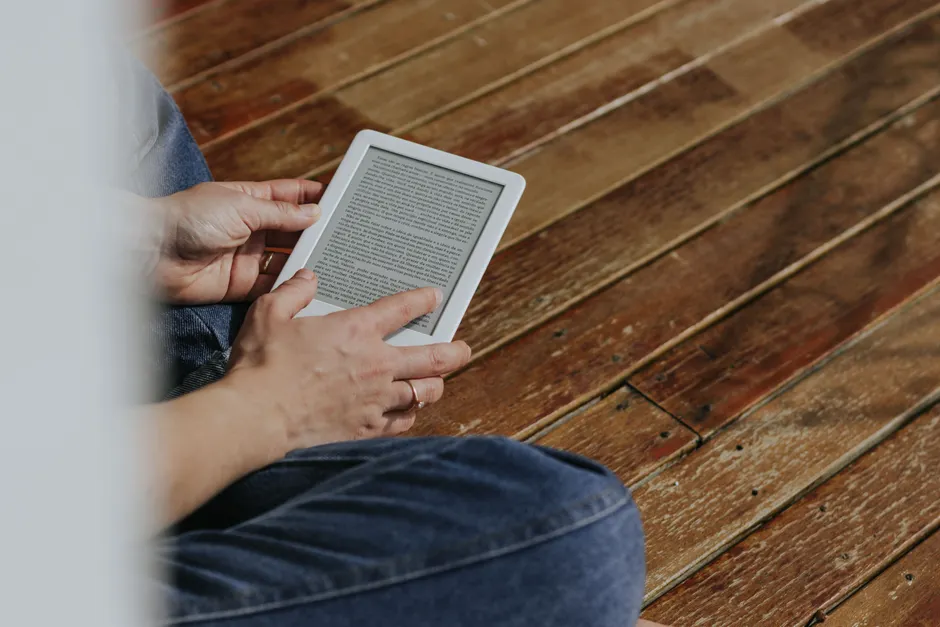
Xteink's Tiny E-Reader Clips Right Onto Your Phone

Xteink's Tiny E-Reader Clips Right Onto Your Phone
A Chinese company called Xteink has released a new device called the X3—a very small e-reader that sticks magnetically to the back of your smartphone. It launched in early 2024 and costs $79. The idea is simple: if you like to read but don't want to carry around a separate e-reader, this tiny screen clips onto your phone instead.
What It Looks Like and How It Works
The X3 is about the size of a credit card, measuring 3.7 inches across the screen. It attaches to your phone using magnets—the same magnetic system that Apple uses with iPhones and MagSafe accessories. If your phone doesn't have built-in magnets, Xteink includes two adhesive magnetic rings you can stick on the back of your phone.
The device has its own small battery that lasts 10 to 14 days if you read for 1 to 3 hours each day, according to Xteink's specifications. You charge it with a special cable that has small magnetic pins on the end—not the standard USB-C cable your phone probably uses. That means you need to carry a separate charging cable just for this device.
It has physical buttons to turn pages, and you can also shake the device to turn the page hands-free. The screen uses e-ink technology, which is the same technology used in Amazon Kindle devices and most dedicated e-readers.
A Trade-Off: Smaller Screen, Limited Reading Options
The X3 only works with Xteink's own reading app. You cannot use other reading apps, and you cannot add your own books or content in the way you might with a traditional e-reader. This locks you into whatever Xteink offers.
The Xteink company describes its mission as "developing intuitive reading experiences, encouraging continuous learning and exploration, and building a community of thoughtful readers." But the closed approach means fewer choices about where you get your books and what reading tools you can use.
At 3.7 inches, this screen is much smaller than a typical e-reader, which usually ranges from 6 to 10 inches. Think of it like reading a book printed on a greeting card instead of a standard paperback. Smaller fonts and detailed layouts become harder to read. For casual reading of simple text, it works. For anything more complex, it becomes a challenge.
The Context: Why This Exists
We have seen this pattern before. When Apple introduced MagSafe in 2020, many companies figured out creative ways to attach useful devices to phones. Xteink looked at that trend and asked: what if we made an e-reader that magnetically clips on instead of a separate device you have to carry.
For context, Xteink is a small company compared to big players like Amazon (which makes Kindles) and Kobo (another major e-reader maker). At $79, the X3 costs more than some basic e-readers but less than a quality dedicated device. You are paying extra mainly for the small size and magnetic attachment, not for better screen quality or features.
The real question this device tries to solve is straightforward: do you want to read without carrying two separate gadgets in your pocket or bag. If the answer is yes, this could appeal to you.
What Could Go Wrong
In practice, a few things could limit how well this device works. Magnetic attachment strength can weaken over time. If your phone has a thick protective case, the magnets might not grip strongly enough. Cases designed to block magnetic attachments would make this device unusable.
The proprietary charging cable is another concern. If you travel and forget the cable, you have no way to charge the device. A standard USB-C port would give you more flexibility.
How often Xteink updates its software, and whether they add more content and reading features over time, will largely determine whether this device remains useful or becomes abandoned software. These are details you can only assess after using the device for weeks or months.
In my view, the X3 is an interesting experiment rather than a major breakthrough in e-readers. It solves a real problem—device proliferation—but makes real trade-offs in screen size and software flexibility. It will appeal primarily to people who read casual content on the go and don't want to carry a second device. For people who read novels, dense documents, or need access to many book sources, a traditional e-reader remains a better choice.
The success of niche devices like this one usually comes down to execution details that only become clear with time: whether the magnetic attachment stays reliable, whether the software improves, and whether people actually want to read on such a small screen for extended periods.