A £8.2bn Scottish AI Project Promised Clean Energy. The Documents Show It Never Could.

Internal government messages obtained by The Guardian through Freedom of Information requests reveal that UK officials and the developers of a massive artificial intelligence datacentre in Scotland knew privately that they could not power it with renewable energy on-site — even though they promised the public exactly that. The investigation, published 6 July 2026, shows a disconnect between what was announced and what the project could actually do.
The Lanarkshire datacentre, announced in January 2026, was supposed to be Scotland's showcase for AI investment. The government said it would create over 3,400 high-value jobs, invest up to £543m in the local community, and run entirely on renewable power generated at the site. It was supposed to open by 2030. Local leaders in North Lanarkshire were even more optimistic, talking about 7,000 jobs including indirect employment across supply chains.
The Energy Problem
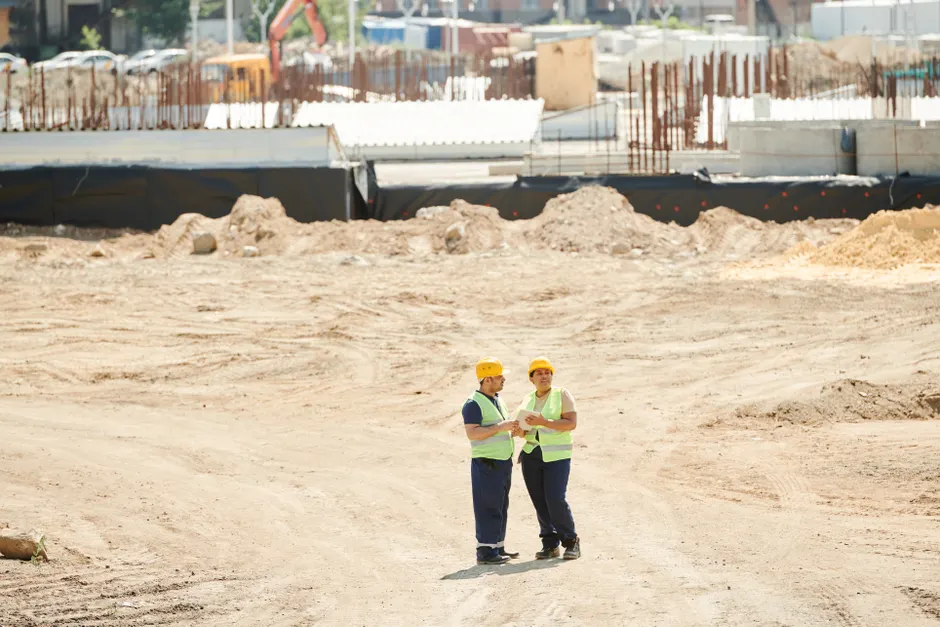
The promise of 1 gigawatt — enough power for roughly 250,000 homes — of renewable energy on-site was always unrealistic. To generate that much power from solar panels or wind turbines built next to the datacentre would need about 44 square kilometres of land. (For perspective: that is roughly the size of 6,000 football fields.) As of July 2026, the developers controlled less than a tenth of that amount. Nobody publicly said this when the project was announced.
When The Guardian asked the government about this, the official answer changed. A government spokesperson now said the datacentre would get its power from the national grid — the network of power lines that connects homes and businesses across the country — rather than from solar and wind farms built next to it. They still claimed the grid power would be mostly renewable. This is very different from the original promise, and it creates a new problem: the UK's electricity grid is already overwhelmed. New connections to the grid now face an eight-to-ten-year waiting list. The same queue affects hospitals, new housing developments, and other datacentres. On top of that, industrial electricity in the UK costs more than anywhere else in Europe.
The company building the datacentre, DataVita, had said in its own communications that the AI infrastructure would be "powered by renewable energy." CoreWeave, a partner company, described the plan as "the most advanced data centre, backed by renewable energy." The leaked documents suggest that by the time the government officially approved the project in January 2026, both officials and the developers knew on-site renewables were not going to work.
Local Communities Left Out of the Loop
In the villages near the datacentre site, the picture is confused. In late 2025, representatives from a company called Oakes Energy Services knocked on doors in Newarthill, a village east of Glasgow, and sent letters asking residents to private meetings about solar farm plans. They offered incentives: free solar panels, trees planted in residents' gardens, or cash payments. But resident Diane Davidson said that none of these offers were put in writing or made legally binding. The Guardian found no clear connection between this company and DataVita, raising questions about whether anyone was actually coordinating the energy plans.
A different solar farm proposal, submitted by another company called Locogen on behalf of a larger international energy group, added to the confusion. Work was already under way beside the datacentre when the Guardian's investigation took place.
This is part of a larger pattern. In March 2026, The Guardian found that several major UK datacentre announcements are what it called "phantom investments" — projects announced with big job numbers that the government does not actually check or verify. Cecilia Rikap, a professor at University College London, told the paper that governments worldwide, including the UK, are "making political promises that ignore the realities of building infrastructure" for AI. An engineer who worked on similar projects put it plainly: there "doesn't seem to be appropriate scrutiny" on these big national projects.
Lanarkshire is not the only case. In June 2026, the Scottish Parliament published a report on datacentres, and the BBC reported that people in Fife were opposing datacentre plans in their area. An earlier Guardian investigation found that a Scottish government policy meant to attract datacentres could allow large amounts of carbon pollution to go uncounted.
The real problem is structural and simple. The UK's plan to become an AI powerhouse is hitting two hard limits at the same time: the grid connection queue is years long, and building enough solar and wind farms on-site to power the datacentre would require land the developers do not have. Announcing both a 2030 opening date and 1GW of clean power on-site — without actually securing either the land or a spot in the grid queue — creates a promise that cannot be delivered.
What makes this troubling is the lack of transparency. When a government announces a major investment with specific promises about jobs and environmental impact, those promises become part of why local communities agree to host it. The shift from on-site renewable power to grid power is a big change in how the project works and how much carbon it will produce. Yet the public was never told.