Samsung's Profit Just Surged 19-Fold. Here's Why the Stock Fell Anyway.
Samsung's Profit Just Surged 19-Fold. Here's Why the Stock Fell Anyway.
Samsung Electronics said it made 89.4 trillion won (about $58.4 billion) in operating profit in the second quarter of 2026 — that's 19 times what it earned in the same quarter last year, according to guidance released July 7 CNBC. Wall Street analysts expected less. The company has now posted record profits three quarters in a row Reuters.
Yet when Samsung announced this number, investors sold the stock. The company's market value dropped by more than $80 billion in the days that followed Reuters. That might seem backwards. A company crushes expectations and its share price goes down. But that actually happens fairly often in markets, and it tells you something important about how investors think.
What Samsung Actually Did
To understand the size of this profit number, step back. In the previous three years combined — a period that included a severe slump in memory chip prices and a slow recovery — Samsung made less total profit than it just made in a single quarter Reuters.
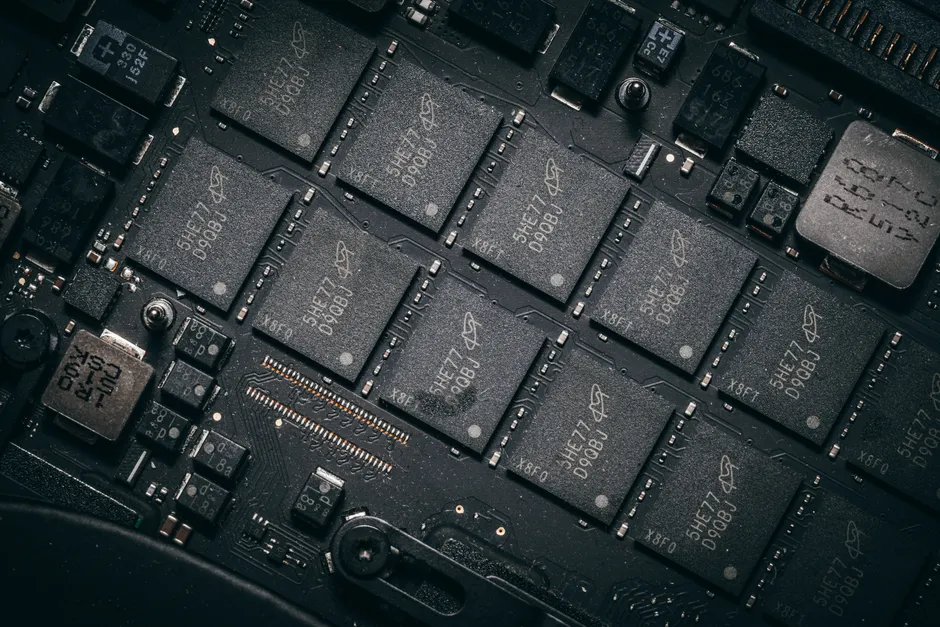
The driver has been artificial intelligence. Companies like Amazon, Google, and Microsoft are building massive AI systems, and those systems need memory chips — the hardware that stores and retrieves data very quickly. Samsung makes those chips. Because demand has been so strong, the price of memory chips has climbed through 2026, and Samsung's semiconductor division (called Device Solutions) has become the company's main profit engine again Reuters.
In the first quarter of this year, Samsung's total revenue hit 133.9 trillion won, up 43% from the quarter before. The semiconductor division alone brought in 81.7 trillion won of that, with 53.7 trillion won in operating profit Samsung Newsroom. The second-quarter guidance doesn't break down which division did what, so the full picture waits until Samsung reports full results later this month Samsung Newsroom.
Why Did the Stock Price Fall?
Here's where the disconnect between profit and stock price makes sense.
Markets don't react to good news in isolation. They react to the gap between what people expected and what actually happened. Samsung's stock has already had a steep climb over the past several quarters because investors were betting the company would do well. A 19-fold profit jump sounds enormous, but it may have been close to what analysts were already modeling. The headline beat the forecast — but perhaps not by much.
When that happens, investors already holding the stock sometimes take their profit and sell. Others may have worried that the company won't be able to keep this pace going, or they may wonder if memory chip prices have gotten so high that they can't stay there. Still others may have simply reshuffled their portfolios ahead of Samsung's full earnings report, which comes July 30 Samsung IR. The $80 billion drop in market value likely reflects some mix of all three.
What Comes Next
The real test happens on July 30, when Samsung holds its earnings conference call at 10:00 a.m. Korean Standard Time Samsung IR. That's when the company breaks down profit by division — semiconductors, phones, displays, and the rest. Management will also discuss plans to spend on new factories and how much AI-focused memory chip it plans to make in the second half of the year. That's the conversation where details matter.
For anyone watching the semiconductor industry, the key question is not whether memory chips will stay profitable right now — they clearly are — but whether they stay profitable. Memory chips have historically been a boom-and-bust business. When prices rise, companies rush to build new factories. Once that new capacity turns on, prices often crash. Samsung, SK Hynix, and Micron are all running their current chip-making equipment nearly flat out to keep up with AI demand, and that's part of why they have pricing power at the moment. But once those three companies finish building more factories, supply will catch up, and the cycle could turn.
That's a legitimate worry, but also a forecast. And forecasts about when and how memory cycles will end deserve skepticism rather than blind belief.
For people who aren't in the semiconductor business, Samsung's profit surge is a window into something broader: whether companies are still spending heavily on AI infrastructure. A profit jump this steep, sustained across three quarters, suggests the big cloud companies — Amazon, Google, Microsoft — are still pouring money into building AI systems as of mid-2026. But whether that spending is sustainable beyond this year is a much bigger question than anything in Samsung's guidance, and the July 30 call won't answer it by itself.


