Lake Powell Is Dropping Fast—Here's Why It Matters
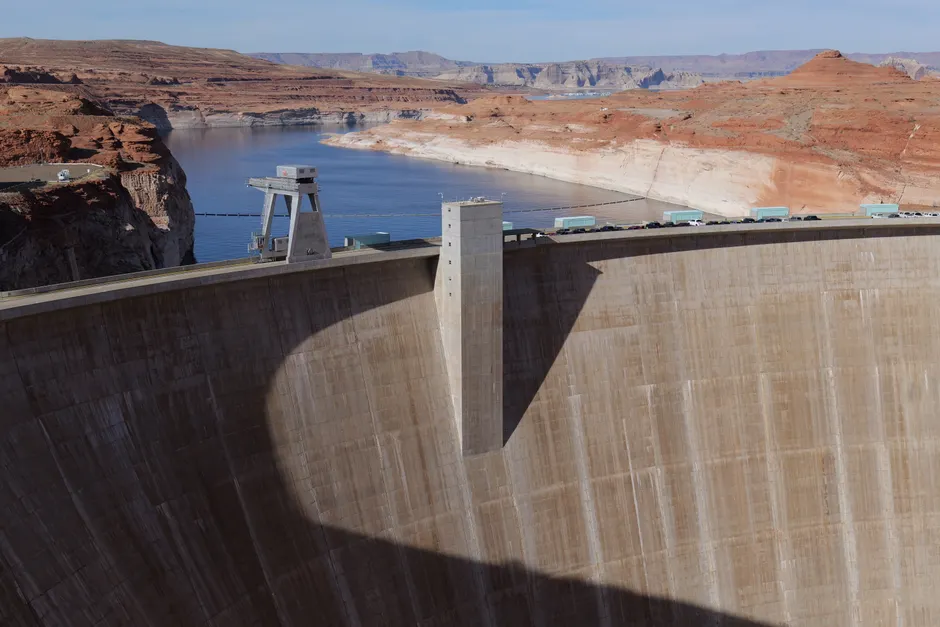
Lake Powell, one of America's largest reservoirs, has dropped to roughly 23% full. That means it holds about 5.6 million acre-feet of water out of 26 million it can hold. According to Jack Schmidt, who studies the Colorado River at Utah State University, the reservoir is headed for historically low levels by fall 2026 The Guardian. The 185-mile-long lake straddles the Utah-Arizona border and began June lower than it was in May. Without heavy snow or rain, officials expect it to keep dropping for the next eight months.
Why the Lake Is Shrinking
The reason is straightforward: the Rocky Mountains received their worst snowpack in recorded history last winter. Then, in March, a record-breaking heat wave swept across the Southwest, melting what little snow existed and causing water to evaporate faster than normal Reuters. In April, Lake Powell received only 372,000 acre-feet of water — just 41% of what usually flows in — while Glen Canyon Dam released 471,000 acre-feet. This meant the lake lost more water than it gained. The water level dropped to 3,526.99 feet, which is 173 feet below the maximum USBR. Dam operators have started releasing less water to try to slow the drop.
A Critical Problem: The Dam Needs Enough Water to Make Power
Glen Canyon Dam has turbines that generate electricity, but they only work if the lake has enough water. The lowest level at which the turbines can operate is 3,490 feet. Lake Powell is now only 37 feet above that line. If the lake drops further, the dam will stop producing power Inc.. That could happen as soon as August. According to the US Bureau of Reclamation, in a worst-case scenario the lake could end the year at 3,504.32 feet—still above the minimum, but dangerously close.
This matters because Glen Canyon Dam supplies electricity to nearly 6 million homes and businesses. If the turbines stop working, millions of people could lose power during the hottest part of summer when air conditioning demand is highest. The Colorado River—which feeds Lake Powell—supplies water to 40 million people across seven states: California, Nevada, Arizona, New Mexico, Colorado, Utah, and Wyoming. Mexico also depends on the river. In Utah, the situation is so tight that streams and wells have already started running dry Salt Lake Tribune.
Except for a brief dip in 2023, Lake Powell hasn't been this low since 1965, two years after the dam was completed. Officials don't expect a quick recovery like the one in 2023 because the snowpack deficit is already built into 2026's predictions.
Another Risk: Damage to the Dam Itself
There's a second problem: cavitation, which occurs when water moves so fast through pipes or channels that it creates bubbles. These bubbles can damage concrete and steel. This same phenomenon harmed Glen Canyon Dam in 1983, and it could happen again now that the reservoir is at historic lows Colorado Sun. Operating the dam at such low levels—in ways it wasn't designed for—raises the risk of structural damage.
The States Can't Agree on How to Share Less Water
Seven western states depend on the Colorado River: California, Nevada, Arizona, New Mexico, Colorado, Utah, and Wyoming. These states are supposed to have negotiated new rules by now about how to use less water. They missed their deadline in February 2026 and still can't agree Reuters. The federal government is now considering forcing its own solution Reuters. The current agreement expires at the end of 2026, so any new rules will have to work both as an emergency fix and as the blueprint for how the river operates for years to come.
What's unfolding is a test of whether seven states can cooperate in a crisis, or whether the federal government will have to impose limits. The Colorado River has been shrinking for two decades, but this year's numbers suggest the problem has shifted from a slow decline into a true emergency.