Tesla Starts Building Robots in Its Old Car Factory

Tesla has started making its Optimus robot at its factory in Fremont, California, a plant that used to build electric cars. The company said so on Wednesday, October 21, 2026, the same day it reported its latest three-month results. Its revenue stayed about the same, but its profit dropped sharply.
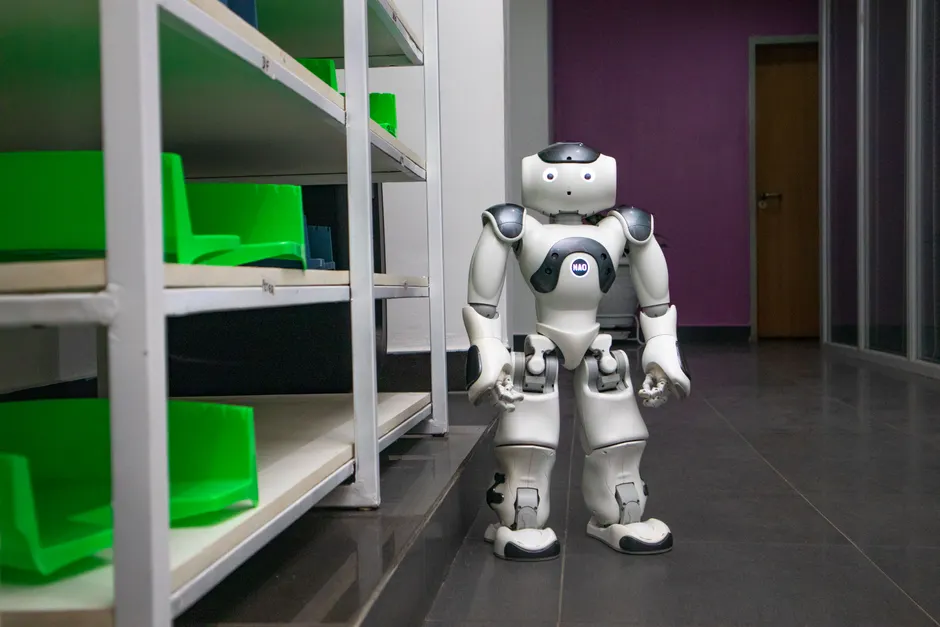
Optimus is a humanoid robot, which means it is built to look and move roughly like a person.
According to Tesla's third-quarter 2026 shareholder letter, the robots coming off the Fremont line are the first ones Tesla has built that are ready for production (Tesla Q3 2026 Update). In its second-quarter update, Tesla said it had shut down the Model S and Model X production lines at Fremont and installed new first-generation equipment. In July, the company said the first robots would be used to collect training data, which is the information a robot learns from (CNBC).
Tesla earned $28.04 billion in revenue in the quarter, close to the $28.09 billion it earned a year earlier. Its net income, the money left after all costs are paid, was $787 million. That was down 43% from $1.37 billion. Tesla blamed lower sales of regulatory credits, which carmakers earn for meeting pollution rules and can sell to other companies. It also pointed to higher spending on AI and Optimus (TechCrunch).
Some parts of the business did better than others. Car sales were flat at about $20 billion. Services grew 33% to $4.6 billion. Solar and battery storage fell 16% to $2.8 billion, which Tesla said was because of refunds to customers linked to tariffs.
Tesla delivered 486,532 cars in the quarter. That is about 6,000 more than in the previous quarter, but fewer than a year earlier. The company also installed 13.7 GWh of energy storage products, up from 13.5 GWh. A gigawatt-hour is a measure of how much energy a battery system can store. Tesla's October 2 release had reported output of over 464,000 cars and deliveries of over 486,000 (Tesla IR).
In April, Tesla's finance chief, Vaibhav Taneja, raised the company's 2026 spending forecast on factories and equipment to $25 billion, up from $9 billion in 2025 (New York Post). Tesla's investor website lists the earnings event for October 21, 2026, with a press release, a question session and a webcast.
The broader context here is spending. Costs for factories and new products have grown much faster than car revenue, and this quarter's growth came from services, not cars. For now, the Fremont news is more a story about costs and factory space than about money coming in. Tesla says the early robots will be used inside the company, so selling them to outside customers is not yet part of the picture.
In my view, the numbers to watch over the next few quarters are how many robots pass inspection the first time, whether the factory can repeat the process reliably, and what each robot costs to build. Those answers will show whether Optimus becomes a source of income or stays a cost the company has to justify. Tesla has not yet given a target for how many robots Fremont will make, so the early months will tell us more than the announcement did.
There is a hopeful side to this as well. Turning a large car plant toward a different kind of machine shows that factory space can be reused. It is a bit like a bakery converting its ovens and counters to make furniture: the building stays the same, but the equipment and skills change. Whether Fremont can make that switch work will take more than one quarter to show.