Oil Hits a Five-Month High, and the Dow Slips 1%
The Dow Jones Industrial Average fell 1% to 52,362.08 on Friday, Oct. 23, 2026, as oil reached a five-month high of $115 a barrel, according to Telegraph's market report. The S&P 500 fell 0.4% in the same session.
Oil was the main driver. Brent, the international benchmark price for crude, traded above $110 in the Wall Street Journal's live coverage. Reuters reported Brent climbing to $116.27 per barrel. U.S. crude rose 2.56% to $102.02.
The WSJ has tied the jump in oil futures and bond yields to military strikes around the Strait of Hormuz, a narrow sea passage that carries a large share of the oil shipped by sea.
The broader point is that the market is pricing a supply risk, and that risk has not been resolved.
The move came after a choppy few days. On Oct. 20, crude hit a five-month high early on Tuesday before reversing, per the New York Post. CNBC reported that prices fell that day as traders hoped for diplomatic progress between the U.S. and Iran. Oil settled with little change on Oct. 21, when investors also weighed possible progress toward Russia-Ukraine talks. Reuters reported that crude touched a five-month high again in its Oct. 22 session. Friday's rise extended that run.
Stocks have moved in the opposite direction from oil, and the pattern is uneven. On Oct. 20, the Dow surged about 1%, more than 500 points, while the S&P 500 rose 0.3%, according to Investopedia.
Reuters' Oct. 22 report had the Dow up 0.02%, the S&P 500 down 1.21% and the Nasdaq down 2.60%. Breadth, meaning how many stocks are rising compared with falling, was thin at the top. The S&P 500 logged 40 new 52-week highs against four new lows. The Nasdaq Composite recorded 82 new highs and 342 new lows. CNN's market data for Oct. 22 had the S&P 500 at 7,663.43, the Nasdaq at 26,008.86 and the Dow at 52,867.98. Friday's Dow reading sits roughly 1% below that level.
Friday's market was mixed beneath the headline. Reuters' Oct. 23 global markets report was headlined "Stocks mixed, day after AI-related selloff; oil prices rise again," and recorded the Nasdaq up 0.2%. Stocks fell at the open, per The Guardian's live coverage.
The Dow can fall while the Nasdaq rises because each index counts its companies differently. The Nasdaq has been the most volatile of the three on AI-related news.
The bigger picture is narrower than the index levels suggest. As of Reuters' Oct. 16 report, more than 180 S&P 500 stocks were down for 2026. In my view, that means the index has held up because a shrinking group of companies has carried it.
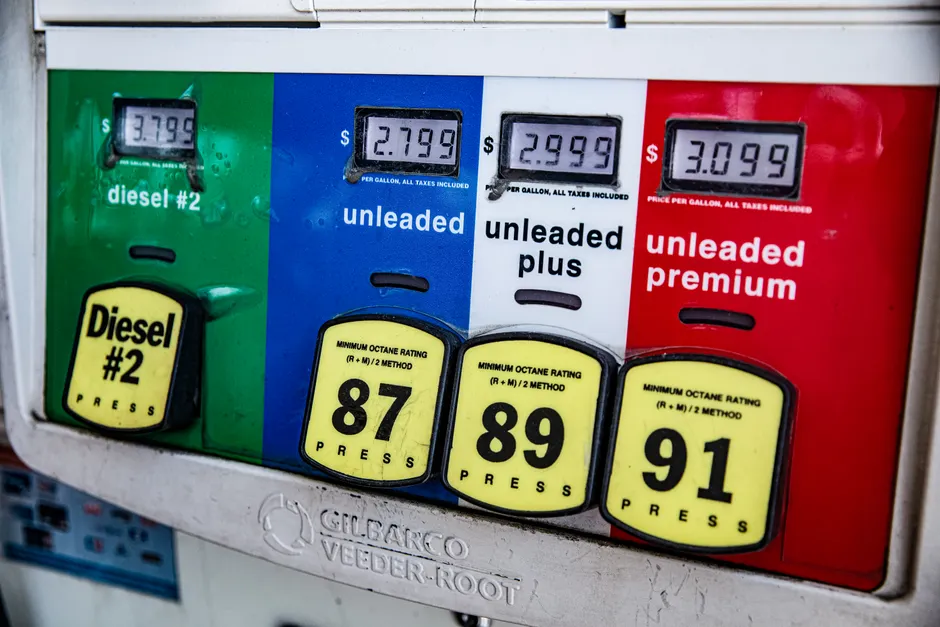
Here is why this matters outside a trading desk. Oil feeds straight into gasoline and heating costs. It also shapes inflation expectations, which means how much people expect prices in general to rise. Those expectations can move bond yields. A yield is the annual return a bond pays, and it moves opposite to the bond's price, so when yields rise, existing bond prices fall. Higher yields also make future company profits worth less today, and they push up borrowing costs for mortgages and other loans whose rates change over time. That is the chain the WSJ's reporting points to when it links the oil spike to rising yields.
The forecasts are where the numbers are least settled. The U.S. Energy Information Administration expects Brent spot prices, the price for oil bought for immediate delivery, to average $105 a barrel in the fourth quarter of 2026. That forecast is $14 higher than the agency's estimate in the prior month's Short-Term Energy Outlook, per the EIA. Brent trading above $110 is already above that average.
Forecasters have revised upward, and the market is pricing a path higher than the agency's quarterly average. In my view, the key question is whether that gap closes through diplomacy or through a lasting supply disruption. The answer will decide whether Friday's jump stays a shock or becomes the new normal. Watch the gap between spot prices and the EIA's average, and whether bond yields follow crude higher.