Amazon Leo Gets U.S. Approval to Buy Globalstar, the Company Behind iPhone Emergency Calls
The U.S. Federal Communications Commission (FCC) has approved Amazon Leo's $11.5 billion purchase of Globalstar, a company that runs satellites for connecting phones and other devices, according to Engadget. The approval was reported on October 27, 2026.
The deal is meant to widen Amazon Leo's network in space. It also lets Amazon move into "direct-to-device" service, where a regular phone connects straight to a satellite instead of a cell tower.
The FCC said the two companies' assets fit together well. It expects Amazon Leo to build a stronger direct-to-device business, and to offer both home internet and mobile service to homes, businesses and government customers. The agency also said the deal is likely to help the public by improving data coverage in areas with weak or no service today.
The FCC's Space Bureau approved Amazon Leo's request to acquire about 25 megahertz of Globalstar's spectrum. Spectrum is the set of radio frequencies that wireless services use, and each slice must be licensed. Globalstar and Amazon had filed applications asking the FCC to approve moving control of Globalstar to Amazon. Shareholders holding the combined voting power of Globalstar's common stock also approved the deal.
The most visible link for consumers runs through Apple. Globalstar currently provides the satellite connection behind Apple's emergency service on compatible iPhones and Apple Watches. Apple also held a 20 percent stake in Globalstar before the takeover.
Under the deal, Amazon Leo will power satellite services for supported iPhone and Apple Watch models. The network that carries those emergency calls will change hands. The phone itself is designed to work the same way for its owner.
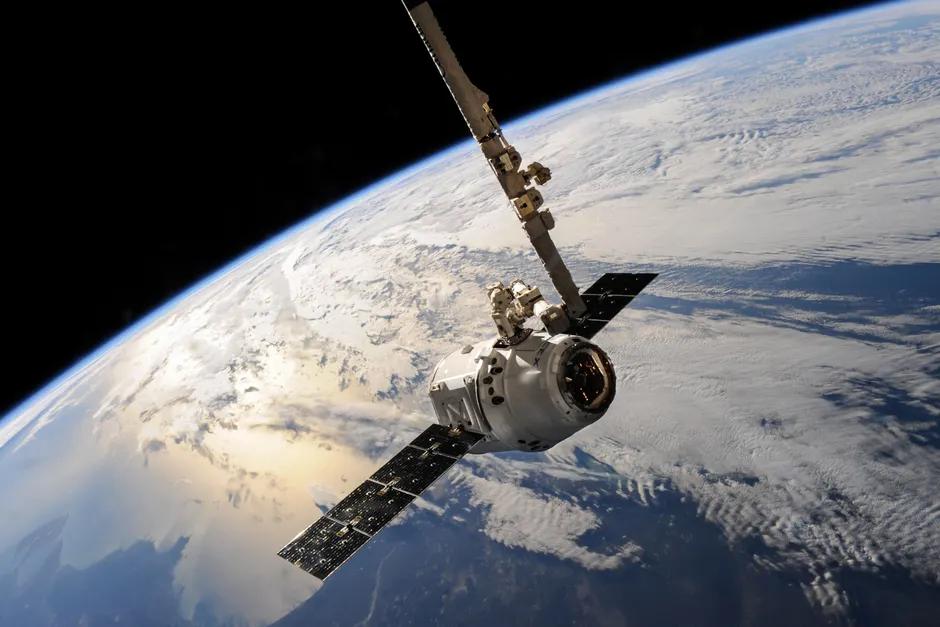
Amazon Leo has 400 satellites in orbit. Amazon aims to have more than 3,000 low-Earth orbit satellites in the near future. In July 2026, Amazon Leo asked the FCC for permission to deploy up to 5,105 new satellites that would use Globalstar's spectrum to carry voice, data and messaging. That request is a proposal, and those satellites have not been deployed. Globalstar's first-generation satellites and its four U.S. gateways, the ground stations that link satellites to the wider network, are licensed by the FCC.
The program has also changed its name. On November 13, 2025, Amazon replaced the Project Kuiper code name with Amazon Leo, which is now the permanent brand for its satellite internet system.
The broader context here is spectrum. Think of it as lanes on a highway. Whoever holds the lanes decides what traffic can use them. Direct-to-device service depends on phones receiving signals from orbit, so the operator that controls the licensed spectrum shapes which features a phone can offer. It also determines how calls pass between satellite and cellular networks, and which carrier partners it must work with. Owning 25 megahertz does not settle those questions by itself. The filing for up to 5,105 more satellites shows how much of the system is still being planned.
In my view, the FCC's three stated benefits are the right tests for the deal: more competition in direct-to-device service, stronger emergency communications, and better data coverage in underserved areas. Each one can be checked in practice. Watch whether service is available in rural and remote regions, how reliably emergency messages get through, and whether other operators can offer similar service. If the integration works as described, the practical gain is connectivity in places that land-based networks do not reach. For the people who live and work in those places, that would be a real change.