OpenAI Is Building Its First Device: A Speaker That Talks Like a Person

OpenAI is working on its first hardware device: a small, portable speaker with no screen that will talk to you like a companion. According to Bloomberg, which reported the news July 14 citing people with knowledge of the project, the device will move on its own using mechanical parts — designed to feel alive in a way that makes it seem less like a machine Bloomberg. Reuters confirmed the same details the same day KFGO.
The speaker will listen and talk to you, control smart home devices like lights and thermostats, and play music or podcasts. It has a built-in camera and sensors so it can sense what's happening around you — whether the room is bright or dark, if you're near the device — and adjust how it responds based on what it detects.
Inside, the device runs an advanced version of GPT-Live, a real-time voice system OpenAI released July 8 that can listen and speak at the same time, the way two people have a normal conversation Reuters. This is the same technology already built into ChatGPT's voice mode; the hardware version is a further refinement.
As for when it comes out and how much it costs, the details are still rough. In February, Reuters reported that the device would likely cost between $200 and $300, citing people informed about the project Reuters. Bloomberg's latest reporting indicates a release sometime in 2027, though the company cautioned that date could slip Engadget.
Design and Legal Backdrop
OpenAI acquired io, a design company founded by Jony Ive (who was Apple's chief design officer for decades), in 2025 for $6.5 billion. Paul Meade, who led development of Apple's Vision Pro headset, now oversees OpenAI's hardware division.
That backstory has drawn serious legal attention. Apple has sued OpenAI, along with two former Apple employees named Chang Liu and Tang Yew Tan, claiming they stole trade secrets before joining OpenAI. The lawsuit alleges that these two employees downloaded confidential files about unreleased Apple products and shared them with OpenAI. Apple has also claimed in court filings that OpenAI has hired more than 400 of its former employees. The company is seeking an injunction to block OpenAI's hardware products from coming to market.
None of these allegations have been tested in court yet, and OpenAI has not publicly acknowledged them. If Apple's request for an injunction succeeds, it could delay or derail the 2027 release date — though nothing in current reporting suggests a court ruling is close.
What This Actually Is
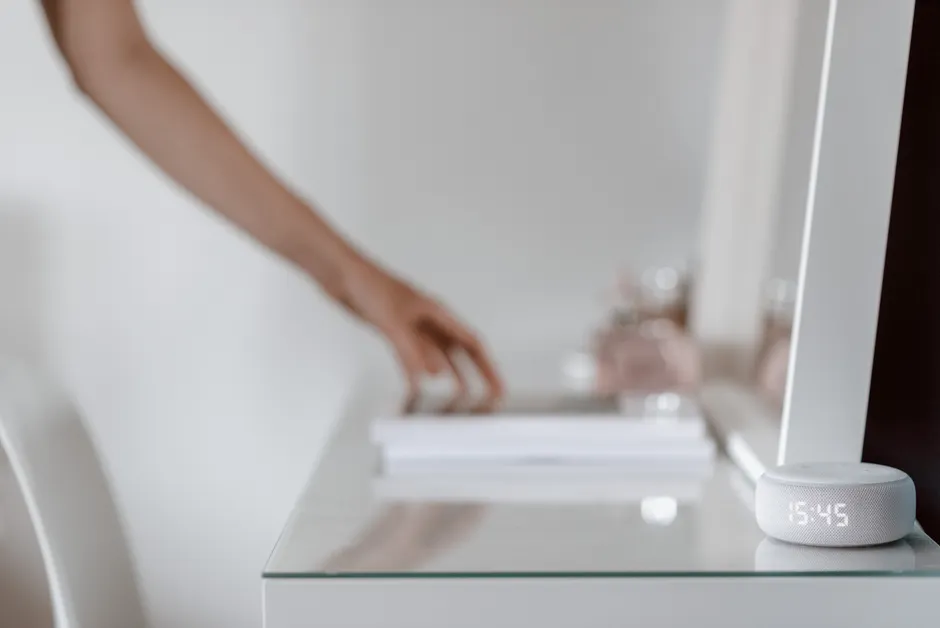
Think of the difference between a traditional smart speaker like Amazon's Alexa and what OpenAI is building. An Alexa device sits on a shelf, listens for you to say a specific wake word, then sends your voice to the cloud to be processed. OpenAI's device is aiming for something different: a physical object that stays on and listens continuously, understands what's happening around you through its camera and sensors, and has a real conversation with you using the advanced voice technology OpenAI developed.
To be direct about what matters here: whether people actually prefer talking to a device that moves and simulates being alive, rather than looking at a screen to see information, is unproven. The technology for having natural conversations is getting much better. But building something consumers genuinely want to keep around — rather than something that ends up in a drawer — depends on whether voice alone is enough for everyday tasks like setting timers, controlling lights, or just having company.
The deeper point worth considering is this. What OpenAI has assembled mirrors almost exactly what made Apple a leader in consumer hardware for two decades: elite industrial designers paired with their own custom chips and software all built as one system. OpenAI adding a former Apple Vision Pro lead and a studio founded by one of the best design minds in the industry suggests the company is serious about hardware. That's presumably why Apple's legal filing names them with such force — it's not routine talent leaving; it's the core architecture of how Apple builds products being reconstructed elsewhere.
Right now, what's publicly confirmed is modest: a voice model, a design partner, a rough price range, a target year, and an unresolved legal dispute over the people involved. The ambition behind it is larger.