A Startup Wants to Teach Robots Using Computer-Made Worlds
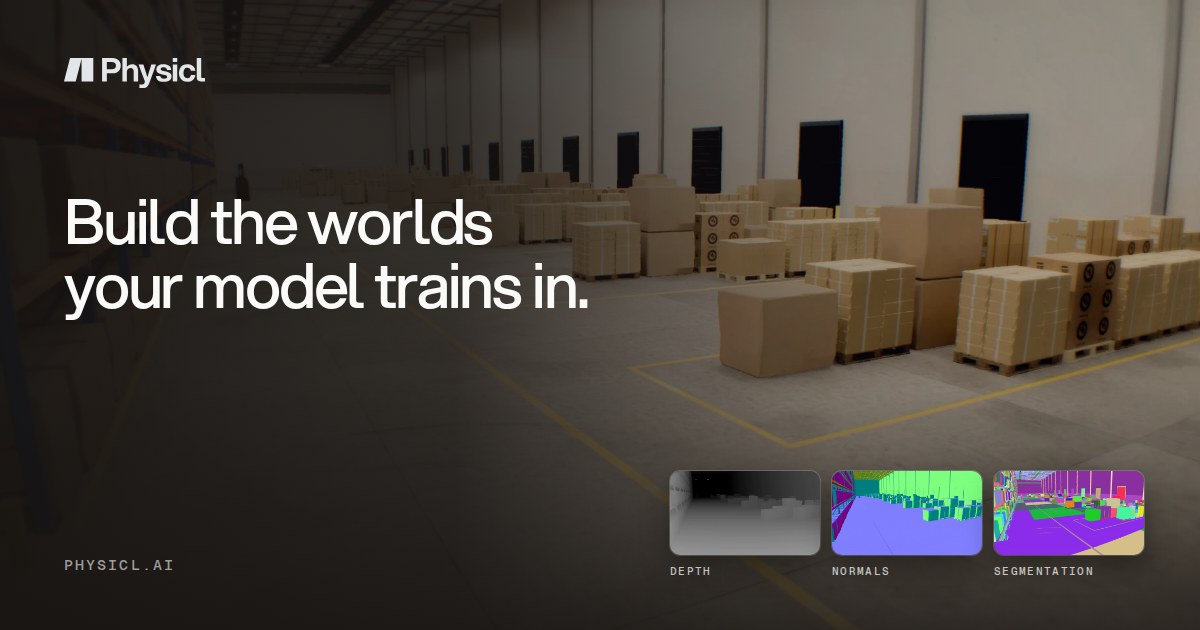
Physicl has raised $10 million in seed funding from Inovia Capital, TechCrunch reported on 6 November 2026. The company's founder and CEO, Alex de Vigan, says its product can help train robots with synthetic data. That is data created by computer instead of collected from the real world.
The company is aiming at two groups. One is the builders of world models, which are AI systems that give a machine a working picture of how a space behaves. The other is the robot builders themselves.
The company says it wants to help these teams solve training problems. Its method is simulation, and it says the simulations can be more realistic and closer to real-world physics.
Its first product is Studio. The company's website describes Studio as being in private beta, which means a limited group of testers can use it. TechCrunch reports that Studio comes with 10,000 3D environments and 100,000 assets, which are individual objects.
Users build scenes from these parts. They then generate synthetic data for a specific vision problem. The example given is a robot that must pick out a cup on a cluttered counter, or a cup sitting in shadow.
The output comes with labels. Think of them as an answer key attached to every image. According to Physicl's website, Studio produces:
- Depth values in metres, showing how far each point is from the camera
- Surface-normal data in RGB, showing which way each surface faces
- Segmentation data with instance IDs, showing which pixels belong to which object
- Per-frame camera-pose data, showing where the camera was for each image
- 2D boxes with classes, which are rectangles drawn around objects and tagged with a name
The company describes itself as the platform that physical AI teams use to generate training data. Physical AI means AI that works in the real world, such as in robots. Those labels are what a robot's vision system usually needs. Making them from a computer render, rather than by hand or from real camera footage, is the core of the offering.
De Vigan spent the last decade building nfinite. That company helped brands and retailers make 3D models of products for online shops. TechCrunch reports that the same work of turning physical objects into digital copies is now being aimed at machine vision instead of shopping websites.
SpAItial, a world model builder, is an early customer. According to the same report, it worked with Physicl to improve product fidelity, meaning how closely a digital copy matches the original. SpAItial's CEO and founder is Matthias Niessner, a professor of robotics at the Technical University of Munich. SpAItial's own tool creates 3D simulations from flat 2D images. That makes it closer to the generative side of the field than Physicl, which builds scenes from parts.
The broader context here is a change in where robot training data comes from. Teams used to rely on people remotely controlling robots to show them tasks, or on footage that humans had labelled by hand. Many are now testing whether computer-rendered worlds can take their place.
The main open question is fidelity. A depth map or segmentation mask made by a computer only helps a robot if the lighting, materials and shapes match what its sensors will see in a factory or a kitchen.
In my view, the most important claim for engineers is not how many assets the library holds. It is whether a model trained in simulation still works in the real world, which engineers call sim-to-real transfer. The company itself names the hard cases: objects blocked by other things on a cluttered surface, and objects in shadow. Simulated systems have often drifted away from reality in exactly those conditions. The funding will pay for testing that, and the SpAItial partnership gives one place to measure the results. Neither the money nor the asset count answers the question on its own.
For engineering teams, the practical question is narrower. Studio uses standard label formats, so its output can feed into code they already have. Whether it cuts the cost of collecting and labelling data depends on how much real-world data it can replace, not just add to. If it can replace real data for even some vision tasks, robots could be trained more cheaply and more quickly.