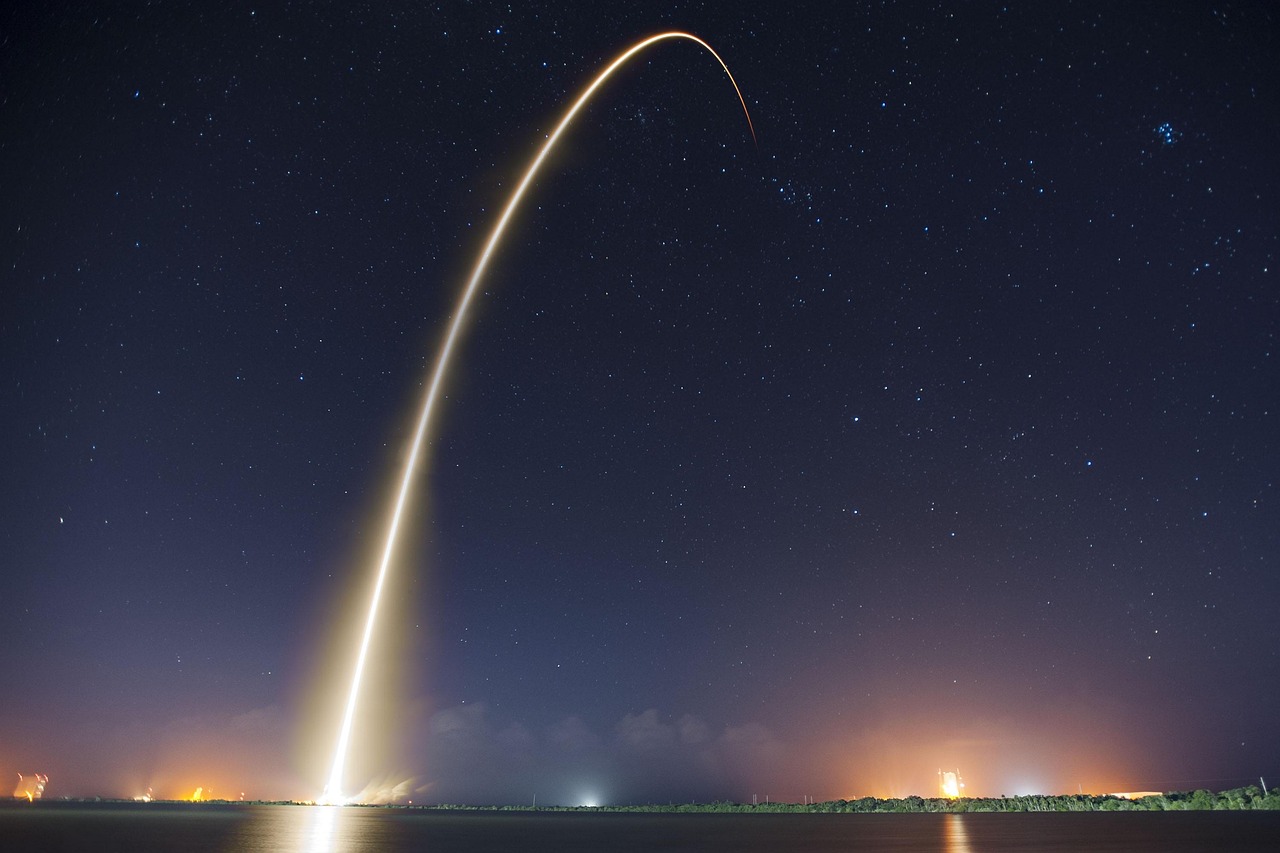
SpaceX Launched Its Giant Rocket Again — and This Time, Shareholders Are Watching

SpaceX is getting ready to launch its thirteenth Starship test flight on Thursday, July 16, 2026, from its site in Boca Chica, Texas. The launch window opens at 5:45 p.m. local time, according to the company's mission page (SpaceX). This is the first Starship flight since SpaceX sold shares to the public for the first time in June 2026 (Bloomberg).
The previous test, Flight 12, launched on May 22, 2026 after a one-day delay. SpaceX stopped the countdown at 40 seconds before launch on May 21 when engineers found a problem with a hydraulic pin (Bloomberg). The vehicle lifted off the next day and successfully released 20 dummy Starlink satellites — test versions of the real satellites SpaceX uses for internet service. Flight 12 was described as a Starship V3 launch (Bloomberg).
Flight 13 is listed as "Expended" on SpaceX's launches page (SpaceX), meaning the rocket will not be recovered after the flight. Starship is designed to be reusable — the goal is to fly the same rocket over and over to bring costs down. Flying expendable means SpaceX is choosing to lose this particular vehicle to collect data on other things, such as how the upper stage performs or how the rocket handles payloads.
The broader context is that this flight comes less than a month after SpaceX joined the Nasdaq-100 index (Reuters), and about three weeks after the investment firm Raymond James set a price target of $800 per share — the highest on Wall Street. Now that anyone can buy and sell SpaceX shares, the results of each test flight matter to how investors feel about the company's value.
SpaceX's path to going public shifted over time. In January 2026, the company was considering raising up to $50 billion at a valuation near $1.5 trillion (Reuters). By the time shares actually went on sale, SpaceX had gone bigger: it sold 555.6 million shares at $135 each, raising a record $75 billion and valuing the company at $1.75 trillion (Reuters) (Reuters).
Trading after the IPO was bumpy. On June 23, shares swung from a low of $147.11 — during a broader market sell-off — to a high of $164.30, a 6% swing in a single day, before closing at $156.11, up nearly 1% (Reuters) (LA Times). The LA Times described the session as a sell-off following the IPO.
The distance between the $135 IPO price and the $800 Raymond James target is so wide that any problem with this flight — or, on the flip side, a clean test that shows the rocket design is working — will feed straight into the debate over whether SpaceX's $1.75 trillion valuation is based on real, near-term launch revenue or on far-future ambitions like Mars, moon missions, and expanding Starlink. Starship is the vehicle meant to deliver on those ambitions; each test flight is a new piece of evidence the market will factor into the stock price.
Separately, SpaceX has a routine Starlink delivery mission scheduled on its Falcon 9 rocket from California on July 20, 2026, with a droneship landing to recover the rocket (SpaceX). While that mission is standard for Falcon 9, it will be watched for consistency — SpaceX's ability to keep launching frequently across both its rocket families is a key reason behind the Raymond James bull case.
For anyone tracking SpaceX shares, Flight 13 will be the first Starship test result available to public investors. The last test (Flight 12) happened before the company was publicly traded. The comparison to Flight 12's satellite deployment will be immediate: if Flight 13 shows progress on how payloads are carried or how the rocket flies, it strengthens the case that Starship is getting closer to being operational. If it reveals new problems, investors will have to weigh that against a stock price that already assumes SpaceX will execute well.