Why Did So Many Democrats Vote Against Israel Aid?
On July 15, 2026, the U.S. House of Representatives voted on whether to stop sending $3.3 billion in military aid to Israel. The effort to cut the aid failed, 314 to 104. But the vote revealed a deep split inside the Democratic Party that could matter for years.
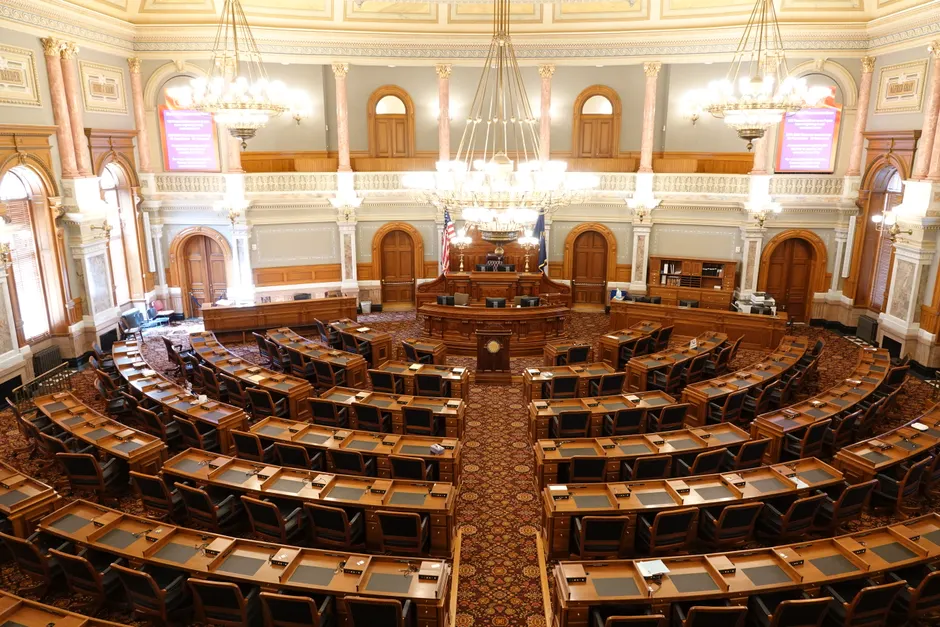
Here is what happened. A Republican lawmaker named Thomas Massie from Kentucky proposed cutting the aid as an amendment — a change to a larger bill (HR 7148). The House held a recorded vote, meaning each member's position is public (House Clerk).
Almost every Republican voted to keep the aid going. Only Massie himself voted to cut it. That Republican unity put Democrats in a tough spot.
The top Democrat in the House, Hakeem Jeffries, had asked his party to vote against the cut. He called the proposal "overly broad" in a letter sent the day before the vote (Politico). But 103 Democrats — nearly half the party — voted for the cut anyway (The Guardian).
One of them was Katherine Clark, the Democrat whose job is to rally party members to follow the leader's position. Her decision to vote against Jeffries was highly unusual. It placed the party's leader and its top enforcer on opposite sides of a major foreign policy question. The Hill reported that Democratic leaders were openly split (The Hill).
Former House Speaker Nancy Pelosi also voted for the cut, but with a catch. She called the amendment "ill-conceived" but said she supported it "for the message that it sends" (The Guardian). Think of it like signing a petition you do not expect to win — you are not trying to pass it, you are trying to send a signal.
Many Democrats felt that signal was necessary. Their progressive voters have grown increasingly unhappy with sending military aid to Israel without conditions. At the same time, party leaders worried that actually cutting the aid could cause problems with national security and alliances. That tension pulled Democrats in two directions.
The broader context here is that Republican leaders chose to allow this vote to happen, and many saw that as a political strategy. By forcing Democrats to take a public position, Republicans created a no-win situation: Democrats who voted to cut the aid could be labeled anti-Israel, while those who voted to keep it could anger their progressive base (The Guardian).
Massie, the Republican who proposed the cut, had already lost his re-election race after pro-Israel groups backed his opponent (The Guardian). Almost no other Republicans joined his effort, showing how isolated he was within his own party. But his proposal gave Democrats a way to register a protest vote.
Politico called the vote a "seismic shift" in the Democratic Party's approach to Israel (Politico). Whether that is true depends on what happens in the next round of spending decisions — if Democrats vote this way again, the shift is real. If they do not, this may have been a one-time protest driven by election-year politics.
Public opinion has moved sharply on this issue. A poll by the Institute for Global Affairs found that only 16% of American adults think aid to Israel should continue without restrictions. Among adults under 30, that number drops to 9% (The Guardian). That is a big gap between what the public wants and what 314 members of Congress voted to keep.
There is also a foreign policy backdrop. Vice President JD Vance recently accused unnamed people "within Israel's system" of trying to undermine his diplomatic efforts with Iran, during a long appearance on Joe Rogan's podcast (The Guardian). His comments suggest the current administration views Israeli influence in Washington with suspicion — a climate that affects Democrats voting on Israel aid, even if their reasons differ from Vance's.
The amendment was never close to passing. What matters politically is the Democratic breakdown: a party leader who could not hold his members in line, a whip who voted against her own leader, a former speaker casting a protest vote, and nearly half the party going on record against $3.3 billion in aid that has been considered untouchable for decades. The next time Congress takes up spending on Israel, we will learn whether this was a one-time release of pressure or the start of a new normal.


