What Happened When 66 Countries Met to Talk About 'Political Terrorism'
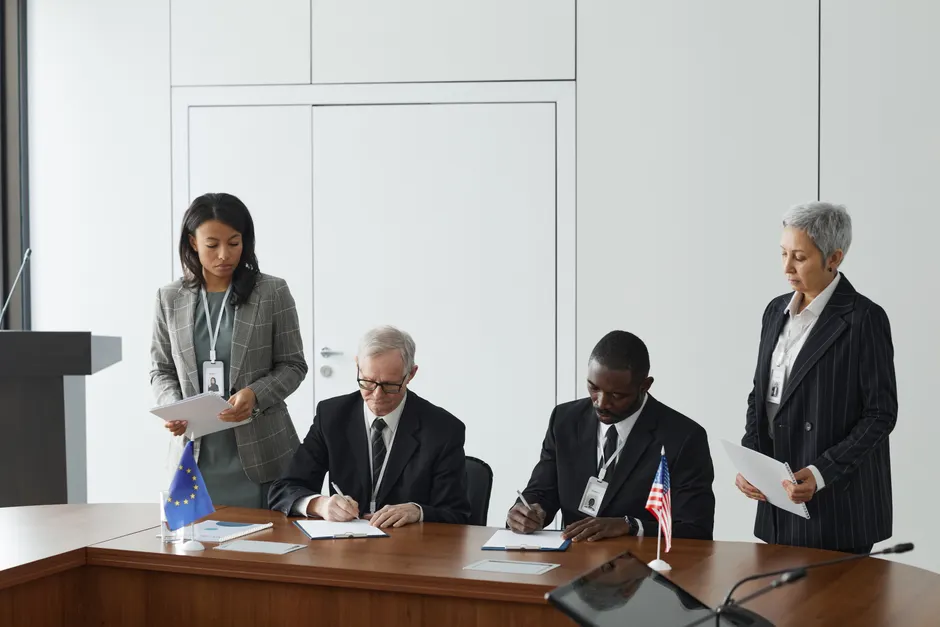
On July 16, 2026, top Trump administration officials hosted a meeting of 66 nations to address what the State Department called the resurgence of political terrorism. Secretary of State Marco Rubio led the event, which was publicly described as a meeting about "political violence." But behind the scenes, there was a mismatch: the public invitation said "political violence," while the State Department's own web address for the event used the stronger term "political terrorism" (The Guardian; U.S. State Department).
The meeting focused only on leftist violence. It did not mention rightwing attacks, including the January 6, 2021 Capitol riot. Rubio called leftists "an encroaching darkness" and "the enemies of civilization." He promised, "We will dismantle these networks brick by brick." He also said the terrorism threat from after 9/11 was "severely diminished" and that the administration was now turning its attention to leftist violence as its main focus (The Guardian).
Stephen Miller, a top Trump adviser, and Scott Bessent, the treasury secretary, attended alongside the 66 nations. Miller said, "The leftist is fundamentally motivated by envy, by hatred, by jealousy." He also dismissed concerns about civil liberties, calling them excuses rather than real arguments. Rubio connected the issue to foreign enemies, saying that Iranian proxy networks and leftist militant groups are "increasingly intimately tied." He said, "We have no choice but to confront this menace together" (The Guardian).
The event built on an earlier step the administration took. In September 2025, the White House officially designated antifa — a loose movement of anti-fascist activists — as a domestic terrorist organization. A White House fact sheet said the group "engages in coordinated efforts to obstruct enforcement of Federal laws." Calling a group a terrorist organization gives the government special tools: it can freeze money, share intelligence with other countries, and use surveillance powers that ordinary crime-fighting does not allow (The White House; The Guardian).
The broader context here is about what happens when you take the tools normally used against international terrorists and apply them to domestic political groups. Think of it like this: labeling someone a terrorist rather than a criminal is like switching from a local police toolbox to a military-grade one. The label unlocks sanctions (government-imposed economic penalties), intelligence-sharing agreements with other countries, and financial tracking tools that normal law enforcement cannot use.
Rubio's claim that Iranian proxy networks and leftist militant groups are tied together matters because it creates a foreign connection. If the administration formally writes this linkage into official intelligence reports, it could allow the government to use foreign surveillance powers — tools normally aimed at foreign threats — against groups it previously treated as domestic political actors, as long as a legal connection to a foreign entity can be shown.
The exclusion of rightwing violence from the meeting narrows what the administration considers "political terrorism." Civil liberties groups have long argued that calling protest movements "terrorism" discourages people from exercising their free speech rights protected by the First Amendment. Miller's dismissal of these concerns suggests the administration plans to push past such challenges rather than engage with them.
For the 66 nations that attended, the meeting creates an expectation that they will share intelligence and coordinate law enforcement against the specific type of threat the United States defined. Whether those countries adopt the "political terrorism" label in their own laws and agreements will shape how far this new system can reach.


