A 110-Year-Old Pipe Burst Under Sunset Boulevard. Here's What Happened and Why It Matters.
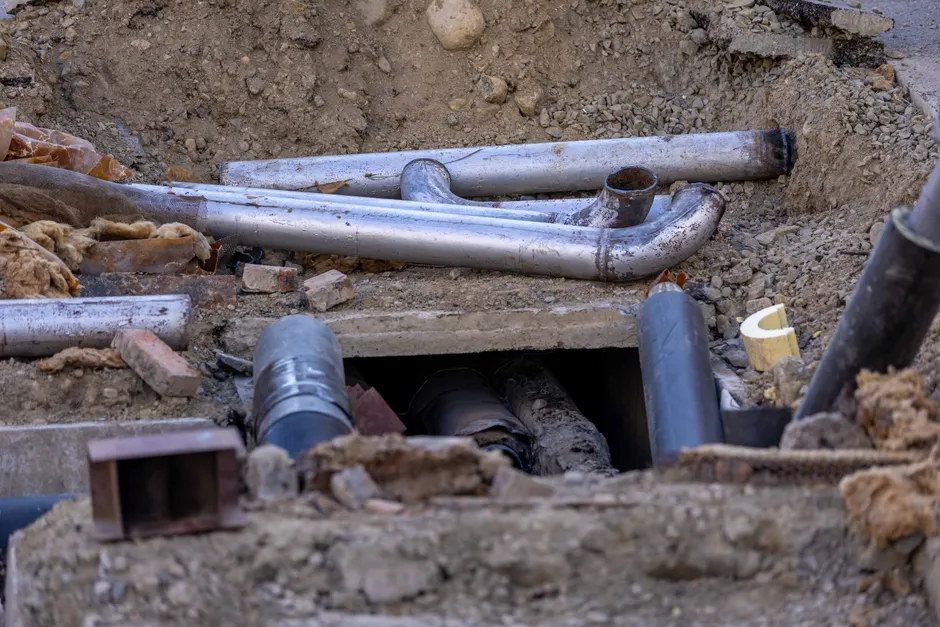
On July 16, 2026, a water pipe built 110 years ago burst underneath Sunset Boulevard in West Hollywood, California. The break opened up a large hole in the road — often called a sinkhole — and flooded the surrounding streets with murky brown water. Local metro buses were left partially submerged. The Los Angeles Department of Water and Power, or LADWP, confirmed the break affected "West Hollywood and the surrounding area near Sunset" (LADWP). The New York Times described the ground collapse as a "giant sinkhole" (New York Times). The Los Angeles Times reported the pipe was 110 years old (Los Angeles Times).
No injuries were reported, according to West Hollywood Mayor John Heilman, who said there was no need for evacuations and that all residents were safe. David Hanson, the interim general manager of LADWP, confirmed that neighborhood residents still had access to clean drinking water. The flooding did cause real damage right away: Dialog Cafe, a brunch spot on the Sunset Strip, sustained significant water damage and temporarily closed.
Anselmo Collins, chief operating officer of LADWP, told reporters the agency did not yet know what caused the pipe to burst. He explained that water pressure usually goes up at night, and that pipe breaks tend to happen during those hours. Collins did not give a timeline for repairs, saying officials were working to shut off smaller valves and figure out the full extent of the problem. LADWP followed its initial public statement with an update titled "LADWP Continues Response Efforts Following West Hollywood Water Main Incident – 11 AM July 16, 2026" (LADWP).
The pipe that burst was installed before West Hollywood even became its own city in 1984. It was made using riveted steel — a method where metal plates are held together with heavy bolts called rivets. That technique was phased out long ago in favor of welded joints, which fuse pipe sections together more durably. But riveted steel pipes are still in use across parts of the city's water system. Collins noted that LADWP replaces about 45 miles of pipe every year, but some sections from the early 1900s are still carrying water today.
The broader context here is a simple math problem. The city replaces 45 miles of pipe per year, but some pipes are over a century old. That gap means some pipes fail before it is their turn to be replaced — like trying to repaint a very large house one room at a time, only to find that the room you started with already needs a fresh coat.
Los Angeles Mayor Karen Bass said the pipe break shows why the city needs a comprehensive infrastructure plan. Bass said a plan was introduced about two months earlier and is scheduled to go before voters on the November 2026 ballot. If passed, that measure would decide whether the city gets new funding to speed up pipe replacements, or whether the current pace continues. The West Hollywood rupture gives supporters of the plan a real-world example to point to, though the cause of this specific break is still under investigation.
For now, the focus is on shutting off valves and assessing the damage. The reason there is no repair timeline yet is that closing valves in a pressurized water system is complicated, and officials also need to check the underground infrastructure for further damage. The sinkhole on a major road like Sunset Boulevard makes that harder, because when the surface collapses, it can mean the soil underneath has shifted beyond the immediate area of the pipe.


