Verizon Now Offers Home Internet 10 Times Faster Than Typical Broadband

Verizon Fios has introduced a new 5Gbps home internet plan, doubling the speed of its previous fastest option and undercutting AT&T's equivalent offering by $30 per month. The plan is live on Verizon's product pages and available for order in select locations as of July 17, 2026. Engadget
Pricing works on a two-track model. The standard rate is $105 per month. New customers switching from another provider can get the plan for $90 per month with a five-year price lock, meaning the rate will not go up for five years. Existing Verizon Fios customers upgrading to the 5Gbps tier receive a three-year price lock. Verizon charges a general $99 setup fee, and enrollment requires credit approval. Verizon
For comparison, AT&T's 5Gbps plan runs $135 per month, or $95 per month for the first 12 months for new customers. Verizon's pricing and longer price-lock periods put the plan in direct competition with AT&T in markets where both providers offer fiber internet. Engadget
A 5Gbps connection is very fast. To put it in perspective, at that speed you could download a full high-definition movie in a few seconds. Verizon's own network documentation specifies average wired speeds between 4.5 and 5.3 Gbps for the tier in both directions, meaning uploads are just as fast as downloads. This is possible because Verizon uses fiber-optic cables, which transmit data as pulses of light and can carry far more information than traditional copper cable lines. Verizon
The previous fastest Verizon Fios plan was 2Gbps. The new tier sits at the top of a five-step ladder that ranges from 300 Mbps to 5 Gbps. Most American households today have internet speeds somewhere between 100 Mbps and 1 Gbps, so 5 Gbps is roughly five to fifty times faster than what many people currently use. Engadget Verizon
Availability is limited to "select locations" rather than nationwide. This is normal for how fiber providers roll out their fastest plans: the physical fiber network in a given area has to have enough capacity to deliver the higher speeds to each household connected to it. Verizon has not specified which markets are eligible.
The broader context here is a competitive market where providers are fighting for customers. The cost of delivering faster speeds over fiber that is already installed is relatively low, so companies use high speeds and attractive pricing to win people over. Verizon's pricing structure rewards switching more generously than loyalty: a new customer pays $90 locked for five years, while an existing customer gets $105 locked for three. The implicit message is that Verizon views the plan as a way to pull customers from competitors first and to reward its own existing customers second.
Against AT&T's $135 list price, Verizon's $105 standard rate creates a meaningful gap. AT&T's promotional $95-for-12-months offer narrows that for new customers, but the five-year price lock on Verizon's $90 switcher rate is structurally harder to match, since it commits Verizon to a fixed revenue per subscriber over a much longer period than AT&T's 12-month promotional window. Whether that trade-off pays off depends on how many customers leave each month and what it costs to acquire new ones in the markets where both providers operate.
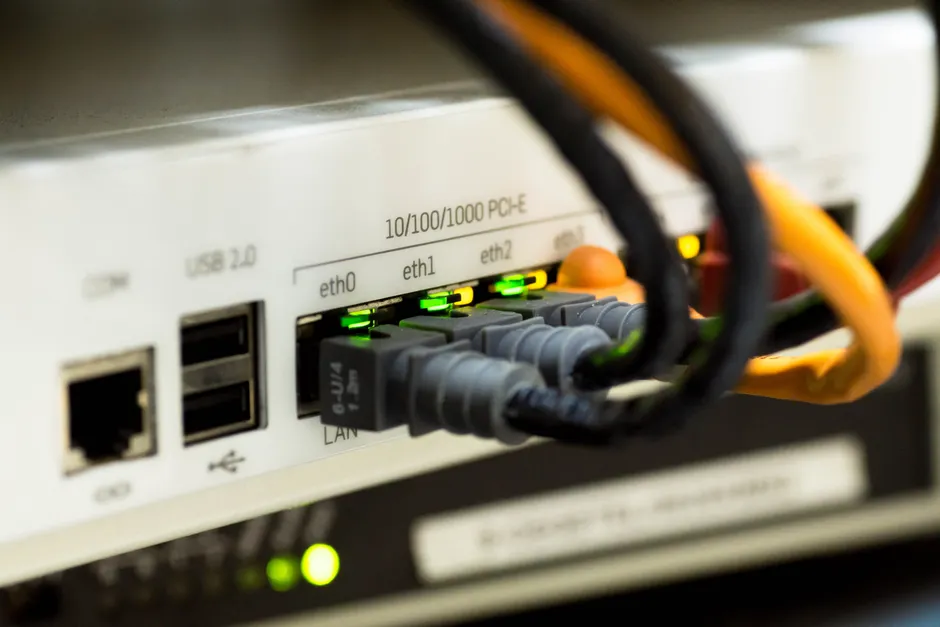
For most people, the practical question is whether their home devices can actually use a connection this fast. Many Wi-Fi routers found in homes today cannot deliver 5Gbps over wireless. A device plugged directly into the router with an Ethernet cable can reach those speeds, but only if the cable, the router port, and the device itself all support 10-gigabit speeds, which is still uncommon in consumer equipment. The plan is most useful in households where many people are using the internet heavily at the same time, or where someone is running a home server or regularly moving very large files to and from the cloud.
Worth flagging is the three-year versus five-year price-lock difference for existing customers. In the internet provider industry, promotional pricing typically favors new sign-ups over keeping current customers, so this structure is not unusual. But it does mean that a current Fios subscriber evaluating the upgrade faces a $15/month premium over a switcher and a shorter rate guarantee, which could nudge some existing customers toward canceling, waiting, and re-signing to capture the better terms. Whether Verizon has built in checks to prevent that is not stated in the available materials.
The plan's "select locations" caveat limits its near-term impact. Very fast residential fiber internet is still a market-by-market proposition in the United States, constrained by where providers have physically laid enough fiber cable to support the higher speeds. Verizon's Fios network is concentrated in the Northeast and Mid-Atlantic, and the 5Gbps tier will succeed or struggle based on whether that footprint overlaps with the households that want it.
What this enables is straightforward. For households that already have fast home networks or are planning to build one, a 5Gbps fiber connection at $105 removes the internet bottleneck that has persisted even as home devices have gotten faster. Internet this fast has been available in pockets for several years; what is changing is the pricing pressure that pushes it toward something a regular household might actually consider, rather than a premium niche. More competition at this tier will eventually expand availability and bring prices down further. That is a slow process, but the direction is the right one.