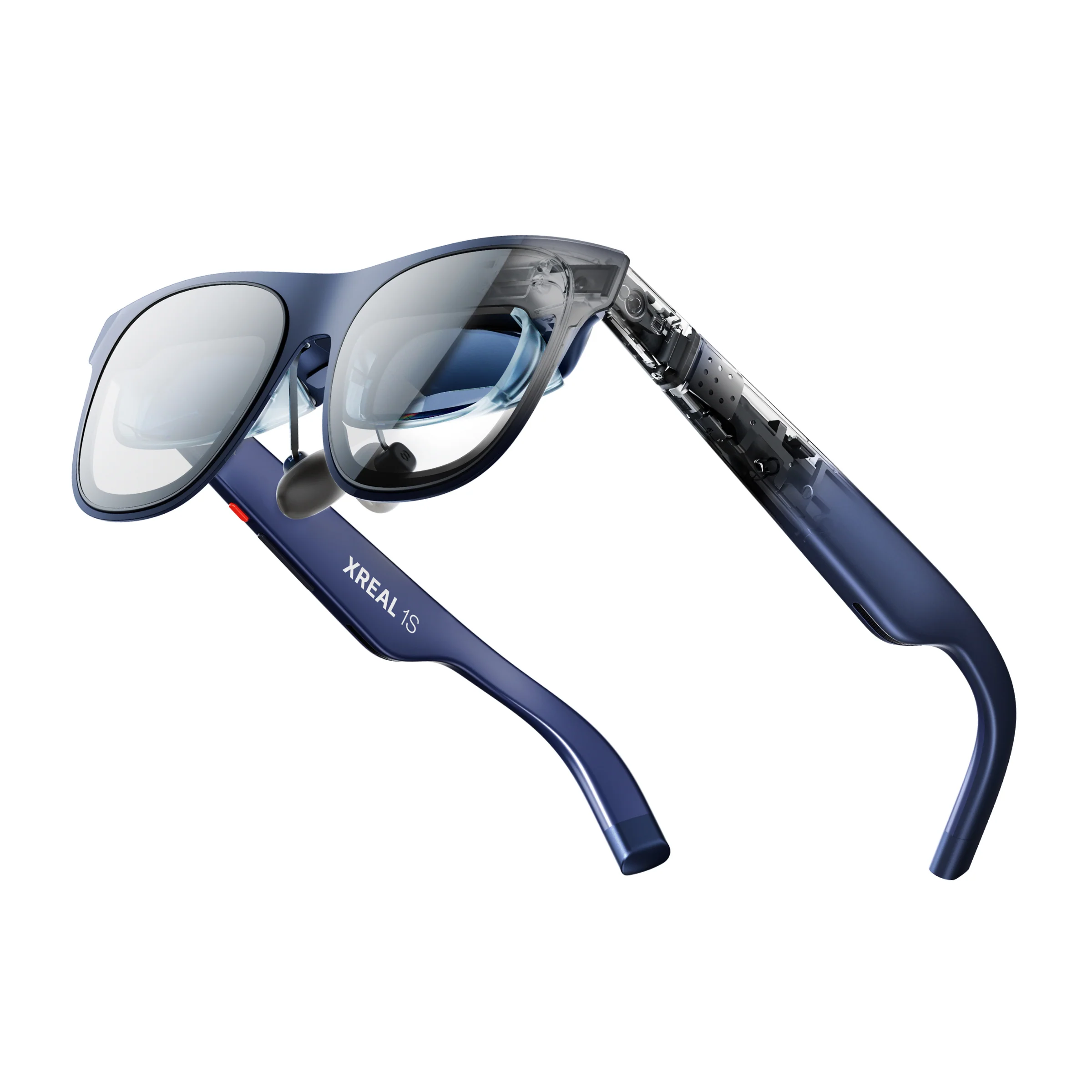
Smart Glasses That Put a Big Screen in Front of Your Eyes Just Dropped to $299

Xreal's XBX a01+ AR glasses deliver a 1080p Micro-OLED display, a 147-inch virtual screen projection, and USB-C bus-powered operation at a discounted price of $299 on Xreal's US store (regular list price $359), according to a first-hand review published by Engadget on July 17, 2026. Gizmodo, reviewing the device a week earlier, described it as Xreal's cheapest glasses to date and confirmed availability on Amazon.
AR glasses like the XBX a01+ are wearable displays that project a virtual screen in front of your eyes, so it looks like you are watching a large TV that no one else can see. Micro-OLED is the screen technology inside: it packs tiny light-emitting pixels onto a chip the size of a fingernail, producing a bright, sharp image in a very small device.
The XBX a01+ weighs just 62 grams, according to Xreal's product and store pages. The screen is rated at 1600 nits of brightness with HDR10 support, which together mean the image stays vivid and colorful even outdoors. The display projects a virtual screen equivalent to 147 inches viewed at a distance. Built-in side-firing speakers handle audio without requiring external output. The device draws power entirely through its USB-C connection to the host device, with no internal battery or separate charging required.
Compatibility spans a broad device range. Engadget confirmed first-hand that the XBX a01+ works with iPhone, MacBook Air, iPad, and Steam Deck, the last of which required no configuration. Xreal's US store listing corroborates iPad compatibility. The glasses automatically switch to horizontal viewing mode when playing YouTube videos.
Prescription lens inserts are available from two sources. HonsVR offers them at $50, per Engadget's review, while Xreal sells its own official inserts at $49.90 on the US store. The a01+ ships with a detachable front lens pre-installed, a light shield, and a glasses case. The light shield is included with the plus model but not the standard XBX a01, per Xreal's documentation. Detachable front frames are also part of the design, allowing users to swap the front aesthetic.
Engadget's reviewer found the XBX a01+ more comfortable for outdoor use than the Apple Vision Pro, comparing its wearability to normal sunglasses. The comparison is notable for the category: the Vision Pro is a standalone spatial computing device with dedicated compute and battery, while the XBX a01+ is a tethered display accessory with no onboard processing beyond the display pipeline. In other words, the Vision Pro is a full computer you wear on your face; the XBX a01+ is a screen that relies on your phone or laptop to do the actual work. The thermal profile is modest; the display area gets warm during use but not hot enough to cause discomfort or sweating.
At 62 grams with no battery, the design trade-offs are clear. The XBX a01+ functions as a dumb display in the traditional sense, relying entirely on the host device for signal, processing, and power. That keeps weight and thermals in check but means the glasses cannot operate standalone or run applications of their own.
The broader context here is the price floor for wearable Micro-OLED displays. At $299 on sale, the XBX a01+ sits well below the entry points of standalone spatial computing headsets. Gizmodo's framing of the device as Xreal's cheapest yet places it in the consumer-impulse-buy range rather than the considered-purchase tier that devices like the Vision Pro occupy. For a category that has struggled with both price and wearability, hitting both targets simultaneously is the more notable achievement than any single spec.
Worth flagging is what the price tells us about the technology itself. Micro-OLED panels have been the cost bottleneck for AR glasses for several years, meaning they were the single most expensive part keeping prices high. A sub-$300 retail price with a 1600-nit HDR10 panel suggests either manufacturing yields have improved materially or Xreal is absorbing margin to build market share, or both. Either way, the component economics matter more for where this category goes next than the review verdict on any single product.
For the practical buyer, the compatibility story is strong. USB-C bus power means no battery anxiety and no firmware updates to manage on the glasses themselves. Steam Deck plug-and-play is a direct appeal to the handheld gaming crowd. iPhone and MacBook Air compatibility covers the majority of the consumer device base. The automatic horizontal-mode switch for YouTube is a small but meaningful touch for the most common use case: watching video on a larger virtual screen than a phone or laptop provides.
The prescription insert ecosystem, with both Xreal and HonsVR options at essentially the same price, removes a friction point that has historically plagued glasses-based wearables for the significant portion of the population that needs vision correction.
Whether the XBX a01+ becomes a turning point for consumer AR depends on factors beyond this single device: sustained component pricing, developer interest in the tethered-display form factor, and whether the use case beyond media consumption materializes. What is verifiable today is that the hardware proposition, a 1080p Micro-OLED display at 62 grams for under $300, is more accessible than anything in this category has been.