Smart Glasses That Are Just a Screen for Your Face: XREAL's $300 a01
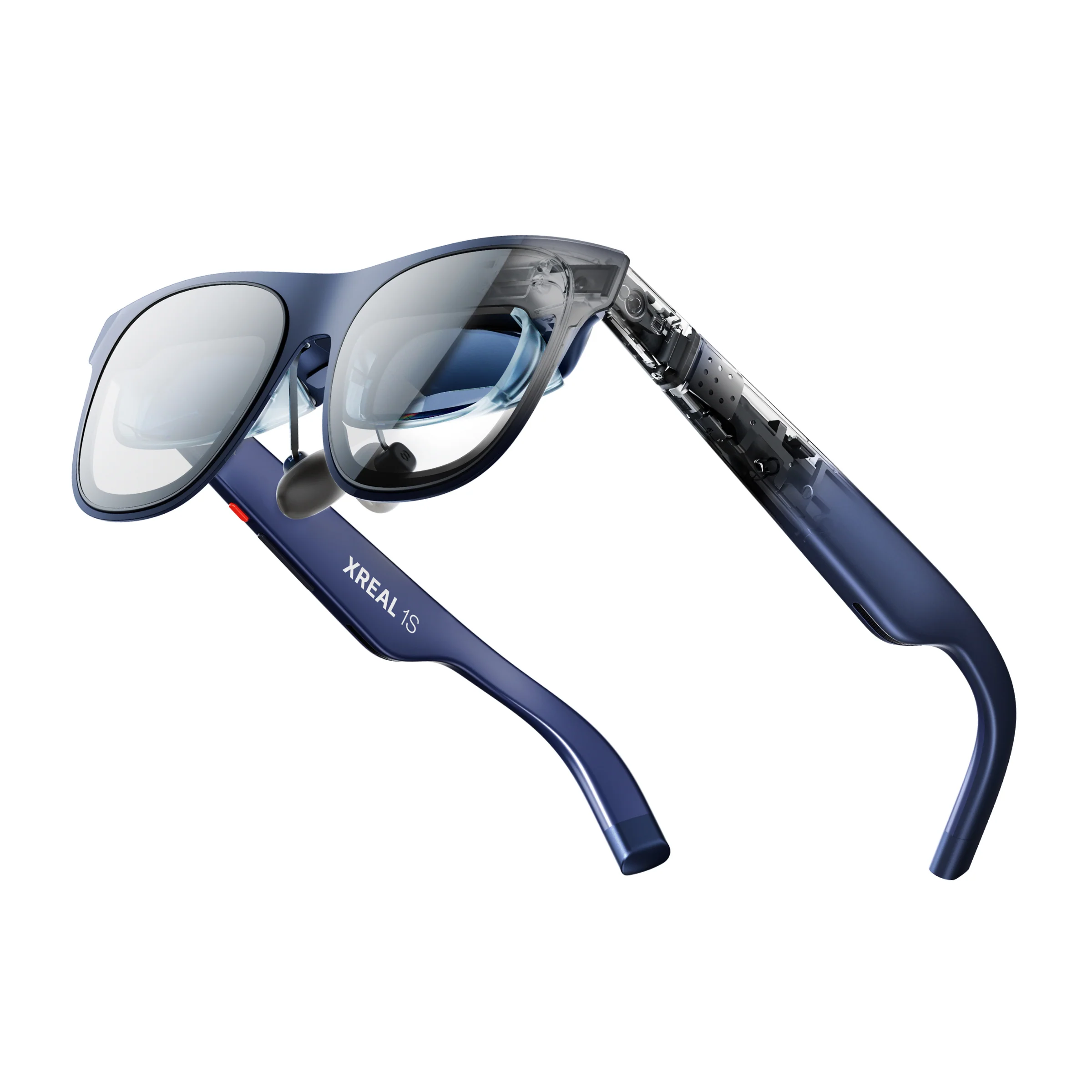
XREAL released its a01 smart glasses in May 2026, priced at around $300. The company is positioning them as a basic wearable screen rather than a high-tech augmented reality device like Meta's Orion or Snap's Spectacles (TechCrunch).
The a01 is, by design, just a display. Think of it like a computer monitor that you wear on your face instead of putting on a desk. It has no battery or internal power source. Power comes through a USB-C cable connected to whatever device is sending it video — a phone, a gaming handheld, or a laptop. The glasses use two small OLED screens (one for each eye) at 1080p resolution with up to 1,600 nits of brightness. XREAL claims the image feels like watching a 147-inch TV.
The use cases XREAL advertises are straightforward: gaming and watching movies or TV. The a01 can plug into a Steam Deck or other handheld gaming device. The device only mirrors what is on the source device's screen, though. The connected phone's screen must stay lit up the whole time you are watching, which means you cannot turn the phone screen off to save battery, and the phone's battery drains for the full duration of use.
What makes the a01 worth noting is what it deliberately is not. Meta's Orion and Snap's Spectacles aim to be spatial computing platforms — devices that run software to place digital objects in the real world around you. The a01 makes no such claim. It is a monitor you wear on your face, attached by a cable. The distinction matters because it reflects a split in the smart glasses market between devices that try to be a full computing platform and devices that solve a narrower problem at a fraction of the cost.
XREAL's own product lineup reflects this split. The XREAL One Pro, the company's top-tier AR glasses, is priced from $649 to $599 and debuted shortly after CES 2026 (XREAL Shop). The XREAL 1S runs on XREAL's own X1 chip and delivers 120Hz visuals with 3ms latency, head-tracking that keeps the screen fixed in space as you move, 3D depth, and certified eye comfort (XREAL Shop). XREAL pitches the 1S as putting a 500-inch screen in your pocket, supporting movies, games, productivity, and 2D-to-3D conversion (XREAL). The XREAL One is reported to deliver decent clarity on large displays with a stable screen and virtually no delay, staying comfortable through a two-hour movie (XREAL Shop). Further out, XREAL is developing the AURA, a next-generation spatial computer co-developed with Google that pairs lightweight glasses with a separate small device that handles the computing, powered by Android XR and Google's Gemini AI (XREAL).
The a01 sits below all of these. No head-tracking, no dedicated chip, no separate computing device. It is the cheapest entry point in XREAL's lineup by a wide margin, and the trade-offs are easy to see. Removing the battery, the processor, and the software brings the price down to impulse-purchase territory, but every computing task is pushed onto whatever device you plug the glasses into.
The screen-mirroring limitation is the one constraint that may frustrate users in practice. Anyone who has used a phone-based VR or AR headset knows that keeping the phone screen active while wearing a separate display feels wasteful, and it drains battery faster than you might expect. The a01 depends on the source device having enough battery to power both itself and the glasses through a USB-C connection. For a Steam Deck with its large battery, that is workable. For a phone mid-flight, less so.
The broader context here is that the wearable display category has been quietly improving while flashier augmented reality projects absorb most of the industry's attention and money. A $300 pair of glasses that works as a tethered 1080p OLED monitor is not a technological breakthrough. It is a refinement of a product type that already exists. The parts are available, the use cases are real if limited, and the price is low enough that the question is not whether the technology works but whether enough people want a private big-screen experience strapped to their face while attached to a cable.
XREAL's bet with the a01 is that the answer is yes, and that the market for simple wearable displays is large enough to support a product that makes no claim of being a full computer for your face. Whether that bet pays off will depend less on the glasses themselves than on whether the phones and gaming devices people already own have the battery life and video output to make the connection worthwhile.


